Trump schedules US-Iran signing to reopen Hormuz
US President Donald Trump said the United States and Iran were scheduled to sign a new agreement on Sunday, 14 June 2026, that would reopen the Strait of Hormuz and begin a new phase of nuclear negotiations. Pakistan’s Prime Minister Shehbaz Sharif said Islamabad was preparing an electronic signing within 24 hours, while Iranian foreign ministry spokesperson Esmaeil Baghaei said the memorandum might come in the coming days but not necessarily on Sunday. The deal’s scope remains contested: US officials describe it as a route to dismantling Iran’s nuclear programme and extending a ceasefire, while Iranian-linked accounts emphasise sanctions relief, frozen assets and a broader halt to fighting including Lebanon. Israeli forces continued strikes in southern Lebanon as the diplomacy advanced. For Europe, the immediate stake is energy: the Strait of Hormuz is a core oil and LNG corridor whose closure has fed inflation and shipping risk.
Trust & Evidence📚 8 sources· 🧠 AI-checked· Trust status: not yet independently verifiedView evidence & verification Hide
Verification record
- 📚 8 verified sources — Al Jazeera, Israel attacks Lebanon as US says Iran deal to be signed on Sunday · Associated Press, What to know about a possible deal to end the Iran war · Axios, U.S., Iran expected to electronically sign agreement to end war Sunday · The Guardian, Trump says Iran peace deal could be signed by Sunday …
- 🧠 High confidence — AI-checked
- 🇧🇪 Belgian impact: Medium
- 📜 Provenance recorded & timestamped
Evidence is generated from the OIS evidence chain and reviewed before appearing on Belgium Pulse.
Powered by OIS / Evidentia
Trump's America: From the First Term to Now
A living dossier on Donald Trump's political project, from the 2016 victory through the post-2020 contested period to his return to the White House in January 2025 — and the political, legal, economic and institutional consequences still unfolding.
About this story
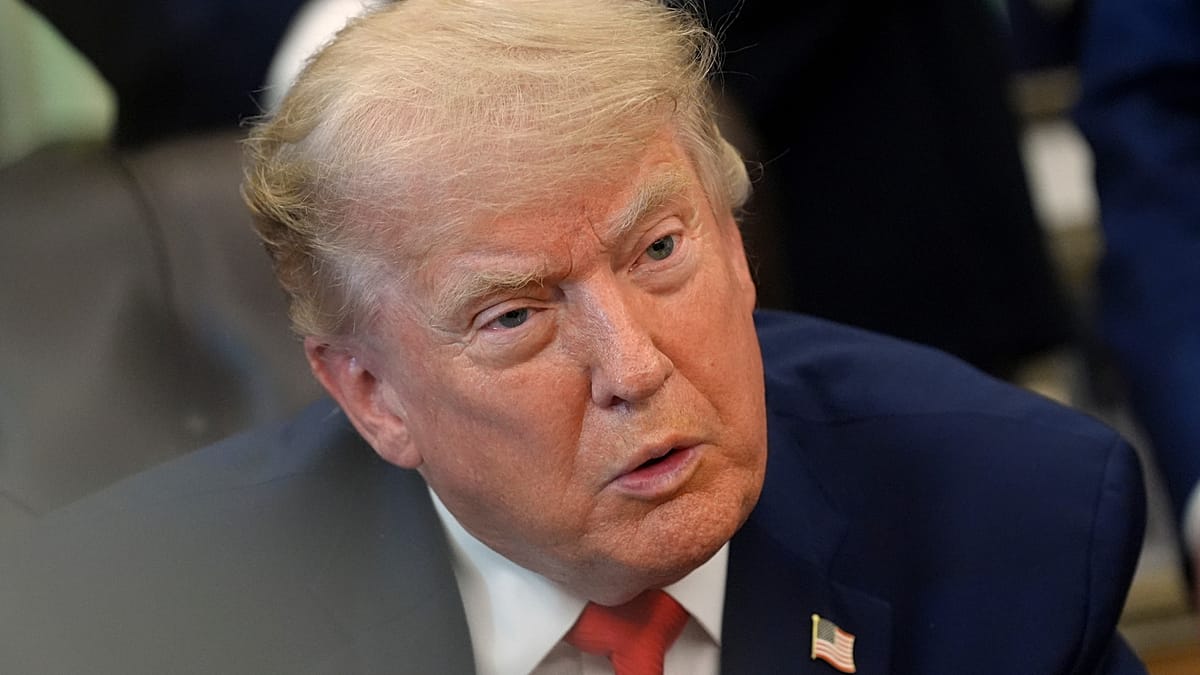
Donald Trump (US president, in his second term in 2026) is presenting the draft agreement as a security and energy breakthrough. Iran (Islamic Republic in the Persian Gulf, under clerical and military power structures) is central because its nuclear programme and control of Hormuz access are at issue. Shehbaz Sharif (Pakistan’s prime minister, mediator in the talks) has framed Islamabad as a guarantor of the electronic signing process. Esmaeil Baghaei (Iranian foreign ministry spokesperson) is the official voice urging caution on timing. The Strait of Hormuz (narrow Gulf waterway between Iran and Oman) is one of the world’s most important energy chokepoints. Hezbollah (Lebanese Shia armed movement and political party backed by Iran) links the deal to the Lebanon front. Benjamin Netanyahu (Israeli prime minister) is resisting limits on Israeli operations in Lebanon. The IAEA (UN nuclear watchdog in Vienna) is the body whose verification role would matter in any nuclear settlement.
How to read this story
The history
The precedent is the 2015 Joint Comprehensive Plan of Action, agreed by Iran, the United States, China, Russia, France, Germany, the United Kingdom and the EU to limit Iran’s nuclear programme in exchange for sanctions relief. The United States withdrew in 2018, and the accord steadily eroded. In 2025, European powers used the JCPOA’s snapback route to restore UN sanctions after accusing Iran of non-compliance. The IAEA’s March 2026 statements said diplomacy had failed before the latest military strikes and warned that attacks around nuclear facilities could carry radiological risks beyond national borders.
The geopolitics
The broader issue is whether Washington can trade military pressure for a verifiable nuclear and shipping settlement without losing Israeli confidence or rewarding Iranian leverage over Hormuz. The deal also tests Europe’s reduced influence after the JCPOA: Brussels remains economically exposed, but the immediate diplomatic channel is being run by the United States and regional mediators.
Why now
The story is timely because Trump, Pakistan’s prime minister and US-linked briefings all pointed on 13 June 2026 to an electronic signing within roughly 24 hours, while Iran publicly cautioned that the timetable was not settled.
What to watch
Watch whether the memorandum is signed on 14 June, whether Hormuz traffic actually resumes, whether the IAEA receives a defined verification role, and whether Israel reduces or continues operations in Lebanon after the signing.
Local impact
The clearest local Belgian exposure is the Antwerp port and petrochemical cluster, where crude, refined products, chemicals, shipping insurance and global freight costs feed into industrial margins. Belgian hauliers, airlines and fuel retailers would feel any sustained change in diesel, jet fuel and petrol prices quickly, even without a direct Belgian role in the negotiations.
International angle
The agreement would be a US-Iran deal mediated by Pakistan and Gulf partners, but its consequences are European. EU governments have to manage energy security, sanctions policy and relations with both Washington and Tehran. France’s G7 diplomacy also matters because European leaders may try to shape follow-up talks after the initial memorandum.
What this means for you
Belgian readers should expect fuel, energy and travel prices to remain sensitive to every implementation signal. A signed memorandum could ease market pressure, but households and businesses should not assume immediate price drops until shipping, insurance and nuclear-verification steps are visible.
What happens next
The next test is whether the electronic signing happens on Sunday, 14 June 2026, or slips into the following days as Iran’s foreign ministry suggested. If a memorandum is signed, technical talks are expected next week on nuclear verification, sanctions sequencing and Hormuz traffic. Leaders are also expected to discuss the deal around the G7 summit in France.
Potential consequences
If the memorandum is implemented, energy prices could ease and eurozone inflation pressure could soften, helping Belgian households and businesses. If it fails, markets may price in longer shipping disruption, higher insurance costs and fresh pressure on ECB policy. A deal that excludes or ambiguously covers Lebanon could also leave Israel-Hezbollah fighting as the next trigger for renewed Iranian pressure on Hormuz.
Opposing perspectives
- Trump administration
The Trump administration argues that the emerging memorandum would secure the core US objectives: reopening Hormuz, extending the ceasefire and creating a path to remove Iran’s highly enriched uranium under verification. Its strongest case is that a staged agreement can reduce war risk immediately while leaving coercive leverage in place if Iran fails to comply.
- Iranian government
Iran’s foreign ministry is presenting the timetable more cautiously and stresses that the memorandum’s scope cannot be reduced to US demands. Its strongest case is that any settlement must address sanctions relief, frozen assets, Iranian control of commercial passage through Hormuz and the regional fronts that Tehran says are linked to the war.
- Pakistani and Qatari mediators
The mediators frame the electronic signing as a practical way to lock in a fragile diplomatic opening before battlefield events derail it. Their strongest argument is that a temporary memorandum, followed by technical talks, is more realistic than trying to solve the nuclear, sanctions, shipping and Lebanon files in one final treaty.
- Israeli government
Israel’s position is that the Lebanon front cannot be subordinated to a US-Iran bargain that leaves Hezbollah’s military capacity intact. Its strongest case is that a deal focused on Hormuz and Iran’s nuclear file may reduce energy pressure while preserving an armed threat on Israel’s northern border.
Timeline
- 2015-07-14·Iran and world powers agreed the JCPOA in Vienna.
- 2018-05-08·The United States withdrew from the JCPOA and restored sanctions on Iran.
- 2026-02-28·The 2026 Iran war began after US-Israeli strikes, and Hormuz traffic became a central pressure point.
- 2026-03-02·The IAEA warned that attacks linked to nuclear facilities could carry radiological risks.
- 2026-06-13·Trump and Pakistani mediators said a US-Iran memorandum could be signed imminently.
- 2026-06-14·The proposed electronic signing is expected, though Iran has cautioned that timing may slip.
Glossary
- Strait of Hormuz
- A narrow waterway between Iran and Oman linking the Persian Gulf to the Gulf of Oman, central to global oil and LNG shipping.
- IAEA
- The International Atomic Energy Agency, the Vienna-based UN nuclear watchdog responsible for safeguards and verification work.
- JCPOA
- The 2015 Iran nuclear deal that limited Iran’s nuclear programme in exchange for sanctions relief before it eroded after the US withdrawal.
- G7
- A forum of major advanced economies: Canada, France, Germany, Italy, Japan, the United Kingdom, the United States and the EU.
Related to this story
Live connections from the Belgium Impulse ecosystem — not recommendations.
This briefing was prepared with AI assistance and reviewed by a Belgium Impulse editor before publication. methodology.