Can Leuven’s safer Vuntcomplex and new science-park bridge make daily travel less brittle?
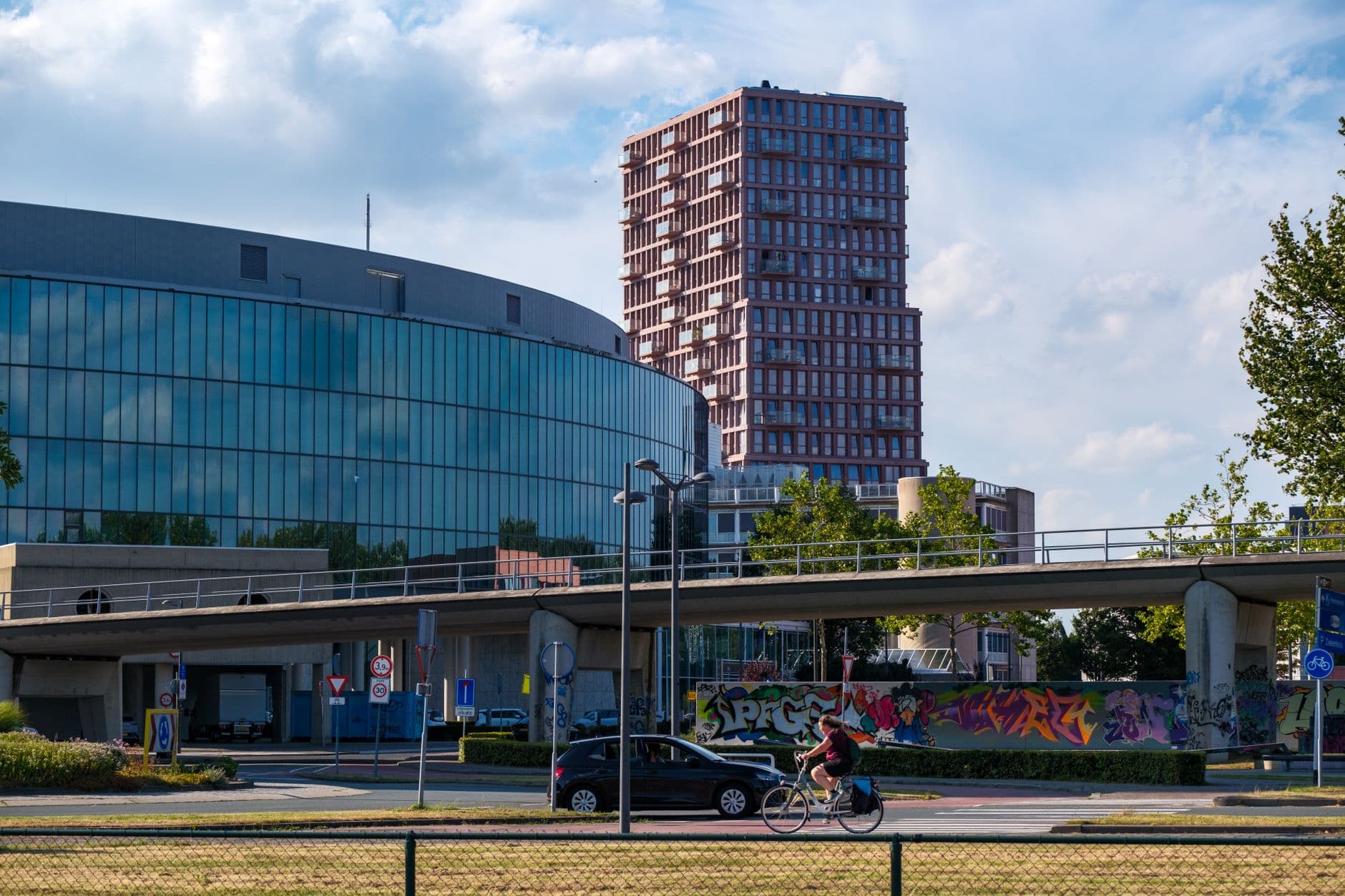
Leuven is moving ahead with two practical city-infrastructure changes: a safer Vuntcomplex and a new bridge connection toward the science park. For Belgium-based readers, the story is not just a local works notice. It sits at the junction of three pressures familiar across Flemish cities: safer cycling and walking routes, reliable access to knowledge-economy sites, and public spaces that can cope better with heat. The same Leuven news cycle also includes a schaduwoplossing prototype Tweebronnen, a test of a new shade solution where trees are not immediately possible. Together, the projects show how a university city east of Brussels is trying to make small pieces of public space do more work: move commuters, protect vulnerable road users and soften the effects of hotter summers.
Verified by Validiris·📚 5 sources·🧠 AI-checked·🇧🇪 Belgian: HighWhy you can trust this
About this story
The true subject is local infrastructure in Leuven, Flemish Brabant, Belgium. The Vuntcomplex project concerns traffic safety and connectivity, while the new bridge to the science park is aimed at improving access for people moving between the city and a research-and-innovation cluster linked to KU Leuven, imec and technology employers. The Tweebronnen shade test is a separate but related climate-adaptation experiment in the city centre. The main Belgian stakeholders are the City of Leuven, Mayor Mohamed Ridouani’s local administration, Flemish mobility authorities where regional roads or cycling policy are involved, KU Leuven-linked science and research users, local residents, cyclists, pedestrians and commuters. The relevant EU bodies are the European Commission’s mobility and climate directorates and the European Environment Agency, because both frame safer active mobility and urban heat adaptation as city-level priorities.
How to read this story
The history
Leuven has spent years branding itself as a compact, cycling-friendly, climate-conscious university city. That makes these projects part of a longer policy arc rather than isolated works. Across Flanders, cities have been trying to reconcile growth in jobs, students and research activity with limited road space and rising expectations for safe active travel. At the European level, this mirrors the shift from car-capacity planning toward sustainable urban mobility: not eliminating cars, but making walking, cycling, public transport and short local trips safer and more credible.
Regional impact
The direct impact is local to Leuven and the wider Flemish Brabant commuter area. A veiliger Vuntcomplex nieuwe bridge connection would mainly affect people travelling to and from the science park, nearby neighbourhoods and Leuven’s employment and education zones. The shade test affects central Leuven users around Tweebronnen and may influence how the city treats hard-surfaced public spaces during heat periods.
Local impact
For Leuven, the most immediate impact is route quality: safer crossings, a clearer bridge link to the science park and a test of cooling infrastructure in a busy public-service area. The projects are modest in scale but touch daily routines for commuters, students and residents.
International angle
The international angle is European rather than overseas: Leuven is a Belgian test case for challenges shared by university cities across the EU, from safe cycling links to heat-resilient public space. EU institutions in Brussels set policy language and funding frameworks, but the delivery burden sits with cities and regions.
What this means for you
For commuters: check city mobility updates before using routes around the Vuntcomplex once works begin. For science-park users: the bridge could improve cycling and walking access if it is direct and well lit. For families, students and older residents: the shade test at Tweebronnen may signal where Leuven will add cooling measures before trees can provide mature canopy.
Opposing perspectives
- City of Leuven and EU urban-policy framing
The Leuven administration’s implied framing is practical and cumulative: safer junctions, bridge links and temporary shade devices are small interventions that make a dense city function better. This lines up with the EU-side language of safe active mobility, climate adaptation and resilient public space, rather than an Anglo-wire style that might treat the story as a quirky local design item.
- Daily users and neighbourhood-friction framing
Cyclists, pedestrians, science-park workers, parents and nearby residents may judge the projects less by policy vocabulary than by whether crossings feel safer, routes are direct and construction disruption is manageable. For drivers or businesses dependent on vehicle access, the test is whether mobility changes improve safety without simply shifting congestion or inconvenience onto adjacent streets.
Related to this story

Pulse Insight — This topic connects to 10 associations, 4 funding programmes, 144 upcoming events and 2269 jobs through the Flanders ecosystem.
Live connections from the Belgium Impulse ecosystem — not recommendations.
This briefing was prepared with AI assistance and reviewed by a Belgium Impulse editor before publication. methodology.