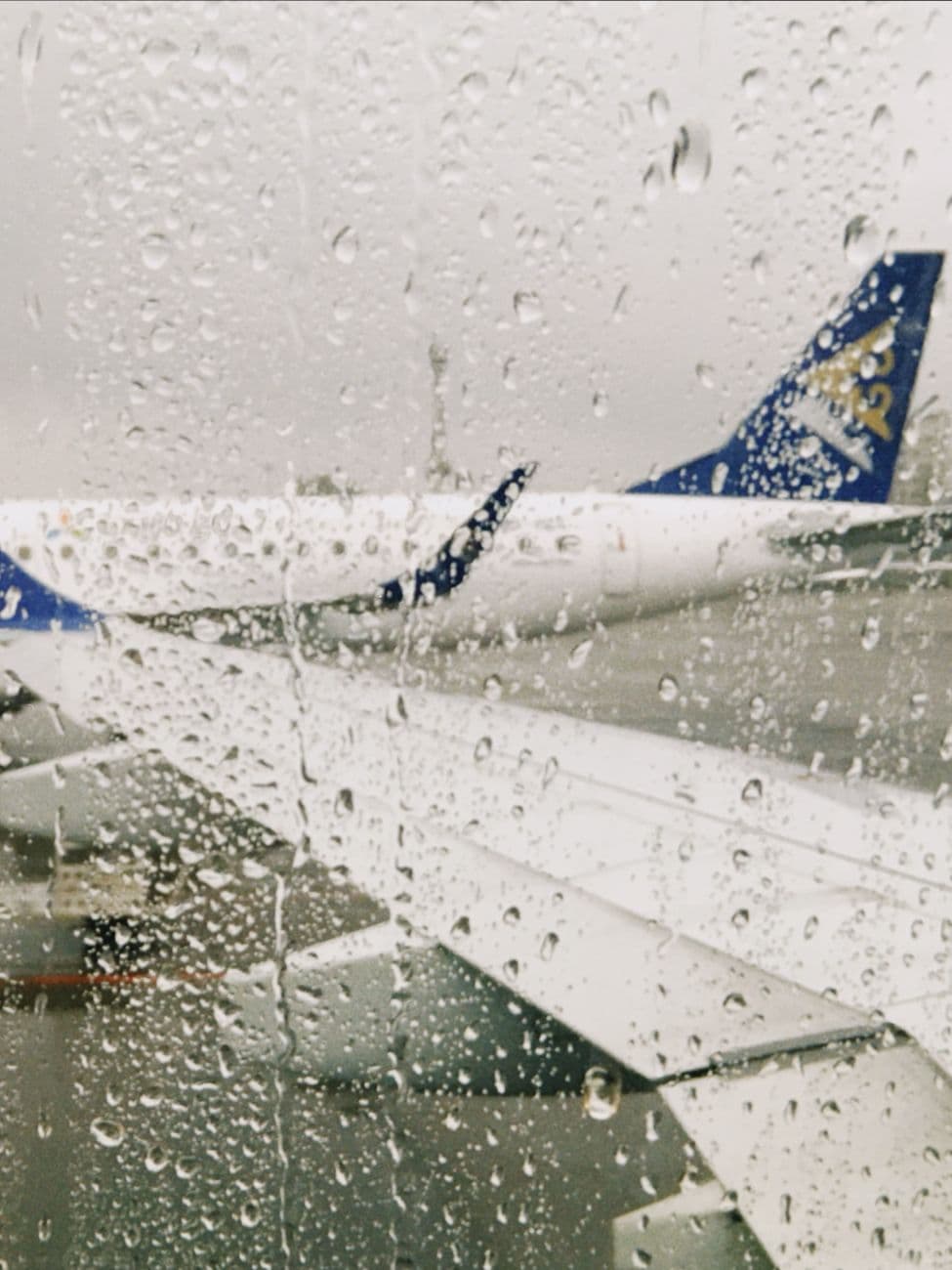
Why is Flanders ordering Brussels Airport to hold back more rainwater?
Flemish Minister of Environment and Agriculture Jo Brouns has obliged Brussels Airport to provide extra opvang regenwater, according to reports in Het Nieuwsblad and 7sur7, adding a water-management condition to one of Belgium’s most sensitive infrastructure files. The measure is not about flight routes, aircraft safety or federal aviation policy. It sits in Flemish environmental and permitting competence because Brussels Airport is physically located in Flemish Brabant, across Zaventem, Machelen and Steenokkerzeel. The practical point is straightforward: a large airport contains extensive paved and built surfaces, so rainwater has fewer chances to soak naturally into the soil. When heavy rainfall arrives, the question becomes whether water is buffered, reused or infiltrated on site, or whether surrounding drainage systems and communities carry more of the burden. Brouns’ decision pushes the airport further toward the first model. For residents around the airport, the condition will be read through a wider local lens: noise, traffic, emissions, groundwater, flooding risk and the cumulative pressure of a national airport on suburban municipalities. For Brussels Airport Company, the issue is operational and regulatory: the airport remains a strategic transport and logistics hub, but its licence to operate increasingly depends on climate adaptation and environmental performance as much as on connectivity. The broader political signal is that Flanders’ 2024-2029 environmental cycle is moving from abstract climate-adaptation language into concrete permit conditions. Brouns’ own policy note says Flanders is vulnerable to both drought and wateroverlast, and commits the government to the Blue Deal, more space for water, and a review of rainwater rules where standard solutions do not fit local circumstances. Brussels Airport is now a high-profile test of that approach.
Verified by Validiris·📚 6 sources·🧠 AI-checked·🇧🇪 Belgian: HighWhy you can trust this
About this story
The subject is a Flemish environmental-permit intervention affecting Brussels Airport, Belgium’s main airport. Jo Brouns, Flemish Minister of Environment and Agriculture and a cd&v member in the Diependaele government, is the competent regional minister for environment and nature policy. Brussels Airport Company operates the airport. Aviation safety, airspace management and many flight-route questions are federal matters, but environmental permitting, water management, spatial planning and local environmental nuisance around the airport fall largely under Flemish regional competence because the site lies in Flemish Brabant, not in the Brussels-Capital Region.
How to read this story
The history
Brussels Airport has long sat at the intersection of Belgian institutional complexity. The airport brands itself around Brussels and serves the capital, EU institutions and national connectivity, but its land is in Flanders. That creates a recurring split: federal authorities handle aviation policy and parts of air traffic, while Flanders handles environmental permits, spatial planning, water and nature rules. In the 2024-2029 Flemish policy cycle, Brouns’ environment note places water management, climate adaptation and permit certainty in the same frame. The rainwater condition fits that institutional history: it is a local environmental requirement imposed on nationally important infrastructure.
Regional impact
The direct regional impact is in Flemish Brabant, especially the airport municipalities of Zaventem, Machelen and Steenokkerzeel and the wider Vlaamse Rand around Brussels. The measure may also interest Brussels residents because the airport serves the capital, but the permitting authority and land-use impact are Flemish.
Local impact
For the airport periphery, the practical issue is whether extra buffering and infiltration reduce runoff into local systems during intense rain. Residents are likely to judge the measure by visible works and measurable effects, not by the wording of the permit condition alone.
International angle
The airport serves international passengers, EU institutions and logistics flows, but the decision itself is domestic and regional. The EU angle is regulatory background: water and flood-risk policies in Flanders sit within European legal frameworks.
What this means for you
For residents: follow municipal communications and permit documents for works that could affect drainage, roads or construction around the airport. For businesses on or near the airport site: expect water buffering and infiltration to become a more visible permitting issue. For policy watchers: separate the files clearly. Rainwater retention is Flemish environmental policy; flight paths and aviation rules are mainly federal and operational aviation matters.
Opposing perspectives
- Flemish government and water-management frame
Jo Brouns’ Flemish environment portfolio frames the airport condition as part of a broader permit and climate-adaptation agenda: strategic infrastructure can keep operating, but must absorb more of its own environmental impact. In this reading, minister brouns verplicht Brussels Airport to take a practical stap goede richting on water, not as a symbolic sanction but as a permit condition linked to Flanders’ Blue Deal and wateroverlast policy.
- Airport operator and economic-continuity frame
Brussels Airport Company’s likely interest is legal certainty and workable implementation. The airport is a national gateway, employer and logistics platform, so extra airport rainwater measures must be designed around safety, construction planning and daily operations. This frame does not necessarily reject stronger water rules; it asks whether obligations are technically feasible, proportionate and predictable inside a heavily regulated airport site.
- Local residents and airport-periphery municipalities
Residents and local authorities in Zaventem, Machelen, Steenokkerzeel and nearby municipalities tend to see water as one part of a larger airport-impact file that includes noise, traffic and emissions. For them, extra opvang regenwater is welcome if it reduces pressure on local drainage and flooding risk, but it may be judged insufficient if not accompanied by broader controls on the airport’s environmental footprint.
- Dutch-language versus Francophone press framing
The Dutch-language seed framing highlights the Flemish ministerial decision and the phrase stap in de goede richting, which fits a local Flemish Brabant politics lens. The Francophone 7sur7 framing presents Brussels Airport as being constrained to improve soil infiltration, a more administrative and consumer-facing Belgian news angle. The difference matters because the airport serves Brussels nationally, while the legal lever in this case is Flemish.
Related to this story
Pulse Insight — This topic connects to 10 associations, 4 funding programmes, 144 upcoming events and 2269 jobs through the Flanders ecosystem.
Live connections from the Belgium Impulse ecosystem — not recommendations.
This briefing was prepared with AI assistance and reviewed by a Belgium Impulse editor before publication. methodology.