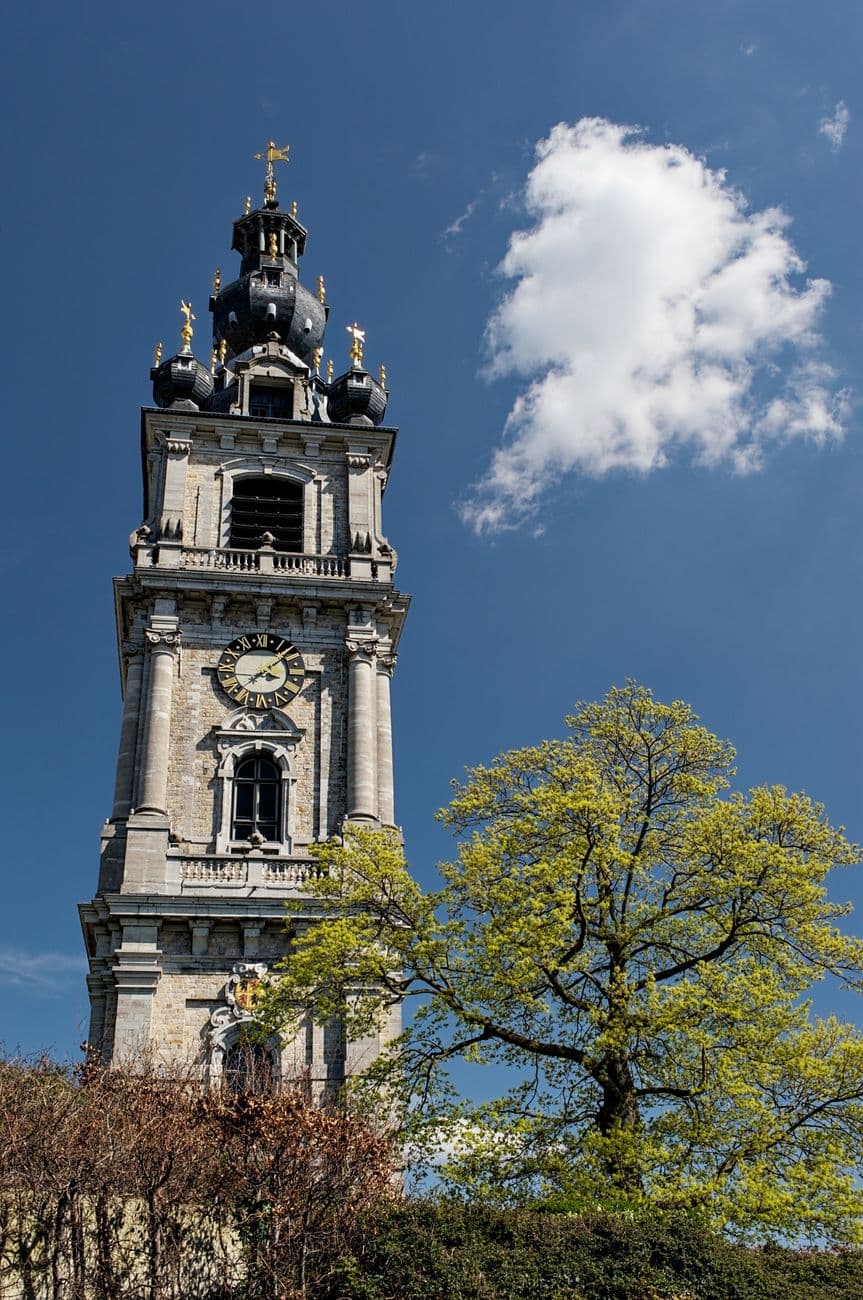
Why is Erotix Mons opening amid a courtroom-scale logistics rethink?
In a `contexte polémique logistique`, Erotix Mons is scheduled to `ouvre ses portes` at Lotto Mons Expo from 5–7 June 2026, while the Falzone trial occupies the same venue with a full assize operation lasting from 4 May to 30 June. Court documents and venue data show an exceptional setup: 278 witnesses, heavy public and media presence, and a 3-room hall strategy used to keep events administratively separated. For local businesses, this is less a morality debate than a live-test of operational resilience in a 10,000 m² venue that can host up to roughly 15,000 people.
Verified by Validiris·📚 9 sources·🧠 AI-checked·🇧🇪 Belgian: HighWhy you can trust this
About this story
The economic story is about venue triage. The Hainaut assizes case of Paolo and Antonino Falzone, reopened after the Strépy-Bracquegnies tragedy, was formally placed as the 3rd session of 2026 by the Court of Appeal of Mons on 12 Dec 2025, with the trial opening 4 May 2026 and an expected 4 May–30 June duration. Public coverage and trial reporting stress that 278 witnesses and unusually large numbers of parties civiles made relocation to a larger hall structurally necessary. A separate but related event, Erotix Mons, was then scheduled in the same fair infrastructure over the weekend 5–7 June, at least 17:00–20:00 local time windows in some channels and 17:00–02:00 for parts of previous editions. The logistics question is not just timing but flow control. Lotto Mons Expo is designed as a modular venue with three separable spaces, dedicated access routes and parking, and internal teams that can reconfigure for multiple, concurrent uses. With trial and salon objectives both high-traffic, organisers are now forced to segment entry, staging, and operational timelines. From a business perspective, the venue operator, FAIRPAK SRL (BE 0653.774.951), and its service partners must absorb added security layers, revised staff planning, and reputational exposure without losing the normal monetisation cycle of a large event month. In practice, the local room-traffic model becomes the deciding asset: the same hall is expected to host a justice process and private entertainment operations with zero overlap risk and measurable service quality standards.
How to read this story
The history
Belgian courthouses have occasionally shifted large civil/assize operations to adapted venues when courtroom capacity and witness volume exceed normal facilities. The Falzone case is now the clearest contemporary local example because it is multi-month, multi-party, and symbolically sensitive. The current logistics model is therefore consistent with a broader trend: when institutional capacity is constrained, Belgium has increasingly leaned on large public-private infrastructure with strict separation rules.
Regional impact
In Mons, the immediate impact is concentrated around the Les Grands Prés/transport axis: public parking demand, station flows, and supplier scheduling. The site is central in municipal economic development plans and can trigger second-order effects for nearby retail and hospitality operators who depend on event-weekend footfall.
Local impact
The overlap affects immediate service activity in Mons: temporary staff hiring, parking and circulation, after-hours public transport pressure, and short-notice supplier coordination for food, cleaning, and event setup. The event economy absorbs this cost, while municipal service teams must reconcile judicial and commercial planning in the same urban corridor.
International angle
Directly local in facts, but it echoes a wider European issue: large venues are increasingly expected to absorb legal, cultural and commercial uses under strict public-safety standards. Similar cases in EU cities are forcing standardised contingency clauses in venue contracts.
What this means for you
Households should treat nearby event-week traffic as potentially variable and check transport advisories before travelling. Local businesses should model two scenarios: full-event weekend and partial-access weekend, because revenue, staffing, and inventory decisions depend on whether opening hours or venue gates are tightened.
Opposing perspectives
- Victims’ families and parties civiles
Their first priority is process integrity and dignity. From this view, any overlap with a commercial exhibition, however separated, risks trivialising a mass-fatality case and creating practical security pressure around witness confidentiality, emotional pressure on those testifying, and visual proximity to families who have already endured years of public attention. They argue that continuity of proceedings should dominate all scheduling in the same municipal ecosystem.
- Venue operators and salon organisers
They frame the same overlap as a test of adaptive infrastructure rather than a conflict, not an affront. Their argument is that modular halls, controlled access, fixed hours and legal compliance can preserve both public security and private economic activity. For them, a full shutdown would penalise unrelated workers, exhibitors, and service suppliers whose contracts are fixed months in advance, especially in a market already marked by thin margins.
- Local security and logistics services
This constituency treats the case pragmatically: crowd control has to be reliable first, and every additional event in a constrained district increases operational cost. Their position is that clarity, not cancellation, is the right policy—advance planning, transparent flow maps, and enforceable separation criteria. If the justice process grows uncertain, they expect contingency clauses and overtime surcharges to protect workforce safety and payroll predictability.
- Hospitality, transport and retail operators in Mons
These actors care about footfall stability more than headlines. They can benefit from either trial attendance or fair attendance, but mixed demand creates volatility: transport capacity, late-night parking, and staff rostering can no longer be planned as one simple event curve. Their interest is consistent scheduling signals, not the moral debate, because they face direct payroll and stock implications week by week.
Related to this story
Pulse Insight — This topic connects to 10 associations, 4 funding programmes, 89 upcoming events and 12389 jobs through the Wallonia ecosystem.
Live connections from the Belgium Impulse ecosystem — not recommendations.
This briefing was prepared with AI assistance and reviewed by a Belgium Impulse editor before publication. methodology.