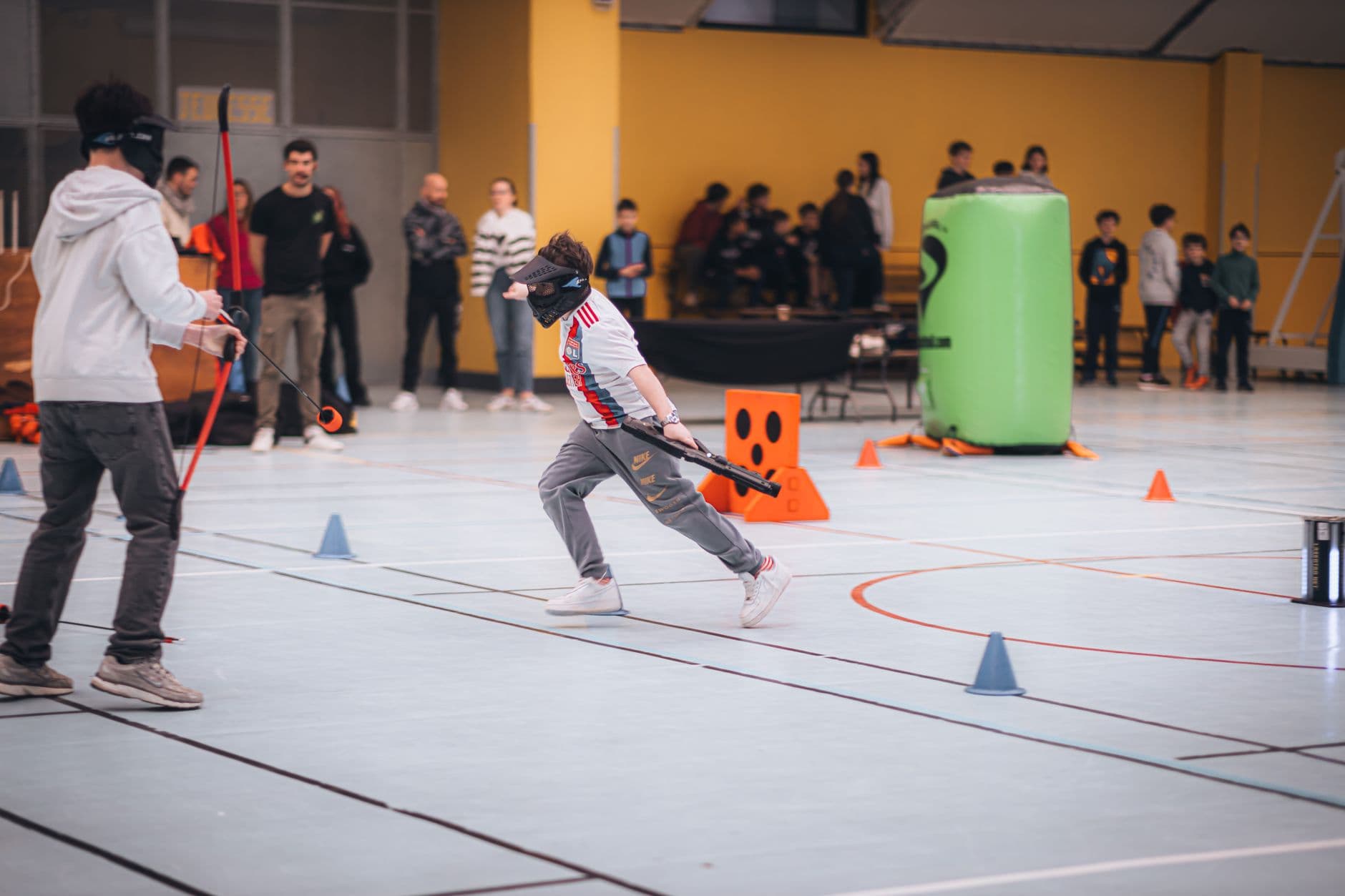
Can two new Hasselt Stix teams turn a niche sport into a small local growth story?
Hasselt Stix is starting with two new teams, according to Het Nieuwsblad, a modest sporting move that is more useful as a local business signal than as a headline-grabbing expansion. In a city of about 90,249 residents after the 1 January 2025 merger with Kortessem, two extra teams mean more training slots, more equipment purchases, more volunteer coordination and a wider route into club sport for families and adult players. The practical question is not whether floorball suddenly becomes a mass-market sport in Limburg. It is whether small clubs can convert rising Flemish participation into sustainable local capacity. Sport Vlaanderen’s latest published club data put Flanders at more than 1.462 million sport-club members in 2024, up by 3,770 on the previous year, across 16,654 clubs affiliated with 73 recognised federations. That is the baseline against which Hasselt Stix’s expansion should be read: a niche club moving inside a crowded but still growing organised-sport market. For households, the impact is concrete. A new team can mean a nearer or more suitable training group for a child, teenager or adult beginner. It can also mean extra costs: membership fees, indoor shoes, sticks, protective eyewear where required, tournament travel and parental time. For local businesses, the effect is smaller but real: sports shops, printers, physiotherapists, cafés near halls, and sponsors can benefit when a club adds fixtures and members. The broader Hasselt context is a city trying to turn population growth, student life and specialised training into durable local activity. Hogeschool PXL, based in Hasselt, lists departments including PXL-Business, PXL-Digital and PXL-MAD School of Arts, while VRT NWS separately reported a new PXL course, Fashion & Technology Futures, linking needlework, design and artificial intelligence. That education story is not the same as the Stix story, but together they point to the same local pattern: Hasselt is building activity through small, specialised communities rather than one dominant industrial anchor. The business risk is capacity. Extra teams require hall time, trained coaches, administration, insurance, federation alignment and stable volunteers. In Flemish sport, growth often fails not because demand is absent, but because clubs cannot turn enthusiasm into weekly, insured, well-managed operations. Sport Vlaanderen’s own policy language puts emphasis on professionalisation, support for sport federations and better club governance, which is exactly where small sports such as floorball depend on public infrastructure and volunteer discipline. For Hasselt Stix, the next test is simple: whether the two new teams can hold enough members through a full season, find consistent coaching, and avoid becoming an extra burden on the same small group of organisers. If they succeed, the club gains a stronger base in a city where sport, education and local services increasingly overlap. If they struggle, the lesson will be just as useful: participation growth needs more than a launch moment.
Verified by Validiris·📚 5 sources·🧠 AI-checked·🇧🇪 Belgian: HighWhy you can trust this
About this story
Hasselt Stix is a Hasselt-based floorball club. The reported launch of two new teams should be understood as a grassroots sport expansion with economic effects through membership fees, equipment, hall use, sponsorship and volunteer labour rather than as a large commercial investment. The related PXL education item in the source cluster concerns a separate Hasselt training development in fashion, technology and AI; it helps frame the city’s wider talent-and-activity ecosystem but is not presented as a direct partner of the club.
How to read this story
The history
Belgian grassroots sport has long depended on local clubs, municipal infrastructure and community federations. In Flanders, Sport Vlaanderen has shifted more attention toward professionalising clubs, supporting federations and improving governance because participation growth creates administrative and coaching demands. Floorball remains a niche compared with football, cycling, padel or gymnastics, but niche sports can grow when they offer lower barriers, mixed-age pathways and indoor access.
Regional impact
The regional impact is concentrated in Hasselt and Limburg. Extra teams can help retain young players and adult beginners locally, but they also add pressure on sports halls and volunteers. Hasselt’s enlarged municipal footprint after the 2025 Kortessem merger gives the city a larger resident base, but also a wider services area to manage.
Local impact
Locally, the launch can create more playing places and modest extra spending on equipment, hall use and match-day activity. The limiting factor is likely to be sport-hall availability and volunteer labour rather than demand alone.
International angle
The international angle is limited. Floorball has a stronger profile in Nordic and Central European sport cultures than in Belgium, but this article is primarily about local Flemish club economics.
What this means for you
For households: check membership fees, equipment requirements, training location and travel before joining. For sponsors: the opportunity is local visibility rather than scale. For the city: two new teams are a useful demand signal when planning indoor sport capacity.
Opposing perspectives
- Volunteer club boards
Club organisers may welcome two new teams as proof of demand, but they also face the hardest economics: hall bookings, insurance, federation administration, coaching schedules and parent communication. Growth can strengthen a club only if the volunteer base expands alongside the playing base.
- Parents and adult beginners
Families and new players may see the launch as better access to a sport that is less saturated than football or padel. Their concern is affordability and reliability: membership fees, equipment, transport and whether the team will still have stable training times after the first season.
- Municipal sport services
Hasselt’s sport administration can view new teams as a participation gain, especially after the city’s enlarged footprint from the Kortessem merger. The trade-off is infrastructure pressure, because every new indoor team competes with schools, established clubs and other users for limited hall hours.
Related to this story


Pulse Insight — This topic connects to 10 associations, 4 funding programmes, 144 upcoming events and 2269 jobs through the Flanders ecosystem.
Live connections from the Belgium Impulse ecosystem — not recommendations.
This briefing was prepared with AI assistance and reviewed by a Belgium Impulse editor before publication. methodology.