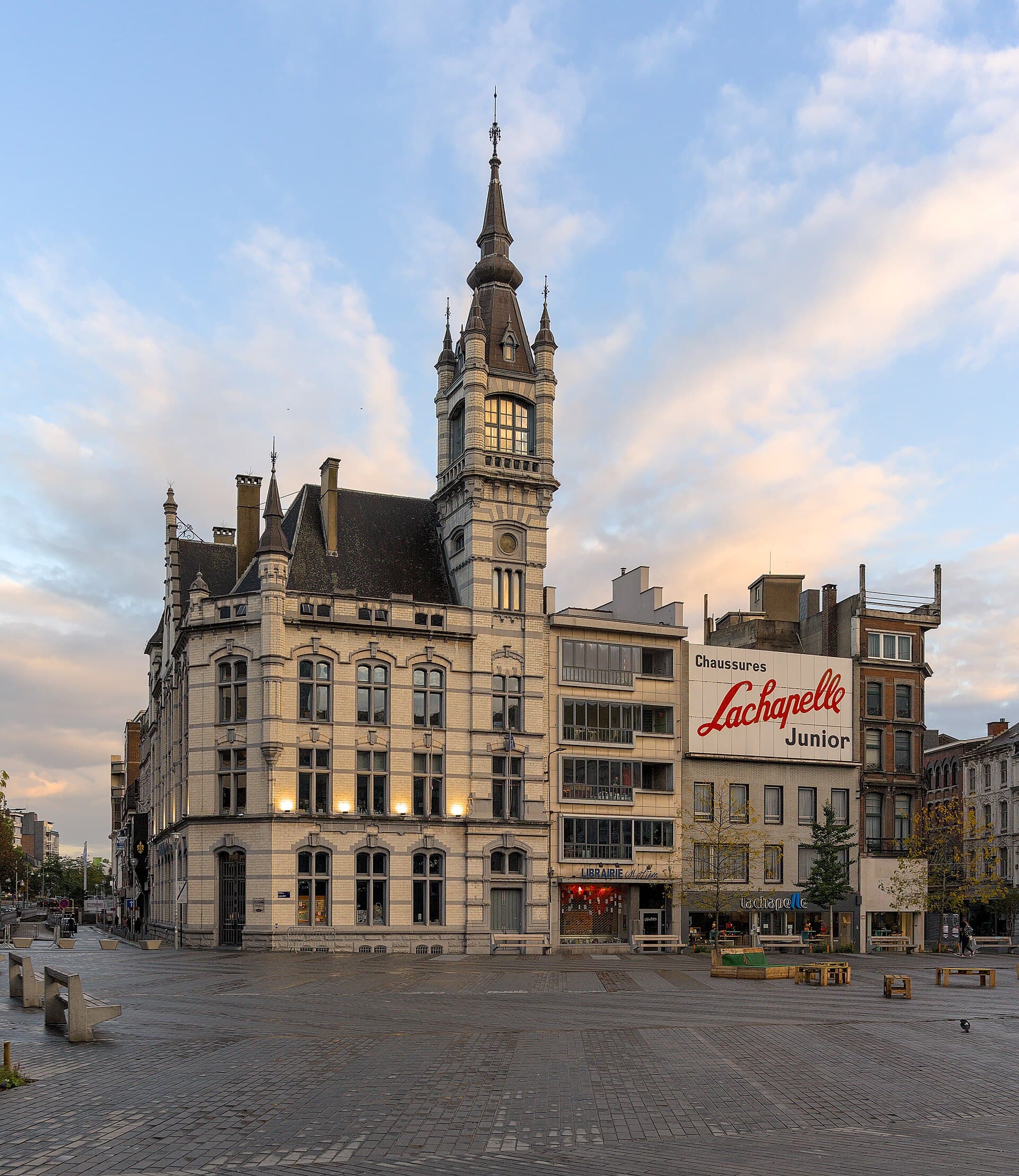
Why is charleroi’s 1,000-plus teachers, pupils and parents still central to the education reform fight?
If you live in charleroi and your child is in school, the immediate takeaway is simple: follow school-level communication, not just social media. As of 7 June 2026, the city has seen repeated mobilisation under the same theme — contre reformes l'enseignement — with teachers, élèves, parents directions d'ecoles in the streets and around schools. The pressure is now mostly about implementation, not whether the decree was voted. For families, the priority is concrete: confirm class calendars, transport alternatives, exam plans and catch-up support with your school direction. For school staff, the core question is how staffing and workload adjustments land in September planning and before the end of the academic year.
Verified by Validiris·📚 10 sources·🧠 AI-checked·🇧🇪 Belgian: HighWhy you can trust this
About this story
The main story is a cycle of protest and policy in the French-speaking education system, with charleroi acting as a pressure point rather than the only battleground. A seed report from early June framed the action as a mobilisation of profs eleves parents and directions d'ecoles rues in front of schools; later local coverage added that on 5 June around 5,000 people passed through charleroi and began from Place Verte. In parallel, the Federation Wallonie-Bruxelles (FWB) pushed a major project-decret (projet de décret-programme) through its parliamentary route, with sessions on 4 and 5 June 2026. The text includes financial and staffing provisions that unions say worsen class conditions and families fear for continuity. The practical conflict is therefore less about symbolism and more about whether day-to-day teaching capacity, student support, and fees remain manageable in 2026-2027. A key practical reading point is the contrast: national-level policy can be adopted quickly, but effects are filtered through schools, school networks and municipal routines. In charleroi, parents are watching this because disruptions often surface locally: school schedules, substitute coverage, and exam organisation. That makes charleroi a useful micro-lens, but the driver remains the FWB-wide package and its execution mechanics.
How to read this story
The history
The dispute fits a broader pattern in the French-speaking educational governance of Belgium, where budget pressure often arrives as package reform and then local conflict escalates by sector and campus. In this cycle, the public narrative has repeated in waves: teachers’ syndicates mobilise first around workload and staffing, then students and parents join, and parliamentarian pressure peaks when a decree reaches the plenum. This follows previous cycles in which policy detail is less visible at launch and becomes concrete through school-level execution.
Regional impact
The local impact is concentrated in school-facing behaviour: assemblies, pickets, route-based visibility and more school-level communication stress. Charleroi schools, particularly around Place Verte, have already been used as staging points, with messages relayed from union meetings to families via directions d'ecoles and municipal channels. In practice, this raises planning friction for secondary students, school transport and exam coordination, even without a formal citywide closure.
Local impact
If your child is in charleroi, this is felt first through school messages, transport changes around demonstrations, and substitute teacher coverage. Watch directions d'ecoles in your zone for class continuity notices, especially if mobility from secondary schools or options classes is affected.
What this means for you
Checklist for parents and students in charleroi (as of 7 June 2026): 1) Confirm your school’s official communication channel (official email/SMS/portal) and archive every update. 2) If you are outside routine school age timing, compare your child’s status with municipal enrollment rules from the Charleroi education page; late enrolment is handled through defined channels with deadlines. 3) If your child is in secondaire and your household is worried about repeated absences or substitute shortages, ask for written contingency arrangements from the direction. 4) For higher-education families, track changes linked to minerval and check eligibility reductions with the school's student office early. 5) If you need bilingual support, ask the school if interpretation or language support is available before formal deadlines, as most notices are predominantly in French.
Opposing perspectives
- Governing coalition (MR/Les Engagés) view
The executive coalition frames the reform as a budget reality and argues the package is a difficult but necessary correction of structural deficits. In this framing, the measure set is designed to stabilise finances and protect the long-term ability to fund education. Supporters of this line point to the political cost but present the decree as a macro-governance choice: fewer hidden deficits, more transparent financing rules and tighter management at sector level. For this view, mobility and fee changes are seen as part of a broader fiscal repair, not an anti-school agenda.
- Teachers’ front and union position
Teacher representatives and school workers describe the measure as a direct hit on working conditions: rising workload, tighter absence rules, and less flexibility in staffing continuity. Their concern is that budget savings do not stop at accounting pages; they appear in class-size pressure, replacement capacity and support-to-student ratios. Front-communal mobilisations in charleroi emphasise that quality and staffing are linked, and that cuts are transferred to front-line schools where pupils and families bear the consequences first.
- Opposition parties and civil actors
Opposition parties in the French-speaking parliamentary field frame the reform as politically rushed and socially unbalanced, arguing that mass mobilisation had not been meaningfully absorbed before the vote. This position highlights parents directions d'ecoles, élèves and students as additional constituencies beyond unions. The critique is less about rejecting budgets in principle and more about process: they argue the government moved too quickly from a contested draft to a final vote and downplayed real local implementation strain.
- Students and parent groups at street level
A broad segment of protest participants accepts that budget pressure exists but wants a guaranteed educational floor: predictable course completion, clear substitution coverage, and stable pathways to higher education. Their practical demand is not ideological only; it is continuity of teaching. These actors emphasise that the real test is not parliamentary wording alone, but whether the rentrée in schools remains workable for children who can’t absorb repeated disruptions.
Related to this story

Pulse Insight — This topic connects to 10 associations, 4 funding programmes, 89 upcoming events and 12389 jobs through the Wallonia ecosystem.
Live connections from the Belgium Impulse ecosystem — not recommendations.
This briefing was prepared with AI assistance and reviewed by a Belgium Impulse editor before publication. methodology.