What does Daniel V.’s arrest mean for Germany’s power-grid sabotage investigation?
German police arrested Daniel V. near Weisweiler power station on 8 September after a days-long search over suspected electricity-grid sabotage.
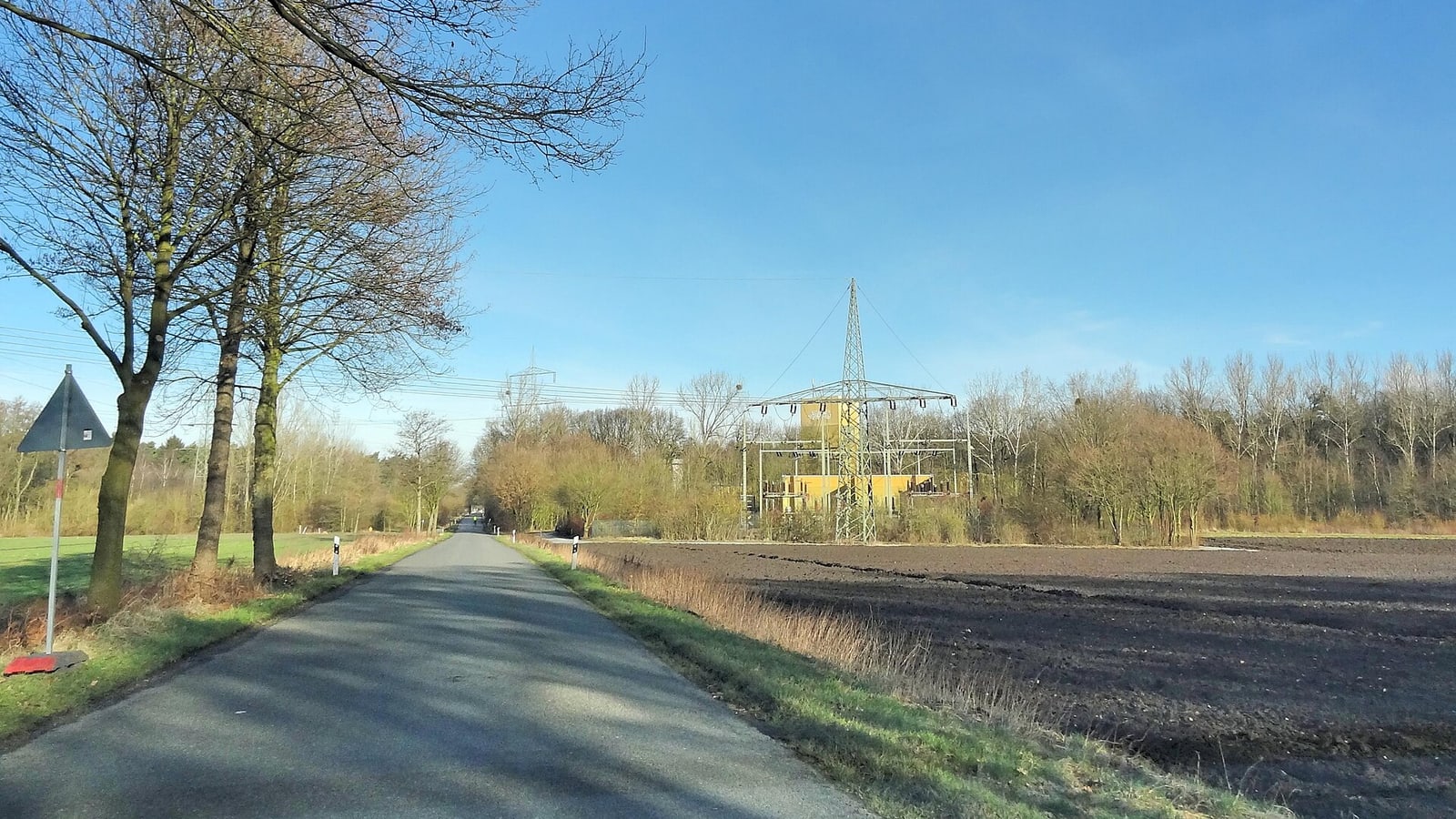
In 30 seconds
- Police confirmed the arrest near Weisweiler on 8 September.
- AP reported that general supplies continued after the initial substation incidents despite equipment disruption.
- Responsibility for all subsequently discovered devices remains unresolved.
- No verified Belgian bill impact or total financial loss is established.
German police arrested the man identified in media reports as Daniel V. near Weisweiler power station on Tuesday morning, 8 September, following a search over suspected electricity-grid sabotage. Reuters corroborated the arrest. The investigation follows attacks at two substations on 1 September: equipment was disrupted, but general electricity supplies in both areas continued, according to [AP’s initial reporting](https://apnews.com/article/ef9c21908f232651d056d7462330e2b7). That distinction matters for households and businesses trying to understand whether a serious security incident also became an electricity emergency.
In their [joint announcement](https://embed.presseportal.de/de/12415/article/6347922), Cologne police and prosecutors said officers encountered the suspect near the plant and that he offered no resistance. They reported finding explosive material in his possession and additional charges at a nearby tent. Specialists were examining the objects while officers searched for further devices. The arrest therefore changes the investigation’s immediate focus, but does not establish that the surrounding area has been cleared or that every incident has been explained.
The earlier disruptions were geographically far apart. AP reported that devices were discovered at a substation near the Jänschwalde coal-fired plant in Brandenburg, eastern Germany, before a separate incident affected lines at Bergheim, near Cologne. For an electricity operator, losing equipment and losing supply to customers are different outcomes. The available reporting establishes the former at these initial locations, without establishing the latter.
Dutch-language coverage helps explain why the search intensified. [Nieuwsblad reported on 4 September](https://www.nieuwsblad.be/buitenland/klopjacht-gaande-naar-klimaatactivist-48-die-aanslagen-op-duitse-elektriciteitscentrales-opeist-in-brief-ik-heb-ze-veroorzaakt/160992891.html) that letters claiming responsibility had reached police and journalists. Its account identified Amprion as the operator of the Bergheim electricity station and described a subsequent discovery of suspicious equipment at Dormagen. The newspaper also reported investigators’ initial caution: a claim of responsibility needed checking against evidence before its author could be treated as the perpetrator.
That caution remains necessary after an arrest. [De Standaard’s earlier account](https://www.standaard.be/buitenland/duitse-politie-jaagt-op-klimaatextremist-daniel-v.-die-sabotagepogingen-tegen-stroomnet-opeiste-in-handgeschreven-brief/161037915.html) described additional suspected devices in Saxony and said police were investigating whether they were connected. [Tagesschau’s arrest coverage](https://www.tagesschau.de/inland/festnahme-strom-saboteur-100.html) likewise said attribution of the latest equipment and a letter found near Weisweiler remained unclear. Similar discoveries should not automatically become a single proven sequence of offences. The evidence must connect the suspect to each alleged act.
The authorities’ interpretation of motive is more specific than the evidence publicly available about every location. In [reporting on their 4 September press conference](https://www.tagesschau.de/inland/innenpolitik/sabotageversuche-dobrindt-reul-100.html), Tagesschau said federal Interior Minister Alexander Dobrindt considered climate extremism the likely motive and that early findings pointed towards an individual acting alone. North Rhine-Westphalia Interior Minister Herbert Reul described letters whose author presented the attacks as opposition to fossil-fuel production. Those are attributed assessments and statements, not a judicial finding or grounds to assign responsibility to the wider climate movement.
The economic issue is the reliability of the system connecting generators to customers. A household needs electricity for refrigeration and communications; a business may depend on uninterrupted power for production, payments or temperature-controlled storage. These are the practical stakes of grid disruption, rather than documented losses from this case. None of the sources reviewed provides a verified total for repair costs, business interruption or a resulting change in electricity prices. Assigning a euro figure to the consequences would go beyond the evidence.
The broader setting is Germany’s debate over protecting essential infrastructure. At its [4 September briefing](https://www.bundesregierung.de/breg-de/suche/regierungspressekonferenz-vom-4-september-2026-2451572), the federal government discussed systematic risk assessment, operators’ resilience measures and reporting of serious incidents. The business question is how effectively those obligations translate into protection and recovery. An arrest may reduce one immediate threat; it cannot, by itself, demonstrate that an electricity network can withstand another disruption.
Belgium has a concrete but limited connection through Elia and its German counterpart Amprion. Their [February 2023 statement](https://www.elia.be/-/media/project/elia/shared/documents/press-releases/2023/20230214_pressrelease-elia-amprion_en_v2.pdf) records that the ALEGrO interconnector began operating in November 2020. As a historical illustration of two-way dependence, electricity flowed towards Belgium during 63% of the time in 2022, compared with 37% towards Germany. Those figures describe an earlier year, not conditions during the attacks. The statement also explains how interconnection supports supply security and access to renewable electricity. It provides no evidence that ALEGrO was affected by this case, or that Belgian household bills will change because of it.
There is also a reason to separate this investigation from wider geopolitical anxiety. The [German government attributed a different attempted attack at Leipzig/Halle Airport to Russia](https://www.bundesregierung.de/breg-de/schwerpunkte/wirksam-regieren/reaktion-angriff-leipzig-2451522). That separate allegation does not establish foreign involvement here. For this case, the next useful developments are forensic findings, clarification of which incidents prosecutors link to Daniel V., and information on any remaining operational disruption. The reviewed reporting establishes an arrest, not a conviction; a verified damage assessment and the suspect’s response remain missing.
What to do
The available evidence gives Belgian households no basis to expect a bill increase or change electricity contracts because of this arrest.
The Belgian angle
The investigation concerns locations in western and eastern Germany. No direct Belgian operational impact is established by the reviewed sources.
EvidenceWell established · 1 primary source + 3 official documents + 2 independent reporting sources · Background sources: 4Explore evidence →Hide evidence ↑
- Published:
- 8 Sept 2026, 02:00
- Retrieved by ODIN:
- 8 Sept 2026
- Published:
- 8 Sept 2026, 02:00
- Retrieved by ODIN:
- 8 Sept 2026
- Published:
- 2 Sept 2026, 02:00
- Retrieved by ODIN:
- 8 Sept 2026
- Published:
- 4 Sept 2026, 02:00
- Retrieved by ODIN:
- 8 Sept 2026
- Publication date unavailable
- Retrieved by ODIN:
- 8 Sept 2026
- Published:
- 8 Sept 2026, 02:00
- Retrieved by ODIN:
- 8 Sept 2026
- Published:
- 4 Sept 2026, 02:00
- Retrieved by ODIN:
- 8 Sept 2026
- Published:
- 4 Sept 2026, 02:00
- Retrieved by ODIN:
- 8 Sept 2026
- Published:
- 14 Feb 2023, 01:00
- Retrieved by ODIN:
- 8 Sept 2026
- Published:
- 4 Sept 2026, 02:00
- Retrieved by ODIN:
- 8 Sept 2026
Continue reading


This story was assembled from verified evidence, with its sources and reasoning recorded as it was written.
This briefing was prepared with AI assistance and passed Belgium Impulse source, provenance and publication-quality checks. methodology.