Antwerp joins Germany’s ICE network as direct Cologne trains begin
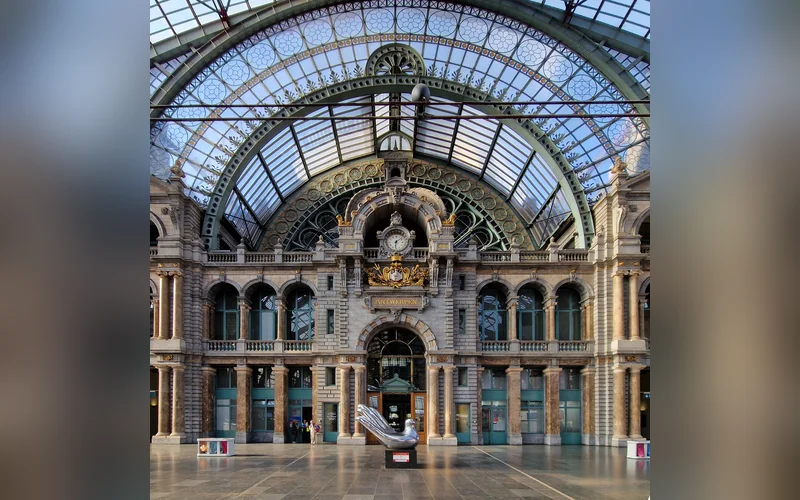
Deutsche Bahn and NMBS launched a direct Antwerp–Cologne ICE service on 7 September 2026, with the first train arriving at Antwerpen-Centraal that morning.
In 30 seconds
- The service began on 7 September 2026.
- Deutsche Bahn publishes two departures daily in each direction.
- Journey times differ between departures and directions.
- Standalone train tickets and combined rail-and-flight bookings are available.
Deutsche Bahn and Belgian railway operator NMBS launched their direct Antwerp–Cologne ICE service on Monday, 7 September 2026, when the inaugural train from Germany arrived at Antwerpen-Centraal. NMBS confirmed the arrival, marking Antwerp’s entry into the ICE network and a new international connection for Leuven and Brussels Airport. [NMBS’s launch announcement](https://press.nmbs.be/antwerpen-voor-het-eerst-rechtstreeks-verbonden-met-duitsland-via-ice-hogesnelheidstrein) identifies the intermediate stops as Brussels Airport-Zaventem, Leuven, Liège-Guillemins and Aachen.
For passengers, the immediate gain is a journey without changing trains. Deutsche Bahn’s published timetable provides two departures each way daily: Antwerp departures at 11:01 and 19:01 reach Cologne at 13:24 and 21:24. The reverse journeys are longer, taking approximately two hours 47 minutes and two hours 19 minutes respectively. That distinction matters when planning a visit: the widely advertised journey of around two hours 20 minutes does not describe every departure. [Deutsche Bahn’s timetable](https://www1.deutschebahn.com/de/presse/pressestart_zentrales_uebersicht/Ab-sofort-und-ohne-Umstieg-ICE-verbindet-Koeln-mit-Bruesseler-Flughafen-und-Antwerpen-14029908) also shows that the first direct train from Antwerp arrives too late for a morning appointment in Cologne.
NMBS advertises tickets from €29.99. Travellers should treat that as a starting price and check their intended departure before budgeting. The airport confirms that passengers can buy a standalone rail ticket through NMBS International or Deutsche Bahn; flying is optional. Its [Dutch-language passenger information](https://www.brusselsairport.be/nl/neighbours-and-spotters/blog/met-de-hst-van-brussels-airport-naar-keulen) gives airport-to-Cologne travel time as one hour 55 minutes.
Behind the shared welcome are different ideas about what the connection should achieve. Antwerp mayor Els van Doesburg emphasised the city’s economic appeal, saying, in translation, “We also strengthen our competitiveness.” Federal Mobility Minister Jean-Luc Crucke called it “a first step” towards further international services. Both comments appear in NMBS’s announcement. Their test of success extends beyond the first train: will easier access translate into more visits, business links and useful travel choices?
Brussels Airlines presents a different commercial priority. Chief financial officer Nina Öwerdieck said the partnership could bring more passengers into its network “without having to operate additional flights,” translated from the airport’s [launch statement](https://pressroom.brusselsairport.be/eerste-hogesnelheidstrein-van-deutsche-bahn-op-brussels-airport-in-samenwerking-met-brussels-airlines-voor-gecombineerd-trein-en-vliegticket). The airport reported more than 1,000 combined rail-and-flight tickets sold since the partnership was announced. These are complementary ambitions, rather than an established dispute: the same train serves passengers whose destination is a city and passengers whose journey continues by air.
That second market was explicit from the outset. In the [February announcement](https://pressroom.brusselsairport.be/nieuwe-hogesnelheidstrein-tussen-keulen-en-brussels-airport-van-deutsche-bahn-in-codeshare-met-brussels-airlines), Brussels Airlines chief executive Dorothea von Boxberg highlighted western Germany’s communities with roots in sub-Saharan Africa as potential customers for its African connections. The combined booking gives the rail journey an airline flight number and includes a connection guarantee in the event of delays, according to the announcement. Passengers buying separate tickets should check the applicable conditions rather than assume the same protection.
The broader significance is how the partners join existing journeys together. Deutsche Bahn reports that passenger numbers on Belgium–Germany ICE services rose approximately 18% between 2019 and 2025. Brussels Airport says the launch restores its international high-speed connection after a gap dating from 2015. Together, those developments illustrate a railway serving both demand for travel between neighbouring countries and an airport’s ambition to attract passengers from farther away. Neither purpose alone explains the route.
The next test is everyday usefulness. Two departures leave limited flexibility when plans change, while the launch material provides no sustained punctuality record or route-specific passenger totals. Travellers should consult the booking timetable: the airport’s press release lists an afternoon departure towards Cologne that conflicts with the evening Antwerp departure published by both railway operators. Further expansion remains an ambition; the reviewed announcements provide no confirmed timetable for additional services.
What to do
Check the live timetable for both directions and the conditions attached to separate or combined tickets.
The Belgian angle
Antwerp and Leuven gain direct access to Germany; the airport stop serves Zaventem in Flemish Brabant, rather than central Brussels.
EvidenceWell established · 4 official documents · Background sources: 1Explore evidence →Hide evidence ↑
- Published:
- 7 Sept 2026, 02:00
- Retrieved by ODIN:
- 9 Sept 2026
- Published:
- 7 Sept 2026, 02:00
- Retrieved by ODIN:
- 9 Sept 2026
- Published:
- 7 Sept 2026, 02:00
- Retrieved by ODIN:
- 9 Sept 2026
- Published:
- 26 Feb 2026, 01:00
- Retrieved by ODIN:
- 9 Sept 2026
- Published:
- 7 Sept 2026, 02:00
- Retrieved by ODIN:
- 9 Sept 2026
Continue reading

This story was assembled from verified evidence, with its sources and reasoning recorded as it was written.
This briefing was prepared with AI assistance and passed Belgium Impulse source, provenance and publication-quality checks. methodology.