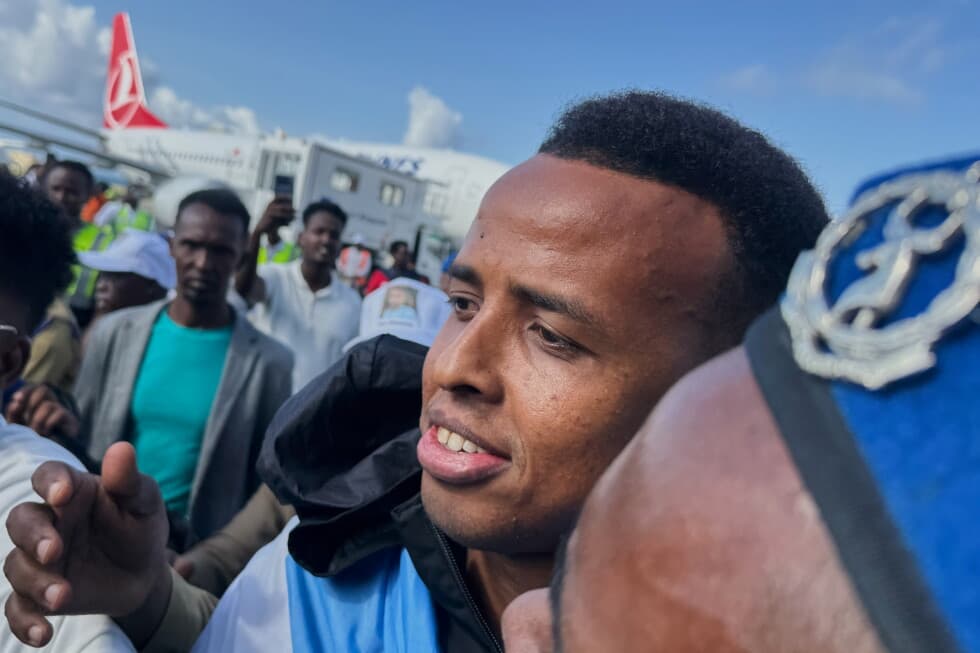
U.S. officials bar Somali referee Omar Artan from World Cup duty
U.S. border officials have blocked Somali referee Omar Artan from entering the United States, removing one of the 2026 FIFA World Cup's selected match officials days before the tournament opened. U.S. Customs and Border Protection said Artan was refused entry at Miami International Airport over unspecified vetting concerns, while FIFA confirmed that he would be unable to train or officiate and said host-country authorities decide who is admitted. FIFA's April match-official list had included Artan among 52 referees for the expanded tournament. The White House's June 2025 entry proclamation fully restricts Somali nationals but also states that athletes and necessary support personnel travelling for the World Cup are exempt from the suspension. Artan's exclusion has therefore become more than an individual setback: it tests FIFA's ability to guarantee access for officials and exposes how host-country security policy can shape the sporting field.
Evidenced on the trust ledger·📚 6 sources·🧠 AI-checked·🇧🇪 Belgian: LowWhy you can trust this
Trump's America: From the First Term to Now
A living dossier on Donald Trump's political project, from the 2016 victory through the post-2020 contested period to his return to the White House in January 2025 — and the political, legal, economic and institutional consequences still unfolding.
About this story
Omar Artan (Somali football referee, FIFA-listed since 2018) was selected for the 2026 FIFA World Cup before being refused U.S. entry. FIFA (the Zurich-based world football governing body, founded in 1904) appoints World Cup match officials but does not control national borders. U.S. Customs and Border Protection (U.S. federal border agency under the Department of Homeland Security) decides admissibility at ports of entry such as Miami International Airport (major Florida airport and World Cup officials' training gateway). Somalia (Horn of Africa state whose nationals are covered by U.S. entry restrictions) has celebrated Artan as a rare elite sporting figure. Mogadishu (Somalia's capital) hosted his return. Hamza Abdi Barre (Somalia's prime minister since 2022) publicly praised him. The 2026 FIFA World Cup (June 11-July 19, 2026, co-hosted by the United States, Mexico and Canada) is the first 48-team men's World Cup. Bram Van Driessche (Belgian video assistant referee) is listed by FIFA among the tournament officials.
How to read this story
The history
World Cup access has been politically sensitive before. During the 2026 bidding process, FIFA and U.S. officials faced questions about whether travel restrictions would affect qualified teams, officials and fans. The White House's June 4, 2025 proclamation revived broad entry restrictions and included Somalia among fully restricted countries, while creating a World Cup-related exemption for athletes and necessary support roles. Earlier tournaments used special access systems: Brazil created temporary visas for 2014 ticket holders, Russia used Fan IDs in 2018, and Qatar used Hayya cards in 2022. Artan's case shows the 2026 model remains dependent on ordinary U.S. border discretion.
The bigger picture
The broader issue is how security politics now enters global sport. The United States frames its entry restrictions around terrorism, document reliability and public safety; football authorities frame the World Cup around universal access and merit. Artan's case shows how those logics can collide when participants come from states treated as security risks by the host country.
Why now
The trigger is Artan's refusal at Miami International Airport days before the World Cup opened on June 11, 2026. His return to Mogadishu on June 10 made the exclusion public and politically visible.
What to watch
Watch whether FIFA names a formal replacement, whether U.S. authorities clarify how the World Cup exemption applies to match officials, and whether further entry cases affect teams, media or supporters during the group stage.
International angle
The case sits at the junction of a global tournament and U.S. sovereign border power. FIFA can appoint officials and negotiate host guarantees, but the United States decides admissibility. That matters beyond Somalia because the 2026 World Cup involves teams, fans and media from countries facing very different U.S. visa and entry conditions.
What this means for you
For Belgian readers travelling to World Cup matches, the practical lesson is that a visa or travel authorisation is not the same as guaranteed entry. For football viewers in Belgium, the main implication is competitive: officiating appointments can change late when host-country border decisions intervene.
What happens next
FIFA is expected to proceed without Artan and adjust match-official assignments from its remaining referee pool. U.S. authorities could face further scrutiny if other players, officials, journalists or supporters encounter entry problems. The next signals are practical: whether replacements are named smoothly, whether FIFA seeks clearer guarantees, and whether any national federation publicly challenges U.S. border decisions during the tournament.
Potential consequences
Artan's exclusion could make teams and officials from restricted or heavily scrutinised countries more cautious about travel routes, documentation and arrival timing. It may also intensify pressure on FIFA to disclose how it handles host-country access failures. If more cases follow, the tournament risks being judged not only on football and logistics but on whether qualified participants and supporters can actually enter the host country.
Opposing perspectives
- U.S. border authorities / White House
U.S. Customs and Border Protection said Artan was inadmissible because of vetting concerns, and the White House proclamation frames country restrictions as national-security screening measures. This view treats the World Cup exemption as subordinate to border officers' final admissibility powers at the port of entry.
- FIFA leadership
FIFA confirmed Artan could not train or officiate but argues that immigration decisions belong to host governments. Its strongest position is institutional: the football body appoints officials and seeks solutions, yet it cannot override sovereign visa and border-control decisions.
- Somali government and football community
Somalia's prime minister praised Artan as a national figure, while Somali football officials argue that his exclusion damages merit and fair play. Their strongest case is that a referee selected through football criteria lost the stage through opaque border enforcement.
- Sport & Rights Alliance / Human Rights Watch
The Sport & Rights Alliance argues that FIFA should use its leverage to secure binding guarantees for teams, officials, media and fans. This frame sees Artan's case as evidence that immigration policy can undermine the tournament's promised openness.
Timeline
- 2025-06-04·The White House issued a proclamation restricting entry for nationals of several countries, including Somalia, with a World Cup-related exemption.
- 2026-04-09·FIFA's final match-official list included Omar Artan among 52 referees selected for the 2026 World Cup.
- 2026-06-06·U.S. Customs and Border Protection refused Artan entry at Miami International Airport, citing vetting concerns.
- 2026-06-10·Artan returned to Mogadishu and was welcomed by Somali supporters and officials.
- 2026-06-11·The 2026 FIFA World Cup opened across the United States, Mexico and Canada.
Glossary
- VAR
- Video assistant referee, an official who reviews match incidents using video and advises the on-field referee.
- CBP
- U.S. Customs and Border Protection, the federal agency that checks travellers and decides admissibility at U.S. ports of entry.
- FIFA
- The international governing body for football, responsible for organising the men's and women's World Cups.
Related to this story

Live connections from the Belgium Impulse ecosystem — not recommendations.
This briefing was prepared with AI assistance and reviewed by a Belgium Impulse editor before publication. methodology.