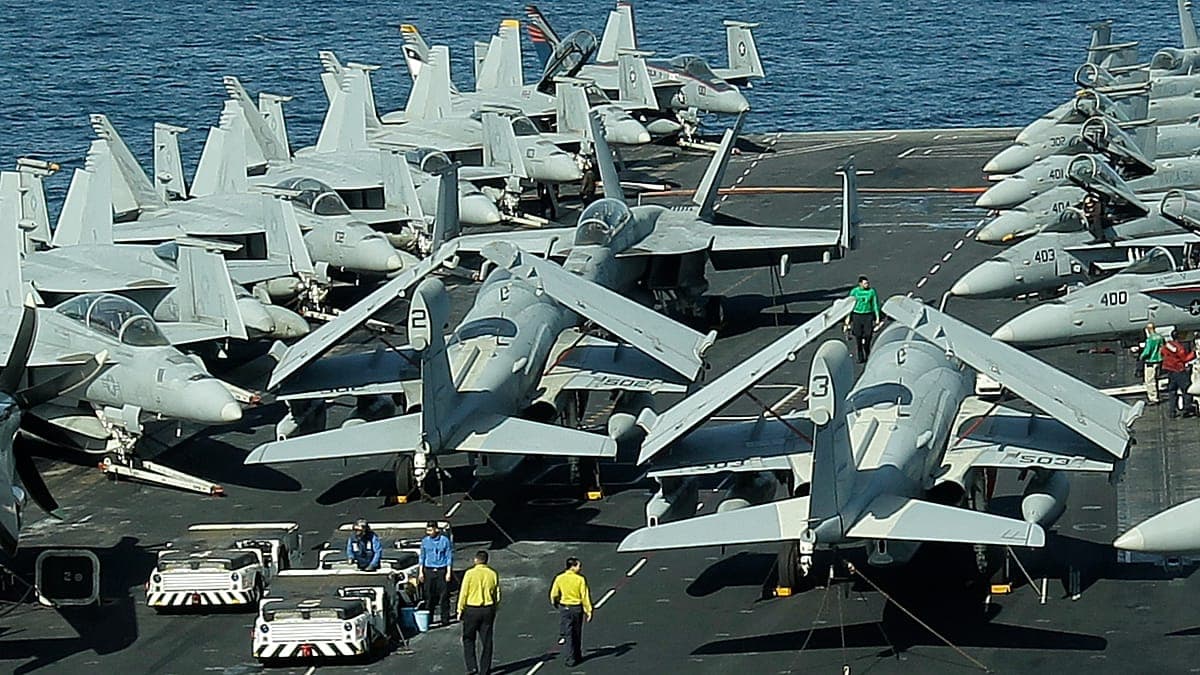
U.S. disables tanker as Iran crisis pushes Hormuz closer to war
U.S. forces disabled another tanker near the Strait of Hormuz as Washington tightened enforcement of its blockade on Iranian oil movements, while Iran said the waterway was closed to all vessels. U.S. Central Command said the strike targeted the M/T Jalveer after the crew failed to follow orders, and President Donald Trump threatened broader action against Iran's oil and gas sector, including Kharg Island. India's shipping minister said a separate U.S. strike this week killed three Indian sailors, raising the diplomatic cost of blockade enforcement. Iran's Foreign Ministry said the renewed U.S. attacks had made the ceasefire effectively meaningless, while Gulf states hosting U.S. troops reported Iranian fire and airspace disruption. For Europe and Belgium, the immediate concern is energy and shipping risk: EIA data identifies Hormuz as a critical oil chokepoint, and fresh instability can feed fuel, freight and inflation pressure.
Verified by Validiris·📚 6 sources·🧠 AI-checked·🇧🇪 Belgian: MediumWhy you can trust this
Trump's America: From the First Term to Now
A living dossier on Donald Trump's political project, from the 2016 victory through the post-2020 contested period to his return to the White House in January 2025 — and the political, legal, economic and institutional consequences still unfolding.
About this story
The Strait of Hormuz (narrow sea passage between Iran and Oman) links the Persian Gulf to global energy markets. M/T Jalveer (Guinea-Bissau-flagged tanker named by U.S. Central Command) is the vessel U.S. forces said they disabled. Kharg Island (Iranian Persian Gulf oil terminal near the mainland) handles most Iranian crude exports, according to energy-market reporting. U.S. Central Command (American military command responsible for the Middle East) directs U.S. operations in the area. Iran's Islamic Revolutionary Guard Corps (Iranian military-political force with naval units in the Gulf) has enforced Tehran's Hormuz posture. Sarbananda Sonowal (India's ports, shipping and waterways minister) announced the deaths of Indian sailors from a separate tanker strike. The International Maritime Organization (UN agency for shipping safety, founded in 1948) is relevant because merchant-vessel attacks raise maritime-law and crew-safety concerns.
How to read this story
The history
The crisis echoes earlier tanker-war dynamics in the Gulf. During the 1980-1988 Iran-Iraq war, both sides attacked shipping and the United States reflagged Kuwaiti tankers under Operation Earnest Will in 1987. More recently, Iran seized or harassed vessels during Gulf tensions in 2019 and 2024, while Western governments used naval patrols and sanctions to deter attacks. The present episode is sharper because U.S. Central Command says it is enforcing a blockade, while Iran's Foreign Ministry says the ceasefire has been hollowed out by U.S. strikes.
The geopolitics
The broader contest is over coercive leverage. Washington is using maritime power and threats against Iran's oil infrastructure to pressure Tehran; Iran is using geography, the Strait of Hormuz and the risk to Gulf bases to raise the cost of that pressure. China, India and Europe are not the main belligerents, but their energy security is shaped by the outcome.
Why now
The story is timely because U.S. Central Command said it disabled another tanker after renewed U.S. strikes on Iran, while Iran announced a harder closure posture for Hormuz and Washington threatened Iran's oil sector.
What to watch
Watch whether India escalates its protest over sailor deaths, whether the IMO or UN Security Council takes up merchant-vessel safety, whether Brent and European gas benchmarks move sharply, and whether Washington or Tehran announces a negotiation channel despite the strikes.
Local impact
The most concrete Belgian exposure sits in the port and logistics economy around Antwerp-Bruges, where petrochemicals, fuel distribution and container-linked supply chains are sensitive to energy and freight costs. No Belgian authority has announced a specific local measure tied to this tanker strike, so the impact remains an indirect market and planning risk.
International angle
The episode crosses U.S.-Iran military confrontation, Indian crew casualties, Gulf-state security and European energy policy. It also tests the rules around commercial shipping in a conflict zone: a tanker strike can quickly become a diplomatic issue for flag states, crew states, insurers, the IMO and governments trying to keep oil moving without joining the war.
What this means for you
Belgian readers should expect volatility rather than an immediate domestic rule change. Fuel prices, air fares, shipping surcharges and energy-intensive goods could move if the disruption lasts. Businesses with Gulf-linked supply chains should monitor war-risk insurance, freight delays and contract clauses; households mainly face the issue through fuel and consumer-price pressure.
What happens next
U.S. Central Command could continue interdictions while Washington tests whether military pressure can restart negotiations. Iran may retaliate through the Strait of Hormuz, Gulf bases, proxy forces or diplomatic channels. Watch for confirmation of ship damage, crew casualties, Indian and IMO follow-up, oil-price moves and any EU or UN effort to separate maritime safety from the wider U.S.-Iran conflict.
Potential consequences
If U.S. enforcement keeps disabling tankers, neutral shipping states may protest more forcefully and insurers may demand higher war-risk premiums. That could reduce traffic even without a formal full closure. For Belgian readers, the plausible second-order effects are higher diesel and aviation costs, more expensive imported goods, pressure on chemical and fertiliser-linked supply chains, and a harder EU debate over whether to align with, distance from or mediate U.S. strategy.
Opposing perspectives
- U.S. administration
The U.S. administration argues that blockade enforcement is a pressure tool designed to stop Iranian oil movements and compel Tehran back toward terms Washington considers acceptable. U.S. Central Command says its strikes followed warnings and targeted vessels or military systems linked to continued Iranian aggression, not a wider war for its own sake.
- Iranian government
Iran's Foreign Ministry says the U.S. attacks have made the ceasefire effectively meaningless and frames the blockade as coercion rather than diplomacy. Tehran's strongest argument is that negotiations cannot be credible while U.S. forces strike Iranian territory and merchant shipping tied to its oil trade.
- Maritime-safety community
The International Maritime Organization condemned the attack on a merchant vessel, reflecting a shipping-safety view that blockade enforcement must not normalize lethal force against commercial crews. This frame treats the tanker strikes less as tactical military episodes and more as a threat to seafarers, insurers and neutral shipping.
- European energy-security policymakers
European energy-security officials would read the episode through supply resilience: even if Europe imports less Gulf crude than Asian buyers, EIA data identifies Hormuz as a critical chokepoint, so prolonged disruption can still raise fuel, gas, freight and fertiliser costs across EU markets.
Timeline
- 1987·The United States began reflagging Kuwaiti tankers during the Iran-Iraq tanker war under Operation Earnest Will.
- 2026-02-28·The current U.S.-Iran war phase began with U.S. and Israeli strikes on Iran, according to reporting on the crisis.
- 2026-04-13·U.S. blockade enforcement against Iranian ports began after failed talks, according to reporting on the blockade.
- 2026-06-10·U.S. strikes on Iran expanded after the downing of a U.S. helicopter near Hormuz, according to reporting on the escalation.
- 2026-06-11·U.S. Central Command said it disabled the M/T Jalveer while Iran said the Strait of Hormuz was closed to vessels.
Glossary
- Strait of Hormuz
- A narrow sea passage between Iran and Oman linking the Persian Gulf with the Gulf of Oman and global energy markets.
- U.S. Central Command
- The U.S. military command responsible for operations across the Middle East and surrounding waters.
- War-risk premium
- An extra insurance cost charged when ships operate in areas where conflict, mines, missiles or seizure risks are elevated.
- Blockade
- A military effort to stop vessels or goods entering or leaving a defined coast, port or maritime zone.
Related to this story
Live connections from the Belgium Impulse ecosystem — not recommendations.
This briefing was prepared with AI assistance and reviewed by a Belgium Impulse editor before publication. methodology.