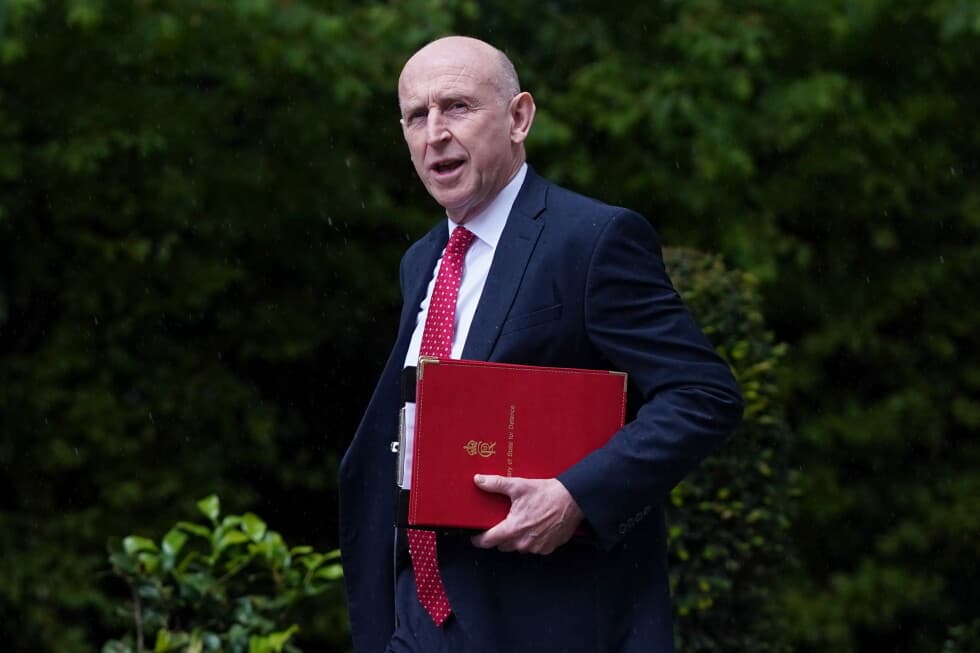
John Healey resigns as UK defence secretary over military funding
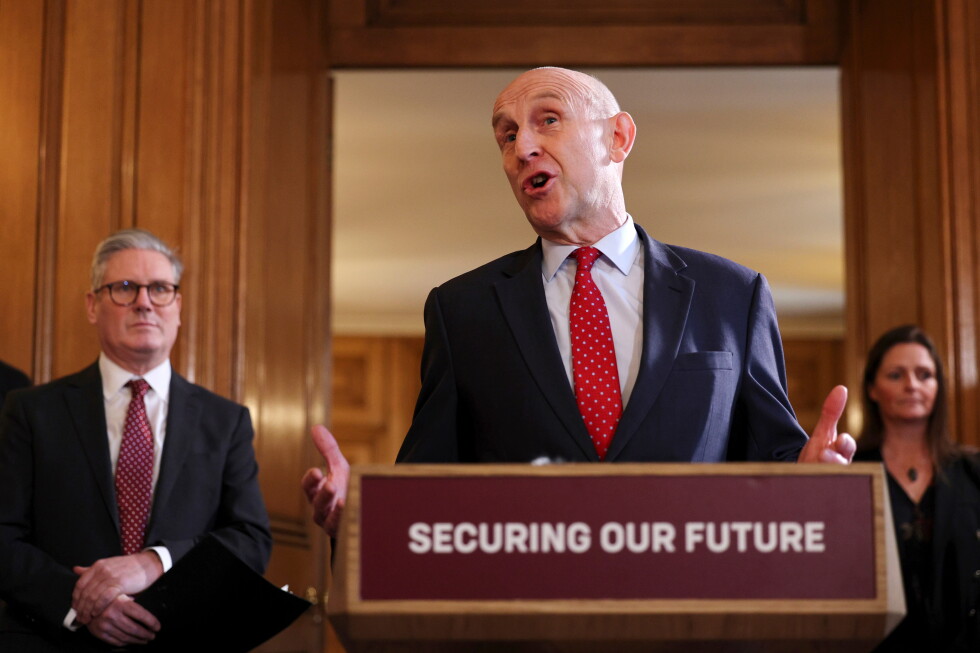
John Healey resigned as UK defence secretary on 11 June 2026 after rejecting Prime Minister Keir Starmer's Defence Investment Plan, turning a budget dispute into a security and leadership crisis. Healey said the Treasury-backed settlement would lift defence spending from 2.6% of GDP next year to only 2.68% by 2030, short of the 3% he argued was needed before the UK moves toward a 3.5% core-defence target by 2035. The UK government says it is delivering the largest sustained defence increase since the Cold War, but the resignation exposes the fiscal trade-off behind NATO's post-Ukraine spending demands: higher readiness, more industry capacity and support for Ukraine must be paid for through taxes, borrowing or cuts elsewhere. For Belgium and EU readers, the direct issue is allied credibility inside NATO, whose political and military headquarters are in Brussels.
Verified by Validiris·📚 7 sources·🧠 AI-checked·🇧🇪 Belgian: MediumWhy you can trust this
Ukraine: From Soviet Independence to a War of Attrition
Russia's war on Ukraine, situated in three decades of post-Soviet history — independence (1991), Crimea (2014), Donbas, the February 2022 full-scale invasion, the current war of attrition, and the live debate over Western support and peace terms.
About this story
John Healey (Labour MP for Rawmarsh and Conisbrough and UK defence secretary from July 2024 until 11 June 2026) was the minister responsible for implementing Britain's defence review. Keir Starmer (UK Labour prime minister since July 2024) must now appoint a replacement and defend the funding plan. Rachel Reeves (UK chancellor of the exchequer since July 2024) controls the Treasury settlement Healey rejected. The Ministry of Defence (UK government department overseeing the armed forces) drafted the Defence Investment Plan, the budget route for the 2025 Strategic Defence Review. NATO (the transatlantic military alliance headquartered politically in Brussels and militarily near Mons) set the allied spending framework. Mark Rutte (NATO secretary general since October 2024 and former Dutch prime minister) has pushed allies to raise defence investment. The Hague Summit Declaration (NATO statement of 25 June 2025) set the 2035 spending benchmark now shaping British and Belgian choices.
How to read this story
The history
NATO allies first endorsed the 2% GDP defence-spending guideline at the 2014 Wales summit after Russia annexed Crimea. Russia's full-scale invasion of Ukraine on 24 February 2022 made that benchmark politically harder to ignore. The UK published its Strategic Defence Review on 2 June 2025, with the Ministry of Defence saying it would move Britain toward warfighting readiness and 2.5% of GDP by 2027, with 3% later if conditions allowed. NATO's 25 June 2025 Hague declaration then raised the long-term bar to 3.5% core defence by 2035.
The geopolitics
Russia's war in Ukraine, uncertainty over long-term US security guarantees and pressure from Washington for higher allied spending have pushed Europe from incremental defence increases toward structural rearmament. Healey's exit shows the political weak point in that shift: strategy documents can converge quickly, but industrial capacity, personnel, munitions stocks and fiscal room move more slowly.
Why now
The immediate trigger was Healey's rejection of the Defence Investment Plan settlement presented to him in the week of 8 June 2026. He said the proposed spending path was too backloaded and would not meet the readiness demands identified by the UK's defence review and NATO commitments.
What to watch
Watch Starmer's replacement choice, whether the Defence Investment Plan is revised before publication, and how NATO allies react before the next summit cycle. For Belgium, the key signal is whether federal ministers cite the UK rupture when explaining their own route toward NATO's 2035 spending framework.
Regional impact
At EU and NATO level, Healey's resignation weakens the image of one of Europe's major military powers just as allies are expected to file credible spending paths. At Belgian federal level, it reinforces pressure on the De Wever government's defence budget choices, not on Flanders, Wallonia or Brussels-Capital policy directly. Brussels is affected institutionally because NATO's political headquarters and EU foreign-policy machinery are based there, while Mons matters through SHAPE's allied military command role.
Local impact
The most concrete Belgian local angle is institutional rather than household-level: Brussels hosts NATO's political headquarters, while SHAPE near Mons is NATO's central military command in Europe. UK uncertainty therefore lands in the daily diplomatic and military coordination environment used by Belgian officials, alliance delegations, EU staff and defence-linked businesses around Brussels and Hainaut.
International angle
The resignation is part of a wider European test: can governments fund the military readiness they promised after Russia's invasion of Ukraine and NATO's 2025 spending reset? The UK is a leading European military power, so a visible funding rupture in London gives allies and adversaries a signal about the difficulty of sustaining rearmament in democratic budgets.
What this means for you
Nothing changes immediately for Belgian households, travellers or businesses. The practical takeaway is budgetary and strategic: Belgian and EU readers should expect defence spending, infrastructure resilience, cyber capacity and support for Ukraine to remain linked in federal and EU debates. Defence suppliers may see continued demand, while taxpayers may see sharper trade-offs in future budgets.
What happens next
Starmer is expected to appoint a new defence secretary quickly and decide whether to publish, revise or delay the Defence Investment Plan. The UK will also face questions from NATO allies before the next alliance discussions. In Belgium, the signal to watch is whether federal defence planning hardens around NATO's 2035 path or seeks more flexibility in defining wider security spending.
Potential consequences
Healey's resignation could weaken Starmer's authority, delay procurement choices and make allies question Britain's ability to fund its own defence review. It could also strengthen the hand of European ministers arguing for faster rearmament timetables. For Belgium, the plausible second-order effect is political: UK turmoil makes it harder for lower-spending allies to treat NATO targets as distant aspirations rather than near-term budget constraints.
Opposing perspectives
- John Healey / defence-readiness hawks
Healey's resignation letter argues that the Defence Investment Plan left the armed forces underfunded at the moment when Russia, Ukraine-related commitments and wider crisis response require faster readiness. This frame treats 3% of GDP by 2030 as a minimum credibility test, not a discretionary political target.
- UK government / Treasury fiscal disciplinarians
The UK government says it is already delivering the largest sustained defence increase since the Cold War. This frame stresses that permanent defence spending cannot be separated from fiscal rules, tax promises and pressure on other departments, especially when every extra defence pound must come from borrowing, revenue or cuts.
- NATO leadership / allied burden-sharing camp
NATO Secretary General Mark Rutte said defence increases across the alliance require difficult trade-offs with other public spending. This frame sees the UK row as part of a wider European adjustment after the 2025 Hague declaration, where allies must turn headline commitments into credible annual plans.
- Fiscal-policy researchers / Institute for Fiscal Studies
The Institute for Fiscal Studies has argued that moving toward 3% of GDP requires choices beyond overseas-aid cuts. This frame accepts the security rationale but warns that ministers should be honest about the distributional consequences: higher taxes, lower non-defence spending or changed fiscal priorities.
Timeline
- 2014-09-05·NATO's Wales summit endorsed the aim for allies to move toward spending 2% of GDP on defence within a decade.
- 2022-02-24·Russia launched its full-scale invasion of Ukraine, reshaping European defence priorities.
- 2025-06-02·The UK Ministry of Defence published the Strategic Defence Review 2025.
- 2025-06-25·NATO adopted The Hague Summit Declaration, setting the 2035 spending framework.
- 2026-06-11·John Healey resigned as UK defence secretary over the Defence Investment Plan.
Glossary
- Defence Investment Plan
- A UK government funding plan intended to translate the 2025 Strategic Defence Review into budgeted military capability and procurement choices.
- Core defence spending
- NATO spending on direct military requirements such as personnel, equipment, operations, maintenance and capability targets.
- SHAPE
- Supreme Headquarters Allied Powers Europe, NATO's main military command near Mons in Belgium.
- GDP defence target
- A NATO benchmark that measures national defence spending as a share of gross domestic product, allowing allies to compare burden-sharing.
Related to this story

Live connections from the Belgium Impulse ecosystem — not recommendations.
This briefing was prepared with AI assistance and reviewed by a Belgium Impulse editor before publication. methodology.