Iran-Israel clashes strain US-brokered Lebanon ceasefire and Europe’s energy risk map
On 7 June 2026, Israel said it struck Beirut’s Dahieh district and Iran then fired missiles at Israel as a direct response. The U.S. military said it intercepted the inbound missiles. Iran’s state media confirmed the launches and repeated that attacks in Lebanon could trigger a broader response. The strike came days after an Israeli attack associated with a 3 June U.S.-brokered ceasefire framework between Israel and Lebanon, which required Hezbollah to halt attacks and withdraw from the South Litani area. Hezbollah later rejected that operational line, while EU and French officials said implementation still depends on immediate cessation of fighting in Lebanon and urgent coordination. The episode now tests whether a fragile ceasefire can survive outside a narrow front-line understanding.
Verified by Validiris·📚 12 sources·🧠 AI-checked·🇧🇪 Belgian: LowWhy you can trust this
The Iran Conflict: Nuclear, Regional and Diplomatic
The decades-long confrontation between Iran and its adversaries — the United States, Israel, Saudi Arabia, and proxies across the region — covering the nuclear file, sanctions, the JCPOA collapse, the post-October 2023 escalation, and current diplomatic openings.
About this story
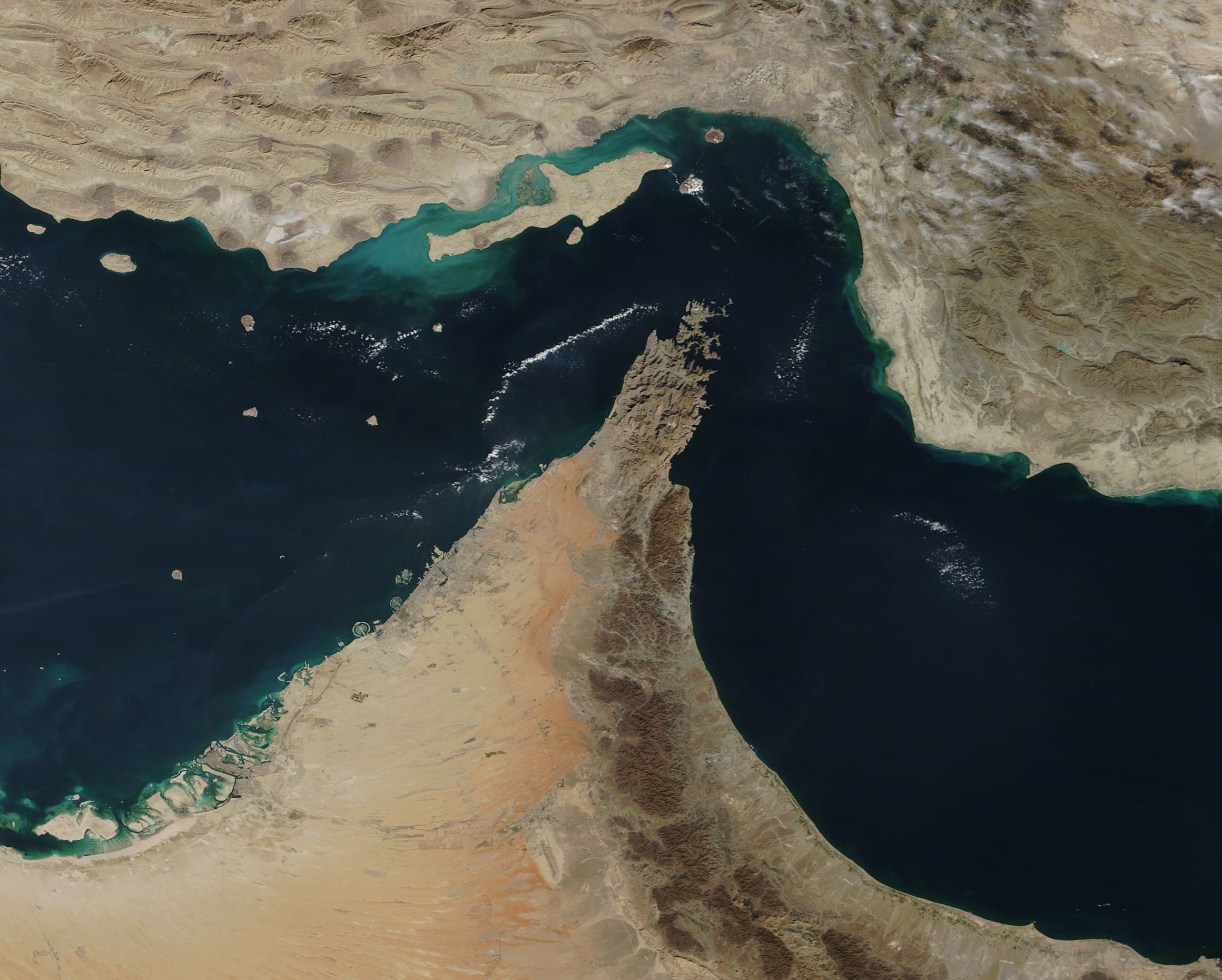
Donald Trump is the United States president overseeing the current diplomacy, including the recent U.S.-led mediation between Tehran and Israel and support for the Israel-Lebanon formula announced in Washington. The Islamic Republic of Iran is the main regional actor insisting that ceasefire terms should be linked to broader Gulf and Lebanon security conditions. Hezbollah is the Iran-aligned Lebanese armed movement; Naim Qassem is its deputy secretary-general, who has publicly argued that a deal must include stronger guarantees on Lebanese sovereignty and Israeli withdrawal. The Israeli Defence Forces are the branch that carries out operations in Lebanon and Israel’s security framing. The European Union is the Brussels-based multilevel policymaking bloc coordinating diplomacy and energy preparedness among member states, with Kaja Kallas serving as High Representative. The Strait of Hormuz is the critical Gulf waterway through which much global tanker traffic passes and on which oil price stability depends. UNIFIL is the UN mission on the southern Lebanese frontier, and the South Litani sector is the zone referenced in the ceasefire implementation formula. The European Peace Facility is an EU financing mechanism that supports security spending in partner states, including support announced for the Lebanese Armed Forces.
How to read this story
The history
This follows the 2026 conflict pattern: a ceasefire in one front does not automatically settle adjacent fronts. A U.S.-Iran ceasefire in early April was followed by separate framework building for Israel and Lebanon, including the 16 April terms that were later repackaged in early June diplomacy. In each phase, public statements created space, but implementation has remained fragile where Hezbollah and Israel interpret obligations differently. The current cycle therefore resembles earlier rounds in this war episode: temporary de-escalation at headline level, coupled with high risk of reversal after local incidents.
The geopolitics
The episode illustrates how a bilateral U.S.-Iran truce sits within a wider proxy conflict architecture. It links strategic choke-point pressure, non-state force participation and domestic political timelines in Washington, Tehran and Beirut, making settlement engineering more fragile than a single ceasefire text suggests.
Why now
The risk spike is triggered by the close timing: a ceasefire was announced in early June, but implementation was contested within days, and operational incidents in Lebanon were immediately framed as broader violations amid unresolved Gulf-security pressure.
What to watch
Watch whether Tehran resumes direct talks, whether Hezbollah adjusts its position on deployment and command obligations, and whether Hormuz tanker traffic normalises or remains volatile in the coming 48 to 72 hours.
Regional impact
The immediate institutional anchor is the EU level, because Brussels is where foreign-policy, energy and emergency coordination is concentrated and where ceasefire-related policy messaging is translated into EU follow-up. At federal level, Belgian authorities monitor those signals through inflation, mobility and budget channels that affect households and transport planning. In Brussels, airport operations, freight flows and EU sectoral coordination are the most direct local touchpoints. Flanders and Wallonia are affected more indirectly through nationwide price transmission and supply-chain costs rather than separate policy lines, but both regions could face higher input costs if fuel and shipping volatility persists.
Local impact
The strongest local Belgian exposure is in Brussels: institutions coordinating EU crisis response and transport-heavy firms face fast-moving risk interpretation, while aviation and freight firms in the city can absorb early price and schedule effects more quickly than other sectors.
International angle
The conflict reinforces Brussels’ central role as a diplomatic and market signal node for Europe. Ceasefire instability in the Gulf-Lebanon axis feeds global tanker risk, energy benchmarks and shipping insurance, with direct implications for EU policy coordination and export logistics across Europe, including Belgium.
What this means for you
Belgian readers should expect volatility rather than immediate structural change: monitor fuel-linked costs in transport and heating, budget pressures on transport-dependent firms, and policy signals from Brussels-based EU coordination. Businesses should build scenario planning for short-notice freight and travel-cost variation.
What happens next
Diplomatically, the next days are likely to be shaped by whether Hezbollah re-engages the implementation channel and whether Tehran resumes mediated talks. In parallel, Brussels policy teams will track tanker movement, ceasefire reporting, and EU energy preparedness updates; if strikes continue, the ceasefire is likely to be treated as an unstable suspension rather than a durable settlement.
Potential consequences
If escalation continues, Belgian consumers could face another transmission of transport and fuel costs, while public budgets and private operators absorb higher insurance and logistics uncertainty. A short breakdown in the ceasefire could also shift EU crisis rhetoric toward stricter conditionality in regional support. If de-escalation holds, the effect may remain a near-term volatility spike rather than a structural change, but institutions are likely to stay in alert mode while Gulf navigation risk remains elevated.
Opposing perspectives
- Hezbollah leadership (Naim Qassem and affiliated commanders)
Hezbollah argued this was not a complete ceasefire if the burden remained on one side, framing the dispute as enforcement by occupation rather than a political agreement. In this view, the group says implementation should include withdrawal of Israeli forces from Lebanese zones and recognition of Hezbollah security concerns, so the group’s rejection is presented as a political defense rather than a purely military one. The logic is that compliance language without what it calls a sovereignty baseline is unsustainable and invites immediate retaliation from Lebanese constituencies.
- EU diplomacy (EEAS and Council level)
EU officials present a stricter implementation frame: the ceasefire exists, and credibility depends on both immediate restraint and explicit sequencing on the ground. According to EU messaging, Hezbollah’s added preconditions are not the governing test; the key test is direct compliance with the published terms. This framing emphasises that a written agreement can still work if both parties move quickly on operational obligations, especially withdrawal from the contested belt and civilian protection. Brussels’ position is that de-escalation must be restored through institutional channels even if the political bargain is incomplete.
Timeline
- 2026-02-28·War escalates across the Gulf and region, setting the conditions for the later ceasefire cycle.
- 2026-04-08·EU welcomed a U.S.-Iran ceasefire framework and called for full regional restraint and safe passage through Hormuz.
- 2026-04-16·An Israel-Lebanon ceasefire framework was announced, including provisions on Hezbollah operations and security control lines.
- 2026-06-03·A U.S.-hosted renewed Israel-Lebanon ceasefire understanding was announced with operational conditions tied to Hezbollah.
- 2026-06-04·Hezbollah publicly rejected the implementation terms of the new Israel-Lebanon ceasefire framework.
- 2026-06-07·Israel struck Dahieh and Iran launched a missile response; ceasefire durability was tested immediately.
Glossary
- Strait of Hormuz
- A strategic Gulf passage for oil and LNG traffic; interruptions can quickly move global fuel prices and shipping risk across Europe.
- UNIFIL
- United Nations peacekeeping mission on the Lebanon-Israel line, tasked with reducing military incidents and assisting Lebanese state authority.
- South Litani
- A Lebanese southern security zone referenced in Israel-Lebanon ceasefire implementation language, including withdrawal and movement obligations.
- European Peace Facility
- An EU funding mechanism used to support partner-country security and defence-related measures.
- Energy Union Task Force
- A European Commission-led coordination mechanism for shared energy-security and market contingency planning across the EU.
Related to this story
Live connections from the Belgium Impulse ecosystem — not recommendations.
This briefing was prepared with AI assistance and reviewed by a Belgium Impulse editor before publication. methodology.