
 What's On
 Expat
WORLD COURT · Reporting
International Court of Justice finds Myanmar guilty of genocide against Rohingya
Myanmar is the first state condemned for genocide by the UN's highest court, a judgment that a Belgian international law expert described as historic.
Published: · Content updated:
Based on: La Libre Belgique
Saved articles and followed stories stay in this browser. No account sync or notifications.
In 30 seconds
The International Court of Justice has found Myanmar responsible for genocide against the Rohingya, the first time an international court has condemned a state for this crime, opening a path to reparations.
- Myanmar was also found to have failed to prevent and punish genocide, breaching its obligations under the 1948 Genocide Convention.
- The court ordered Myanmar to organise the voluntary return of displaced Rohingya, restore or replace their property, help trace missing people and protect the group.
- The ruling is binding and cannot be appealed, but the court has no means of enforcing it.
Sources: La Libre Belgique
What it means
What’s at stake
For the Rohingya, the ruling brings legal recognition and, according to Olivier Corten, a right to reparation, including return, restitution of property and the search for missing people. For Myanmar, non-compliance could, in Pierre d'Argent's view, expose its assets abroad to seizure. For international justice, the judgment sets a precedent as the first condemnation of a state for genocide, while its real effect depends on pressure from other states, since the court cannot enforce its own rulings.
Sources: La Libre Belgique
What happens next
According to Pierre d'Argent, Myanmar must report to the court within two years on all restitution measures; after that assessment, a compensation phase could open for whatever has not been repaired by restitution. If Myanmar does not comply, he says, its assets could be seized worldwide. Olivier Corten points to the UN Security Council and possible economic sanctions as levers. How Myanmar's authorities will respond is not stated in the material.
Sources: La Libre Belgique
Context
Background
The case goes back to August 2017, when the Arakan Rohingya Salvation Army (Arsa) attacked a base and security posts of Myanmar's forces, killing around ten people. The response, ordered by Min Aung Hlaing, then head of the army, turned into what La Libre Belgique describes as the 'ethnic cleansing' of northern Rakhine State, forcing hundreds of thousands of Rohingya to flee to neighbouring Bangladesh. In 2019 Gambia, a Muslim-majority African country, took Myanmar to the International Court of Justice, alleging a breach of the 1948 Genocide Convention. Public hearings were held in January, during which victims were invited to testify. The Rohingya had been awaiting the judgment for nine years, according to the paper.
Sources: La Libre Belgique
The wider picture
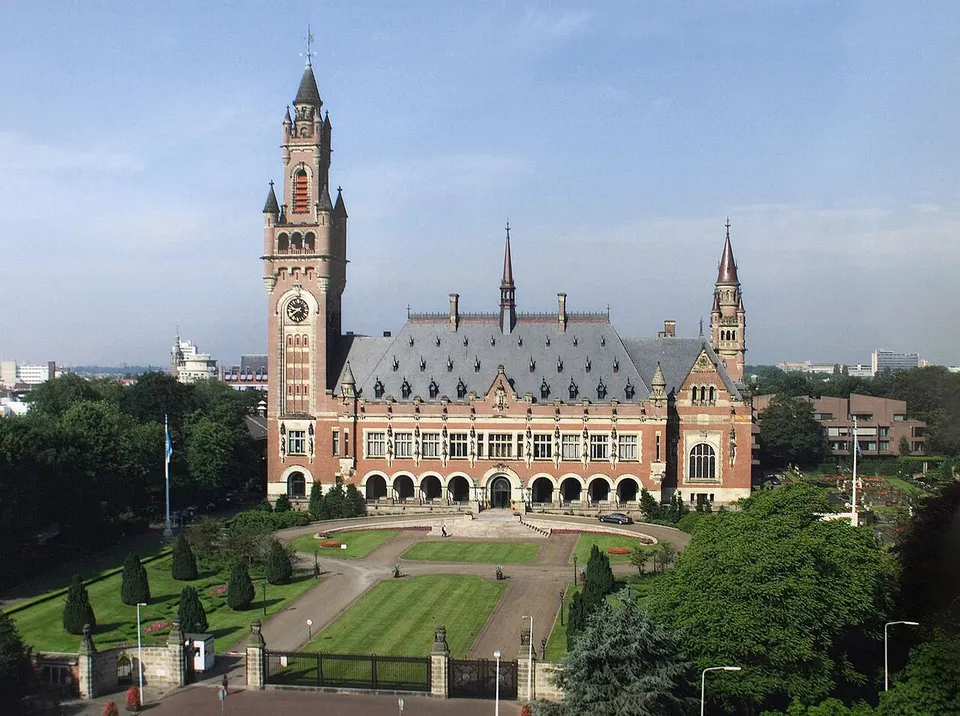
The International Court of Justice is the principal judicial organ of the United Nations, seated in the Peace Palace in The Hague. It settles disputes between states, and its judgments are binding and final, but it has no formal enforcement mechanism: enforcement is ultimately a political matter for the UN Security Council, where the five permanent members hold a veto. The ruling also lands in a Myanmar shaken by the military's 2021 coup, which, according to the encyclopaedic reference, marked the outbreak of an ongoing civil war.
Sources: Wikipedia: International Court of Justice (Background reference) · Wikipedia: Myanmar (Background reference)
How we got here
The Convention on the Prevention and Punishment of the Crime of Genocide, the basis of the case, dates from 1948.
Arsa attacks a base and security posts of Myanmar's forces, killing around ten people and triggering the military response.
Gambia brings the case against Myanmar before the International Court of Justice.
Min Aung Hlaing overthrows the elected government of Aung San Suu Kyi in a coup.
Sources: La Libre Belgique
Reporting
A first verdict of its kind
The International Court of Justice in The Hague ruled on Thursday that Myanmar committed genocide against the Rohingya, a persecuted Muslim minority, making it the first state the UN's highest court has condemned for that crime, La Libre Belgique reported. Court president Iwasawa Yuji spent three hours setting out the facts, which centre on the campaign waged by the Tatmadaw, Myanmar's army, in northern Rakhine State. Pierre d'Argent, a UCLouvain professor who acted as lawyer and counsel for Gambia, told the paper he had attended around a dozen cases at the court but none as moving, recalling public hearings in January at which victims described events he called hell on earth.
Reporting
What the judges found
According to La Libre Belgique's account of the judgment, the court highlighted widespread and systematic sexual violence committed by the Tatmadaw and found that between 700 and 2000 children under the age of five lost their lives. Iwasawa Yuji said it was hard to explain why these children were targeted other than by their membership of the Rohingya minority. The judges also pointed to messages spread by the armed forces portraying the Rohingya as subhuman and as a threat whose numbers were growing out of control, rhetoric that may have encouraged civilians to take part in genocidal acts alongside soldiers. The court said 392 villages where the minority lived were partly or entirely destroyed, burned or bulldozed, then replaced by new infrastructure where other communities settled.
Key line
Pierre d'Argent, a UCLouvain professor and counsel for Gambia, said none of the cases he had followed at the court had been as moving, recalling hearings at which victims testified.
Reporting
How the case reached The Hague
The case was brought in 2019 by Gambia, an African country with a Muslim majority, which accused Myanmar of violating the 1948 Convention on the Prevention and Punishment of the Crime of Genocide. Myanmar's defence presented the 2017 operations as a counter-insurgency against what it called terrorist attacks by the Arakan Rohingya Salvation Army, known as Arsa, which had struck a base and security posts that August, killing around ten people. The court rejected that reading, La Libre Belgique reported, concluding that the military's actions went beyond reprisals against Arsa and amounted to an attempt to destroy the Rohingya in whole or in part. It also found that Myanmar had failed to prevent or punish genocide.
Reporting
Why the ruling matters
Olivier Corten, director of the international law centre at ULB, told La Libre Belgique the judgment was historic because it is the first time an international court has condemned a state for genocide. UN High Commissioner for Human Rights Volker Türk said Myanmar bore responsibility for one of the most abhorrent crimes known to humanity and urged governments to stop immediately the transfer of military equipment, kerosene and dual-use goods still being used against the population. The ruling also adds pressure on Min Aung Hlaing, who commanded the army in 2017, ousted the elected government of Aung San Suu Kyi in a coup in 2021 and became president this year after disputed elections. He is the subject of an arrest warrant request at the International Criminal Court and of an international warrant issued by Argentine judicial authorities.
Reporting
Reparations and enforcement
Beyond legal recognition, Olivier Corten said, the Rohingya have a right to reparation. The court ordered Myanmar to organise the voluntary return of displaced Rohingya, restore or replace personal and collective property, help trace and identify missing people and protect the group. According to Pierre d'Argent, Myanmar must report to the court within two years on restitution, after which a compensation phase could open; he said other states must press the country to comply and that, failing that, its assets could be seized worldwide. Rulings of the court are binding and cannot be appealed, yet it has no means of enforcing them, and Corten pointed to the UN Security Council and possible economic sanctions as remaining levers. How Myanmar's authorities will respond is not yet known.
Understanding the story
What the main actors are doing
Reported positions, summarised — not direct quotations
Min Aung Hlaing
Commanded the army in 2017, seized power in the 2021 coup and became president after disputed elections; he faces an arrest warrant request at the International Criminal Court and an Argentine international arrest warrant.
Sources: La Libre Belgique
Voices & reactions
Olivier Corten
The director of ULB's international law centre called the judgment historic, as the first time an international court has condemned a state for genocide.
Sources: La Libre Belgique
Volker Türk
The UN High Commissioner for Human Rights said Myanmar was responsible for one of the most abhorrent crimes humanity has known and urged an immediate end to transfers of military equipment, kerosene and dual-use goods.
Sources: La Libre Belgique
Pierre d'Argent
Gambia's counsel said other states must put pressure on Myanmar to comply with the court's measures.
Sources: La Libre Belgique
Key terms
- Tatmadaw
- Name of Myanmar's armed forces, which the court found responsible for the 2017 campaign against the Rohingya.
- Arsa
- The Arakan Rohingya Salvation Army, an armed group whose August 2017 attacks Myanmar cited to justify its operations.
- Genocide Convention
- The 1948 treaty obliging states to prevent and punish genocide; Gambia accused Myanmar of violating it.
Sources: La Libre Belgique
People, places and institutions
- Cour internationale de justiceUN court in The Hague that found Myanmar guilty of genocide.
- Iwasawa YujiPresident of the court, who read out the judgment over three hours.
- État RakhineRegion where the Rohingya lived and where the 2017 campaign took place.
- Olivier CortenDirector of ULB's international law centre, who commented on the ruling.
- Pierre d'ArgentUCLouvain professor who acted as lawyer and counsel for Gambia.
- Aung San Suu KyiFormer head of the elected government overthrown in the 2021 coup.
Sources: La Libre Belgique
Some background items were left out because automated checks could not verify them against the sources.
Video report
People, places and organisations in this story
File pictures of subjects named in the article, not pictures of the events reported.
Related reading
Sources and factual attribution (1)
- "Les faits sont d'une atrocité absolue, c'est l'enfer sur Terre" : la Birmanie jugée coupable du génocide des Rohingyas — La Libre Belgique
Dated report by La Libre Belgique used for the facts attributed to it.
Source publication date: . Consulted: .
Supports
The International Court of Justice ruled on Thursday that Myanmar committed genocide against the Rohingya, the first state it has condemned for that crime; court president Iwasawa Yuji read out the judgment.
La Libre Belgique: "Les faits sont d'une atrocité absolue, c'est l'enfer sur Terre" : la Birmanie jugée coupable du génocide des RohingyasPierre d'Argent, a UCLouvain professor and counsel for Gambia, said none of the cases he had followed at the court had been as moving, recalling hearings at which victims testified.
La Libre Belgique: "Les faits sont d'une atrocité absolue, c'est l'enfer sur Terre" : la Birmanie jugée coupable du génocide des RohingyasThe court cited widespread and systematic sexual violence, found that between 700 and 2000 children under five were killed and that 392 villages were partly or wholly destroyed.
La Libre Belgique: "Les faits sont d'une atrocité absolue, c'est l'enfer sur Terre" : la Birmanie jugée coupable du génocide des RohingyasGambia brought the case in 2019, alleging that Myanmar had breached the 1948 Genocide Convention.
La Libre Belgique: "Les faits sont d'une atrocité absolue, c'est l'enfer sur Terre" : la Birmanie jugée coupable du génocide des RohingyasMyanmar described its 2017 operations as a counter-insurgency against Arsa attacks, but the court found the acts went beyond reprisals and aimed to destroy the Rohingya in whole or in part.
La Libre Belgique: "Les faits sont d'une atrocité absolue, c'est l'enfer sur Terre" : la Birmanie jugée coupable du génocide des RohingyasOlivier Corten of ULB called the judgment historic, the first time an international court has condemned a state for genocide.
La Libre Belgique: "Les faits sont d'une atrocité absolue, c'est l'enfer sur Terre" : la Birmanie jugée coupable du génocide des RohingyasUN human rights chief Volker Türk urged an immediate halt to transfers of military equipment, kerosene and dual-use goods to Myanmar.
La Libre Belgique: "Les faits sont d'une atrocité absolue, c'est l'enfer sur Terre" : la Birmanie jugée coupable du génocide des RohingyasThe ruling increases pressure on Min Aung Hlaing, army commander in 2017 and coup leader in 2021, who faces an ICC arrest warrant request and an Argentine warrant.
La Libre Belgique: "Les faits sont d'une atrocité absolue, c'est l'enfer sur Terre" : la Birmanie jugée coupable du génocide des RohingyasThe court ordered Myanmar to organise the voluntary return of displaced Rohingya, restore or replace property and report within two years, after which a compensation phase could follow, according to Pierre d'Argent.
La Libre Belgique: "Les faits sont d'une atrocité absolue, c'est l'enfer sur Terre" : la Birmanie jugée coupable du génocide des RohingyasICJ rulings are binding and final but the court cannot enforce them; Olivier Corten pointed to the UN Security Council and possible economic sanctions.
La Libre Belgique: "Les faits sont d'une atrocité absolue, c'est l'enfer sur Terre" : la Birmanie jugée coupable du génocide des Rohingyas
How this article was prepared
Revisions and corrections
No corrections recorded.
- First version · 1 —
First publication.