Has Virgin really cleared the way to challenge Eurostar between London and Brussels?
Britain’s rail regulator has conditionally approved Virgin Trains’ access to High Speed 1 for planned services linking London with Brussels, Paris and Amsterdam from 2030, but the company has not yet secured a complete Eurotunnel route approval.
In 30 seconds
- ORR announced the pre-approval on 17 August 2026 following a decision taken on 13 August.
- The framework covers up to 20 daily return services from 1 October 2030 to 31 December 2040.
- The destinations named are Brussels, Paris and Amsterdam, but no route-by-route allocation was confirmed.
- The approval covers Britain’s HS1 line, not every track and safety permission required for through services.
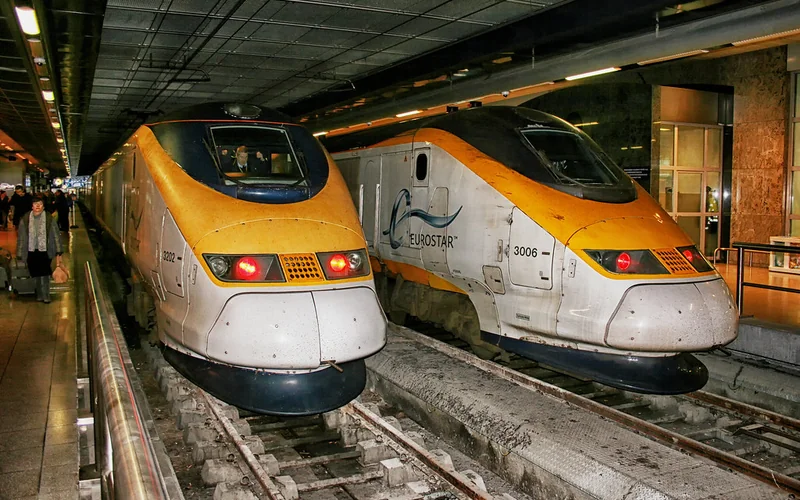
Britain’s Office of Rail and Road announced on 17 August that it had pre-approved Virgin Trains’ access to High Speed 1, moving the company closer to running trains between and from 2030 and challenging , whose Belgian parent company is partly owned by SNCB. The decision, taken on 13 August, permits Virgin and London St Pancras Highspeed to conclude a framework agreement covering as many as 20 daily return services to Brussels, or between 1 October 2030 and 31 December 2040.
For passengers in Belgium, this is the most credible regulatory advance yet towards a second operator on the direct London–Brussels market. Competition could eventually mean more seats, different service levels and pressure on fares, although none of those benefits is guaranteed. The approval concerns Britain’s HS1 line between St Pancras and the Channel Tunnel portal; it is not, by itself, permission to run through the tunnel or across France and Belgium.
The ORR said Virgin must still obtain suitable trains, negotiate access to the other rail networks involved and secure British and EU safety approvals. A UK House of Commons Library briefing likewise notes that the company still needs agreements for the Channel Tunnel and continental infrastructure. No timetable, fare structure or confirmed allocation of the 20 return services among Brussels, Paris and Amsterdam accompanied the regulator’s announcement.
That distinction matters because cross-Channel rail is a chain of tightly connected systems rather than a single route controlled by one authority. A London–Brussels train must use HS1 in Britain, the Channel Tunnel between Britain and France, French infrastructure and Belgium’s network before reaching Brussels-Midi. Border and security facilities also constrain passenger volumes, particularly at St Pancras. Virgin has therefore cleared an important British hurdle, not the whole course.
The Belgian institutional connection is unusually direct. SNCB says Eurostar Group is a company established under Belgian law in which the Belgian public railway owns 18.5%; SNCF Voyageurs holds 55.75%, with Canadian pension investor CDPQ and Federated Hermes Infrastructure owning the remainder. Competition would consequently affect not only Belgian travellers but also the position of a significant SNCB investment. Infrabel, which manages Belgium’s rail infrastructure, would also be relevant to any eventual train-path arrangements on Belgian territory.
Virgin presents entry as a consumer and growth story. Welcoming the decision, the company said it wanted to bring competition and its customer experience to the Channel Tunnel market. ORR deputy director Martin Jones called the approval an “important next step” towards competition and growth while acknowledging that more work remained.
Eurostar framed the same development less as an attack on its position than as evidence of demand, saying it showed the “huge potential for growth in international rail”. That response sits alongside practical concerns Eurostar raised during earlier regulatory proceedings about capacity at its Temple Mills maintenance depot and at St Pancras. The incumbent is also pursuing its own fleet and network expansion, so the eventual market may involve growth by several operators rather than a simple transfer of passengers from Eurostar to Virgin.
Where this is happening
View on map Brussels →From Brussels, the immediate picture is therefore more measured than headlines suggesting that Virgin has already won a Eurotunnel route. The Brussels Times described the decision as bringing Virgin one step closer to competing, while SNCB’s published corporate information establishes Belgium’s financial stake in the incumbent. No specific public response from SNCB, Infrabel or Belgium’s federal mobility authorities to the August decision was identified by publication time.
The broader significance lies in whether Europe can turn formal rail-market openness into workable international competition. Eurostar has remained the Channel Tunnel’s sole international passenger-train operator since services began in 1994, while depot space, specialist rolling stock, border controls and access agreements have repeatedly frustrated prospective entrants. The next concrete deadline is 4 September, by which Virgin and London St Pancras Highspeed may enter the HS1 agreement. After that, the decisive evidence will be signed infrastructure agreements, a financed and authorised fleet, workable terminal capacity and a credible Brussels timetable—not the Virgin logo alone.
What to do
There is nothing for passengers to book or change yet: existing London–Brussels travel remains with Eurostar, and Virgin’s framework would not begin before 1 October 2030. Travellers should treat claims that the route is fully approved with caution because Channel Tunnel and continental permissions remain outstanding. Dates worth watching are the planned 2030 start, later route allocations and any announcements on Belgian train paths, timetables or ticket sales. No confirmed Brussels frequency, fare level or booking date is provided, so passengers cannot yet compare prices or plan journeys with Virgin.
The Belgian angle
Brussels-Midi would be one of Virgin’s proposed continental destinations. Any service would require Belgian train paths and operational coordination, while SNCB has a financial interest in incumbent Eurostar Group.
EvidenceWell established · 1 primary source + 3 official documents + 1 independent reporting sourceExplore evidence →Hide evidence ↑
- Published:
- 17 Aug 2026, 02:00
- Retrieved by ODIN:
- 25 Aug 2026
- Published:
- 17 Aug 2026, 02:00
- Retrieved by ODIN:
- 25 Aug 2026
- Published:
- 17 Aug 2026, 02:00
- Retrieved by ODIN:
- 25 Aug 2026
- Publication date unavailable
- Retrieved by ODIN:
- 25 Aug 2026
- Published:
- 20 Aug 2026, 02:00
- Retrieved by ODIN:
- 25 Aug 2026
Voices & reactions
What the main actors are doing
Reported positions, summarised — not direct quotationsVirgin Trains and the British regulator
Virgin and the ORR frame the decision as a step towards competition, passenger choice and growth in cross-Channel rail. Their case is that additional capacity and a second operator can expand the market rather than merely divide Eurostar’s existing traffic.
Eurostar and Belgian incumbent interests
Eurostar publicly emphasises the market’s growth potential but has previously raised practical capacity questions involving St Pancras and Temple Mills. From Belgium, SNCB is both a public mobility stakeholder and an 18.5% shareholder in Eurostar Group, so competition may benefit passengers while creating commercial pressure on a Belgian state-linked investment.
The story, connected
Explore the people, places and ideas in this story
Go beyond the headline. Open a card for sourced context, maps, official links and the other subjects connected to this report.
Continue reading


This story was assembled from verified evidence, with its sources and reasoning recorded as it was written.
This briefing was prepared with AI assistance and passed Belgium Impulse source, provenance and publication-quality checks. methodology.