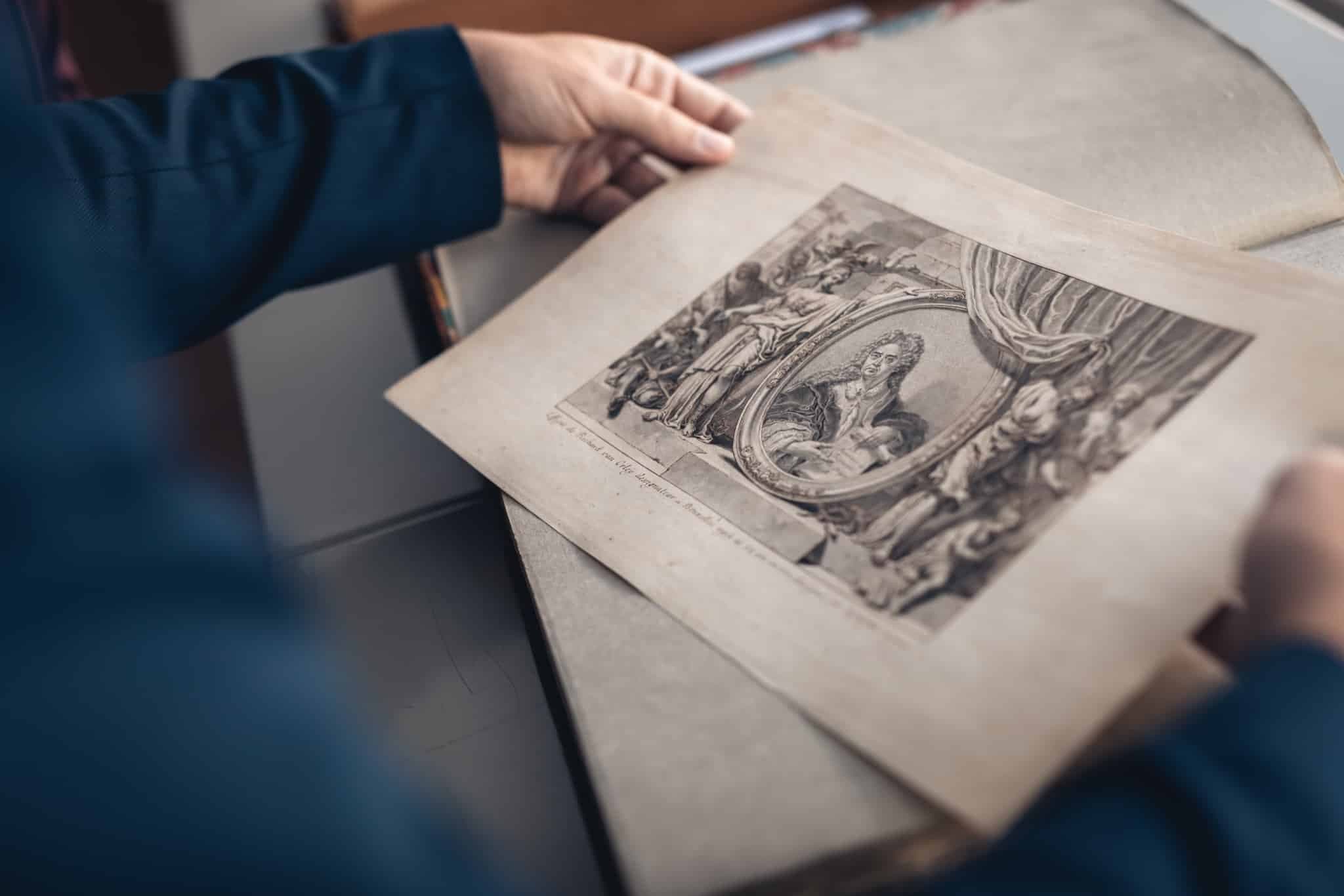
Could newly surfaced 18th-century drawings change how Brussels reads its past?
Recently surfaced 18th-century drawings of Brussels have put a familiar Belgian question back on the table: when privately held views of the city reappear, should they become trophies for collectors, research material for museums, or accessible public memory? A Dutch-language report by Het Nieuwsblad described the works as a rare opportunity for “verzamelaars, musea en instellingen” because the tekeningen tonen vergeten parts of Brussel before later urban change. The immediate story is cultural heritage, but the wider intelligence picture is the cross-border market for old works on paper, where provenance, conservation, export rules and digitisation now matter almost as much as price.
Trust & Evidence📚 7 sources· 🧠 AI-checked· Trust status: not yet independently verifiedView evidence & verification Hide
Verification record
- 📚 7 verified sources — Het Nieuwsblad · KBR - Prints and drawings · KBR - The Ferraris map · urban.brussels - Documentation centre …
- 🧠 Low confidence — AI-checked
- 🇧🇪 Belgian impact: High
- 📜 Provenance recorded & timestamped
Evidence is generated from the OIS evidence chain and reviewed before appearing on Belgium Pulse.
Powered by OIS / Evidentia
About this story
The subject is a set of recent opgedoken 18de-eeuwse tekeningen linked to Brussels. Such works are valuable because they can record streets, buildings, gates, waterways or viewpoints that disappeared before photography. For Belgium-based readers, the relevant stakeholders include KBR’s Prints and Drawings Department, urban.brussels and its documentation centre, the Royal Museums of Fine Arts of Belgium, the Archives of the City of Brussels, private collectors, auction houses, Brussels heritage researchers and local communities whose neighbourhood histories may be visible in the images. The EU connection is indirect but real: cultural goods move through an EU-regulated market shaped by import, export and anti-trafficking rules.
How to read this story
The history
Eighteenth-century Brussels sat within the Austrian Netherlands and changed rapidly before and after the French Revolutionary period. Visual records from that era are especially useful because they predate photography and often capture topography, fortifications, religious sites, markets and road patterns later altered or demolished. KBR’s Ferraris map, created between 1770 and 1778, shows why this period matters: it was a moment when the territory of present-day Belgium was being documented systematically, just before industrialisation and 19th-century urban restructuring transformed the landscape.
Regional impact
The impact is concentrated in the Brussels-Capital Region. The drawings may help document older urban layers of the City of Brussels and surrounding communes, especially where later redevelopment erased physical traces. urban.brussels, KBR, the Archives of the City of Brussels and local museums are the natural public-interest actors, although no official acquisition or protection move could be verified from the available public sources.
Local impact
For Brussels, the practical question is whether the drawings become accessible evidence for the city’s collective memory. They could help historians compare vanished streets, religious buildings, waterways or viewpoints with today’s urban fabric.
International angle
The international angle lies in the art and cultural-goods market. Old Brussels drawings can attract Belgian and foreign collectors, while EU rules and UNESCO norms increasingly expect buyers and sellers to document lawful provenance and movement.
What this means for you
For would-be buyers: ask for provenance, condition and export documents before bidding. For museums and archives: move quickly on assessment and funding. For Brussels readers: if the works are digitised, they may become useful tools for understanding how the city looked before modern redevelopment.
Opposing perspectives
- Private collectors and auction-market buyers
Collectors can argue that private acquisition is not automatically a loss for heritage. Many works on paper survive because private owners stored, restored and eventually resold or donated them. In this framing, the “unieke kans verzamelaars” angle is practical: a buyer with resources can preserve fragile drawings quickly, especially if public museums lack acquisition budgets or cannot move within a sale deadline.
- Belgian public institutions and heritage researchers
KBR, urban.brussels, the Royal Museums and city archives represent a different Belgian framing: the highest value of such drawings may be research access, not ownership prestige. Their institutional logic favours cataloguing, conservation, digitisation and public consultation, because old views of Brussels can support urban history, restoration files and exhibitions far beyond the interests of one buyer.
- EU and UNESCO due-diligence perspective
The EU/UNESCO framing differs from a simple art-market story. It asks whether cultural goods have clear provenance, lawful movement and adequate documentation. That does not imply wrongdoing in this case, but it changes the buyer’s checklist: invoices, ownership history, export papers and expert condition reports are part of responsible acquisition, especially for older cross-border works.
Related to this story
Pulse Insight — This topic connects to 10 associations, 3 funding programmes, 89 upcoming events and 1568 jobs through the Brussels ecosystem.
Live connections from the Belgium Impulse ecosystem — not recommendations.
This briefing was prepared with AI assistance and reviewed by a Belgium Impulse editor before publication. methodology.