Brussels turns Hokusai’s Great Wave into a floral emblem of Belgian-Japanese ties
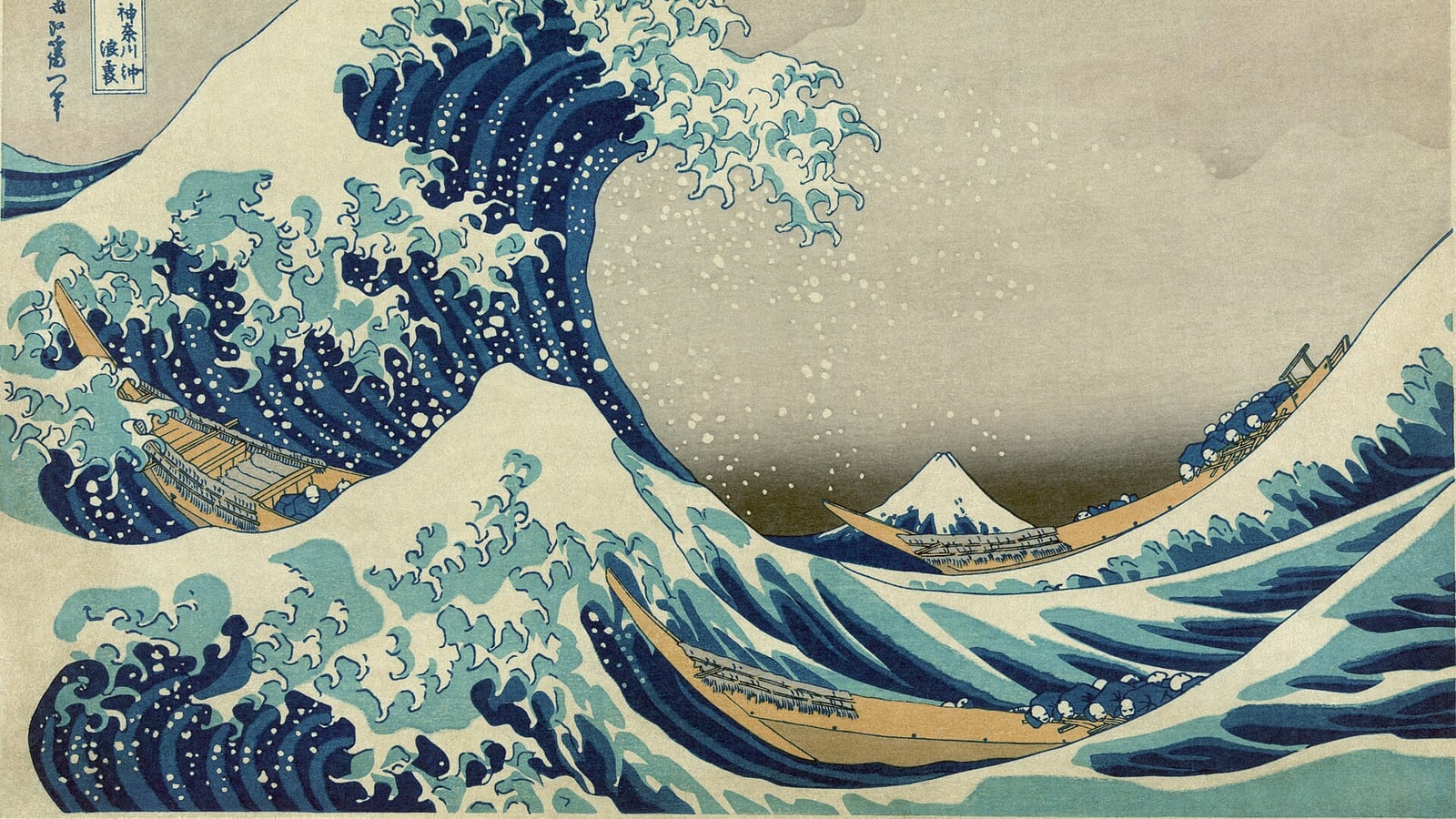
Brussels displayed a Hokusai-inspired flower carpet on the Grand-Place from 13 to 16 August, placing a Belgian-Japanese cultural celebration among the week’s stark images of real, destructive waves on China’s coast.
In 30 seconds
- The 2026 carpet was displayed on the Grand-Place from 13 to 16 August.
- Hiro Sugiyama and the Enlightenment collective reinterpreted Hokusai’s Great Wave.
- The City reported a 70-by-24-metre design made with more than 500,000 dahlias.
- A hop-inspired second carpet was installed at the Bourse for the first time.
placed at the centre of its from 13 to 16 August, when volunteers transformed Hokusai’s Great Wave into a vast carpet of dahlias marking 160 years of diplomatic relations between Belgium and Japan. De Standaard’s photographic selection subsequently set that carefully composed wave beside houses-high seas on ’s coast, turning the week’s images into an unintended study in beauty, danger and the different meanings carried by a single visual form.
For people in Brussels, the carpet was first of all a brief and accessible civic spectacle, not an EU ceremony. The City of Brussels says Japanese artist Hiro Sugiyama and his Enlightenment collective reinterpreted The Great Wave off Kanagawa using more than 500,000 dahlias. Around 120 volunteers assembled the 70-by-24-metre installation, which occupied the UNESCO-listed square for four days. A second carpet appeared at the for the first time, with a hop design referring to Belgium’s brewing heritage.
Its diplomatic purpose nevertheless reached beyond tourism. Belgium’s Foreign Ministry presented the carpet as part of a year-long programme celebrating the treaty of friendship, commerce and navigation signed by Belgium and Japan in 1866. That programme has also included Emperor Naruhito and Empress Masako’s June state visit, Japanese participation in the Ommegang and cultural events elsewhere in Belgium. The ministry says more than 300 Japanese companies operate in Belgium and account collectively for about 35,000 jobs, making the relationship tangible for workers in sectors including technology, logistics, chemicals and biotechnology.
That Belgian framing differs sharply from the news context behind the photographs from China. A Reuters Connect caption placed tourists beside huge waves at Qingdao in Shandong province on 11 August, but did not independently establish their cause. Two days earlier, Associated Press reported that had struck eastern China after more than 300,000 people were moved pre-emptively and at least 1,300 flights were cancelled at Shanghai’s airports. AP described massive coastal waves, heavy rain and serious flood and landslide risks in Zhejiang and neighbouring Fujian. The available reporting does not show that the Qingdao waves photographed later were directly caused by Dolphin, so the visual connection should not be treated as a meteorological conclusion.
The contrast matters because a weekly picture gallery can compress events that have entirely different stakes. Brussels deliberately reproduced one of the world’s most recognisable waves as ephemeral public art. On the Chinese coast, towering water formed part of a hazardous environment in which authorities restricted movement and prepared for flooding. The resemblance is powerful, but the underlying stories are not equivalent.
There are also two legitimate ways to read the Brussels installation. City organisers emphasised craftsmanship, public space and a tradition dating to the first Grand-Place carpet in 1971. Belgian and Japanese officials treated it as cultural diplomacy: Deputy Prime Minister Jan Jambon has described Japan as being “of enormous importance” to Belgium’s economy, while Japanese diplomat Shuichi Nishino called anniversary events opportunities for younger generations to rediscover the relationship. Neither framing requires Brussels to be confused with the European Union. The event belonged to the city, while its wider significance arose from bilateral Belgian-Japanese ties and an EU-Japan partnership grounded in trade and cooperation.
Where this is happening
View on map Brussels →The carpet has now disappeared, as intended, but the anniversary programme continues. Its most durable message may be that diplomacy is not conducted only through summits and communiqués. Sometimes it is built by volunteers on a medieval square, in flowers designed to last four days. What remains uncertain is how many people saw the carpets and what measurable tourism or commercial benefit they produced; neither the City nor organisers had published a verified attendance total in the sources reviewed.
What to do
The 2026 Flower Carpet was a temporary event and closed on 16 August, so it is no longer available to visit on the Grand-Place or at the Bourse. Readers can use the City of Brussels event information and published photo coverage to review the installation. No admission cost, booking requirement or continuing access arrangement is established by the article, so readers should not infer one. The next edition’s dates are not provided; anyone hoping to attend a future carpet should monitor City of Brussels announcements rather than relying on the 2026 schedule.
The Belgian angle
The event brought a temporary cultural installation to central Brussels and introduced a second carpet at the Bourse, extending activity beyond the Grand-Place.
EvidenceWell established · 1 primary source + 3 official documents + 2 independent reporting sourcesExplore evidence →Hide evidence ↑
- Publication date unavailable
- Retrieved by ODIN:
- 27 Aug 2026
- Publication date unavailable
- Retrieved by ODIN:
- 27 Aug 2026
- Published:
- 23 Jul 2026, 02:00
- Retrieved by ODIN:
- 27 Aug 2026
- Published:
- 27 Jan 2026, 01:00
- Retrieved by ODIN:
- 27 Aug 2026
- Published:
- 9 Aug 2026, 02:00
- Retrieved by ODIN:
- 27 Aug 2026
- Published:
- 11 Aug 2026, 02:00
- Retrieved by ODIN:
- 27 Aug 2026
Voices & reactions
What the main actors are doing
Reported positions, summarised — not direct quotationsBrussels and Belgian diplomatic framing
The City of Brussels presents the carpet as ephemeral public art and local heritage, while Belgian and Japanese officials frame it as cultural diplomacy supporting a relationship with economic, scientific and political depth. Jan Jambon called Japan “of enormous importance” to Belgium’s economy.
Chinese emergency and wire-service framing
Associated Press treated the week’s waves as part of a dangerous typhoon environment involving evacuations, cancelled flights and flood risks. Reuters Connect’s Qingdao caption documented the visual scene but did not verify its cause, demanding more caution than a picture-gallery juxtaposition might suggest.
The story, connected
Explore the people, places and ideas in this story
Go beyond the headline. Open a card for sourced context, maps, official links and the other subjects connected to this report.
Continue reading

This story was assembled from verified evidence, with its sources and reasoning recorded as it was written.
This briefing was prepared with AI assistance and passed Belgium Impulse source, provenance and publication-quality checks. A human editorial review was recorded for this version. methodology.