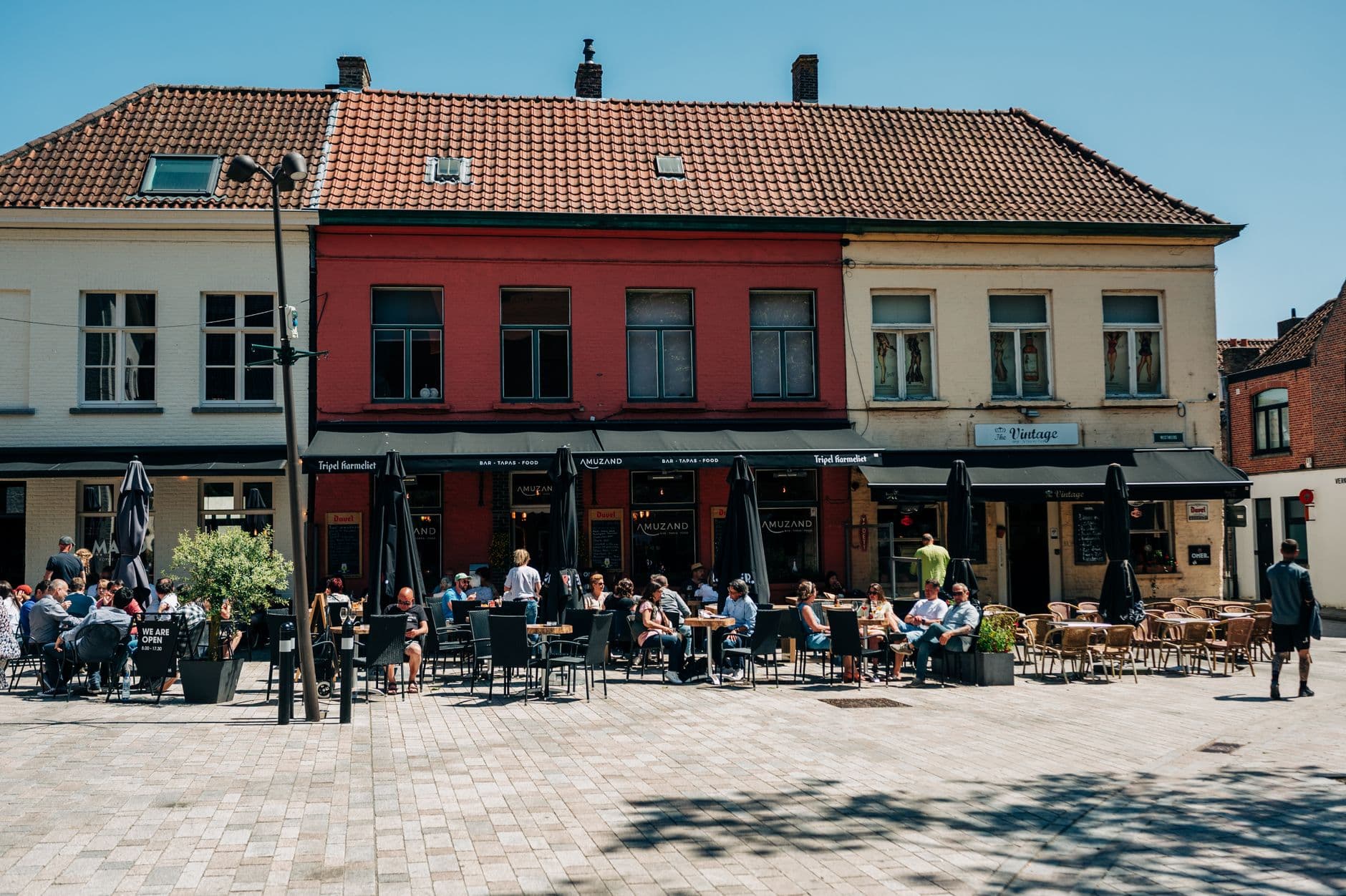
Belgium faces its hottest stretch of the heatwave as France’s 40C surge moves north
Belgium is entering the most dangerous phase of a western European heatwave that has already pushed parts of France above 40C and put public-health systems, transport operators and city authorities on alert. For Belgium-based readers, the immediate issue is not only the daytime maximum: the Royal Meteorological Institute says inland temperatures may reach 36C to 38C, locally 39C on Friday, while some large urban areas may stay at 25C to 27C overnight. That is the threshold at which heat stops being a hot afternoon and becomes a recovery problem, especially for older people, small children, outdoor workers and people living in poorly insulated flats. The SPF Public Health alert phase of Belgium’s ozone and heat plan remains active, according to the IRM’s warning page. In practical terms, this means drinking before feeling thirsty, checking on vulnerable neighbours, limiting sport and outdoor work in the hottest hours, and following local instructions from communes, Brussels services, hospitals, care homes and employers. The international picture explains why Belgium is exposed. France has seen temperatures above 40C and widespread red heat alerts, with disruption to schools, tourist sites and infrastructure. The same hot air mass is affecting Spain, Italy, the Netherlands, Germany and the United Kingdom, while the European Meteoalarm system provides cross-border warning coordination. Francophone Belgian coverage has framed the question as “comment la canicule va-t-elle frapper la Belgique” after “40C en France” and “records attendus” at home; the answer is that Belgium is less exposed than south-west France, but still faces an unusually early, intense and humid heat episode, followed by a growing risk of thunderstorms. The broader lesson is that heatwaves are no longer a southern European exception. The IRM says Belgium’s early and intense heat fits a trend toward more frequent and extreme heat peaks in recent decades. That does not make every record automatic, but it changes the baseline for public services: schools, trains, care homes, offices and city housing now need heat plans, not improvised advice. What happens next depends on two things: whether Friday’s projected peak reaches record territory at Uccle, and whether Saturday’s unstable air produces storms strong enough to create a second risk after the heat.
Trust & Evidence📚 6 sources· 🧠 AI-checked· Trust status: not yet independently verifiedView evidence & verification Hide
Verification record
- 📚 6 verified sources — DH - Météo : 40C en France, records attendus en Belgique · Royal Meteorological Institute of Belgium - Heat warning map · Royal Meteorological Institute of Belgium - Les chiffres de la vague de chaleur précoce · Le Monde in English - Heatwave in Europe: From Spain to Germany …
- 🧠 Medium confidence — AI-checked
- 🇧🇪 Belgian impact: High
- 📜 Provenance recorded & timestamped
Evidence is generated from the OIS evidence chain and reviewed before appearing on Belgium Pulse.
Powered by OIS / Evidentia
About this story
The subject is a western European heatwave centred on France but now materially affecting Belgium. Named Belgian stakeholders include the Royal Meteorological Institute (IRM/KMI), SPF Public Health, local authorities in Brussels, Wallonia and Flanders, hospitals, care homes, public transport operators and employers responsible for outdoor or poorly cooled workplaces. The relevant EU-level framework is cross-border weather warning coordination through Meteoalarm and the broader EU climate-adaptation debate shaped by Copernicus and WMO assessments.
How to read this story
The history
Belgium’s official heatwave reference point is Uccle, where the IRM says 51 heatwaves have been recorded since measurements began and only 16 started before 1 July. The IRM notes that the 1976 heatwave lasted from 22 June to 8 July, while 2019 was more intense but shorter. The current episode is notable because it is early, because night temperatures remain high, and because the European heat zone extends from France into northern Europe.
Regional impact
Wallonia and Brussels are among the areas where dense housing, paved surfaces and limited night cooling can worsen heat stress. Inland Belgium faces the highest daytime readings, while the coast should be moderated by sea breezes. Brussels is relevant both as a city with urban heat-island risk and as the EU institutional capital, but the city angle should not obscure the wider Belgian and European weather event.
Local impact
In Brussels, the practical issue is urban night heat: apartments under roofs, dense streets and limited ventilation can stay hot after sunset. In Wallonia and inland Flanders, the highest daytime readings affect work, camps, farming and travel. The coast should be cooler, but beaches and rail routes may still face crowding and heat-related disruption.
International angle
France is experiencing the most extreme nearby heat, with 40C-plus readings and red alerts in several areas. The same system affects a broad western European arc, meaning Belgium’s situation should be read as part of a cross-border heat event rather than a local weather anomaly.
What this means for you
Keep shutters and curtains closed during the day, ventilate only when outside air is cooler, drink regularly, avoid strenuous activity from late morning to early evening, check on isolated neighbours, never leave children or pets in cars, and follow IRM thunderstorm warnings once the heat begins to break.
Opposing perspectives
- Belgian meteorological framing: cumulative heat and nights
The IRM’s Belgium-facing framing puts special weight on cumulative exposure, hot nights and the health effect of a long episode. That differs from a pure record-temperature narrative: a 37C afternoon is serious, but the bigger Belgian warning is that cities may not cool below 25C to 27C overnight, reducing recovery time for vulnerable people.
- French crisis framing: exceptional heat and immediate disruption
French coverage and official response focus more heavily on the scale of the national emergency: temperatures above 40C, red alerts, school and infrastructure disruption, and drownings as people seek relief. For Belgium, France is the warning signal, but the risk profile is moderated by geography and complicated by later thunderstorm potential.
- EU climate-adaptation framing: preparedness over surprise
The EU and climate-service view treats the episode less as an isolated anomaly than as part of Europe’s growing heat-risk baseline. That framing pushes the debate toward building standards, urban cooling, worker protection and health surveillance, rather than asking each summer whether the latest peak is exceptional enough to justify action.
Related to this story


Live connections from the Belgium Impulse ecosystem — not recommendations.
This briefing was prepared with AI assistance and reviewed by a Belgium Impulse editor before publication. methodology.