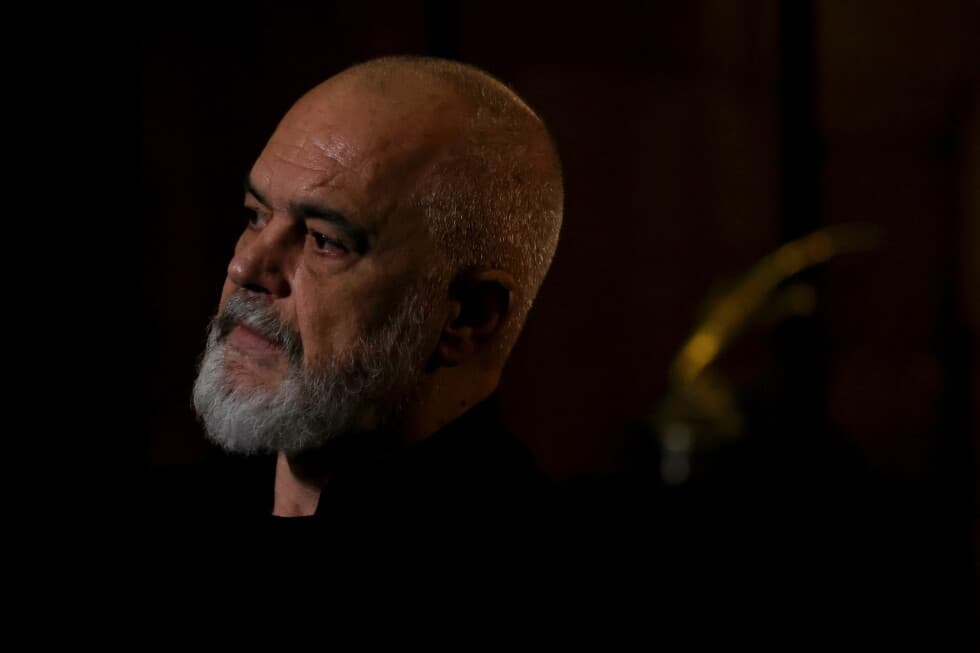
Albanian protesters pressure Rama over Kushner-backed resort
Albania's protest movement against a Jared Kushner-linked coastal resort has moved from a local environmental dispute into a broader challenge to Prime Minister Edi Rama's development model. Protesters filled central Tirana on Wednesday after work at the Zvërnec and Narta Lagoon area triggered anger over protected wetlands, land access and transparency. Rama says the project remains in planning, that a formal environmental impact assessment has not yet begun, and that Albania should welcome high-end investment. Environmental groups say machinery and fencing appeared before the public had seen enough permits or consultation. The European Commission has warned Albania that progress towards EU membership depends on alignment with the EU environmental acquis. The dispute now tests three things at once: Albania's rule-of-law credibility, its tourism strategy, and the political sensitivity of a major Balkan project tied to Donald Trump's family.
Verified by Validiris·📚 6 sources·🧠 AI-checked·🇧🇪 Belgian: LowWhy you can trust this
Trump's America: From the First Term to Now
A living dossier on Donald Trump's political project, from the 2016 victory through the post-2020 contested period to his return to the White House in January 2025 — and the political, legal, economic and institutional consequences still unfolding.
About this story
Jared Kushner (US investor and Donald Trump's son-in-law, former White House adviser from 2017 to 2021) is linked to the project through Affinity Partners (Miami-based investment firm he founded in 2021). Ivanka Trump (businesswoman and Donald Trump's daughter, former White House adviser) has publicly associated herself with the Albania plans. Edi Rama (Albania's Socialist prime minister since 2013) is defending the development as part of a luxury-tourism strategy. Zvërnec (coastal village near Vlorë in southern Albania) is close to the disputed mainland works. Narta Lagoon (protected wetland near Vlorë) is a migratory bird habitat. Sazan Island (former military island off Albania's coast) is the resort's second component. PPNEA (Protection and Preservation of Natural Environment in Albania, long-running conservation NGO) is among the organisers opposing the project. SPAK (Albania's Special Structure against Corruption and Organized Crime, created after 2016 justice reforms) is examining issues linked to protected-area legal changes.
How to read this story
The history
Albania's coastline has repeatedly become a test case for the trade-off between post-communist development and conservation. In 2023, the Albanian government and IUCN presented the Vjosa Wild River National Park as Europe's first wild river national park, covering 12,727 hectares and intended to protect a river system of high biodiversity. In 2024, legal changes on protected areas drew criticism from environmental groups and EU-facing observers because they appeared to open space for strategic tourism investments. Earlier controversy over the planned Vlora airport near Narta Lagoon also showed how infrastructure projects can collide with migratory-bird habitats and accession expectations.
The geopolitics
The dispute folds local ecology into a wider Balkan pattern: governments courting Gulf, US and other foreign capital to upgrade tourism and infrastructure while EU institutions press for rule-of-law and environmental convergence. Kushner's involvement adds US political sensitivity, but the deeper geopolitical question is whether candidate states can attract capital without weakening the standards required for EU entry.
Why now
The story became urgent after machinery and fencing appeared around the Zvërnec site, turning earlier concern into visible confrontation. The 10 June rally in Tirana then showed that the dispute had outgrown a local planning fight and become a national protest issue.
What to watch
Watch for publication of permit documents, the start or scope of any environmental impact assessment, SPAK's next procedural move, and whether Rama's government changes the project footprint. A Commission follow-up in accession monitoring would raise the stakes for Tirana.
International angle
The European dimension is central because Albania is a candidate country and its environmental alignment is part of accession scrutiny. Brussels is not deciding the resort permit, but EU institutions can influence Albania through monitoring, benchmarks and political signalling. The case also matters to neighbouring Balkan countries that use strategic-investor policies while seeking EU credibility.
What this means for you
Belgian and EU readers should treat this as an enlargement-governance case rather than a travel story. It may influence how EU institutions discuss Albania's environmental chapter, how NGOs brief MEPs and member-state diplomats, and how investors assess political risk in Western Balkan tourism projects.
What happens next
The next steps are likely to come through three channels: Albania's project approval process, any environmental impact assessment, and SPAK's inquiry into the surrounding legal and land issues. Protests could continue if machinery returns or if the government advances the project without publishing documents. The European Commission may also keep the issue alive through accession monitoring and Chapter 27 benchmarks.
Potential consequences
If the project proceeds without a transparent environmental process, it could deepen public distrust in Rama's government and give EU institutions a concrete example to cite in accession scrutiny. If the project is delayed or redesigned, Albania may face short-term investor complaints but gain credibility on rule-of-law and nature-protection standards. Either outcome could shape how other Western Balkan governments balance strategic-investor laws with EU conditionality.
Opposing perspectives
- Albanian government / Edi Rama
Rama argues that Albania should not signal hostility to major foreign investors and says the project is still in planning, with environmental assessment to follow. His strongest case is that high-end tourism could move Albania away from low-margin mass tourism while keeping the country on a pro-EU development path.
- Environmental groups (PPNEA and allies)
PPNEA's argument is that the sequence is backwards: machinery, fencing and land clearing appeared before transparent permits, consultation and environmental safeguards were visible. The strongest version of this view is that the dispute is not anti-investment but about whether protected areas and local rights mean anything when a politically connected investor arrives.
- European Commission / enlargement institutions
The Commission's frame is institutional rather than local: Albania's accession path requires alignment with EU environmental standards. The strongest version is that candidate countries cannot treat protected-area policy as negotiable when Chapter 27 and green-agenda commitments are part of the credibility bargain with existing member states.
- Developers / Sazan Real Estate Development LLC
The developer's stated position is that it will pursue responsible stewardship, environmental improvement, job creation and long-term local value while respecting public and institutional processes. The strongest version is that a final, assessed project could bring investment to a poor coastal region without destroying the natural assets that make it attractive.
Timeline
- 2023-03-15·The Albanian government and IUCN announced the Vjosa Wild River National Park.
- 2024·Albania adopted protected-area legal changes that environmental groups later criticised.
- 2025-01·Kushner-linked plans for Sazan Island received strategic-investor attention from Albanian authorities.
- 2026-05-30·Protests began around the project after work and fencing at the coastal site drew public anger.
- 2026-06-10·Protesters filled central Tirana in the largest rally yet against the project.
Glossary
- EU environmental acquis
- The body of EU environmental law and standards that candidate countries must adopt and implement before joining the Union.
- Chapter 27
- The EU accession negotiating chapter covering environment and climate change, including nature protection, water, waste and impact assessment rules.
- Strategic investor status
- A national designation used by some governments to prioritise or facilitate large investments, often through faster procedures or state support.
Related to this story
Live connections from the Belgium Impulse ecosystem — not recommendations.
This briefing was prepared with AI assistance and reviewed by a Belgium Impulse editor before publication. methodology.