Will Leuven act before another serious bus-station accident?
Bus drivers in Leuven have demanded safety measures after a 75-year-old man was critically injured beneath a De Lijn bus at the city’s station on 5 August, renewing scrutiny of a transport interchange where earlier interventions have not prevented serious…
In 30 seconds
- A 75-year-old Leuven man was struck at about 18:45 on 5 August 2026 and suffered life-threatening injuries.
- Prosecutors seized surveillance footage; the bus driver’s alcohol test was negative.
- A 27-year-old Indian student died after a collision at the station in February 2024.
- An 80-year-old pedestrian suffered severe injuries at the station in March 2025.
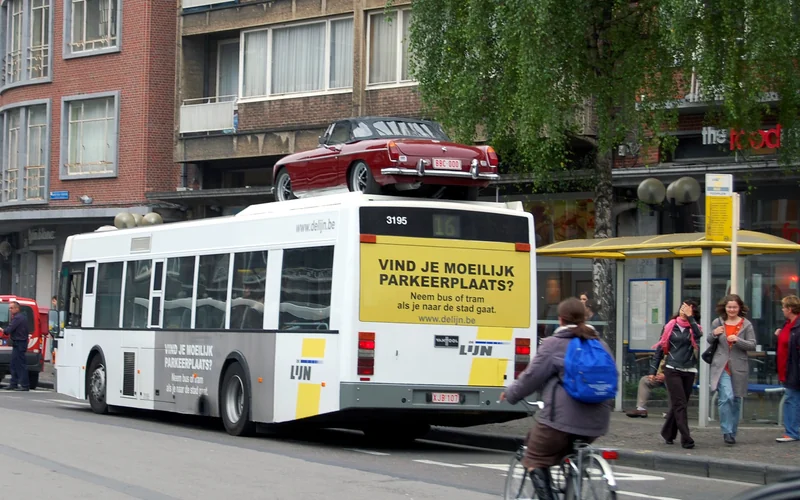
Bus drivers in demanded urgent changes at Belgium’s busiest bus station on 7 August, two days after a 75-year-old local man was struck by a bus at a platform on Martelarenplein and suffered life-threatening injuries. The Leuven public prosecutor’s office is investigating the collision, while drivers told that the station’s layout makes further accidents foreseeable.
The accident happened at about 18:45 on 5 August. According to local reporting based on information from the authorities, the man was on the green pedestrian guidance strip when he was hit and both legs became trapped beneath the vehicle. Emergency services took him to UZ Leuven’s Gasthuisberg campus. The driver tested negative for alcohol, but the precise sequence of events remains undetermined. Prosecutors seized surveillance footage and began questioning witnesses; the victim could only be interviewed when his condition allowed.
For commuters, students, visitors and the many international residents who change between trains and Flemish regional buses in Leuven, the immediate issue is not an abstract mobility debate. The compact forecourt brings turning buses into close contact with people walking between platforms, cyclists and other traffic. Drivers interviewed by VRT NWS said colleagues had experienced several near misses and argued that waiting for the next victim was unacceptable.
Their warning carries particular weight because the latest collision follows a fatal accident and another case involving serious leg injuries. In February 2024, a 27-year-old Indian student died after a bus struck her beside the platforms. VRT NWS reported that an initial traffic examination found the bus had approached from Bondgenotenlaan. In March 2025, an 80-year-old pedestrian suffered severe injuries to both legs after being hit near platform 9. Leuven police said he survived and that the driver’s alcohol and drug tests were negative.
De Lijn, Leuven city authorities and local police responded to the 2024 death with red and green surface markings and pictograms intended to guide pedestrians away from buses’ paths. De Lijn spokesperson Marco Demerling said at the time that the markings were meant to provide greater clarity for everyone using the station. Drivers’ renewed intervention presents a different assessment: paint and warnings do not, in their view, resolve the underlying conflict between bus movements and pedestrian routes.
The institutional response has not been entirely static. In May 2025, Leuven and the Flemish publicly owned operator De Lijn commissioned a long-term safety and comfort study, budgeted at €75,600.80 and financed equally by both partners. Mobility alderman Dirk Vansina of CD&V said the consultants could consider moving stops to the former depot or to the Kessel-Lo side of the railway station. He acknowledged that the interchange was already extremely busy and would face greater pressure as Leuven grew.
That creates the central tension. Drivers want measures quickly because they experience the risk during every shift. The city and De Lijn are considering a structural redesign, but redistributing platforms must be coordinated with the planned redevelopment of Martelarenplein and the Kessel-Lo junction. Those projects involve scarce urban space, public-transport capacity, cycling routes and substantial construction work. The Brussels Times also reported that the police had previously described the square’s lightly regulated movement as “safe chaos”; repeated serious injuries now place that premise under sharper scrutiny.
The broader lesson extends beyond Leuven without turning this into an EU-level story. European cities encourage transfers between rail, buses, bicycles and walking, but successful interchange design depends on separating the paths of large vehicles from vulnerable travellers wherever possible. Leuven’s experience shows how a transport hub can support sustainable mobility while accumulating risks when passenger volumes outgrow its physical arrangement.
Where this is happening
View on map Leuven →The next test is whether the city and De Lijn publish the commissioned study, identify interim protections and attach funding and dates to structural work. As of the reporting reviewed for this article, no definitive cause had been established for the 5 August collision, and no newly adopted emergency redesign had been announced. The investigation must distinguish individual circumstances from infrastructure failures, but the recurring pattern means Leuven’s authorities will also have to explain what can change before another near miss becomes another casualty.
What to do
Passengers using Leuven station should take extra care around turning buses, use designated pedestrian routes and allow more time when changing between trains and buses, particularly during busy periods. No completed redesign, implementation date or confirmed service change is identified in the article, so travellers do not yet need to alter tickets or regular routes. The next concrete decisions to watch are the findings of the €75,600.80 safety study and any measures announced by Leuven or De Lijn. Drivers and regular users can report dangerous situations through the relevant operator, city or police channels.
The Belgian angle
The issue directly concerns Flemish mobility policy because De Lijn is a Flemish public transport operator. Any redesign could affect bus routes and transfers across the wider Leuven transport region, not only movement within the city.
EvidenceWell established · 1 primary source + 1 official document + 3 independent reporting sources · Background sources: 3Explore evidence →Hide evidence ↑
- Published:
- 7 Aug 2026, 02:00
- Retrieved by ODIN:
- 25 Aug 2026
- Published:
- 6 Aug 2026, 02:00
- Retrieved by ODIN:
- 25 Aug 2026
- Published:
- 6 Aug 2026, 02:00
- Retrieved by ODIN:
- 25 Aug 2026
- Published:
- 10 Mar 2025, 01:00
- Retrieved by ODIN:
- 25 Aug 2026
- Published:
- 26 May 2025, 02:00
- Retrieved by ODIN:
- 25 Aug 2026
- Published:
- 26 May 2025, 02:00
- Retrieved by ODIN:
- 25 Aug 2026
- Published:
- 20 Feb 2024, 01:00
- Retrieved by ODIN:
- 25 Aug 2026
- Published:
- 27 May 2025, 02:00
- Retrieved by ODIN:
- 25 Aug 2026
Voices & reactions
What the main actors are doing
Reported positions, summarised — not direct quotationsLeuven bus drivers seeking immediate intervention
Drivers interviewed by VRT NWS argue that the layout itself creates unavoidable conflicts and that colleagues regularly experience near misses. From their workplace perspective, coloured markings and appeals for vigilance are inadequate, and waiting for a long redevelopment process exposes passengers and drivers to continuing risk.
Leuven and De Lijn pursuing a structural study
The city and De Lijn frame the problem as a complex redesign challenge requiring coordination with Martelarenplein and Kessel-Lo infrastructure projects. Their approach considers relocating platforms and redistributing bus movements, but necessarily operates on a longer planning, funding and construction timetable.
Police framing of lightly regulated movement
As reported by The Brussels Times, Leuven police had described the station environment as a form of “safe chaos”, in which fewer rigid rules may encourage caution. The recurrence of grave collisions gives drivers and travellers grounds to question whether that operating principle remains defensible at such a busy interchange.
The story, connected
Explore the people, places and ideas in this story
Go beyond the headline. Open a card for sourced context, maps, official links and the other subjects connected to this report.
Continue reading
This story was assembled from verified evidence, with its sources and reasoning recorded as it was written.
This briefing was prepared with AI assistance and passed Belgium Impulse source, provenance and publication-quality checks. methodology.