Why was Pommelien Thijs quietly spending summer evenings in the Flemish Ardennes?
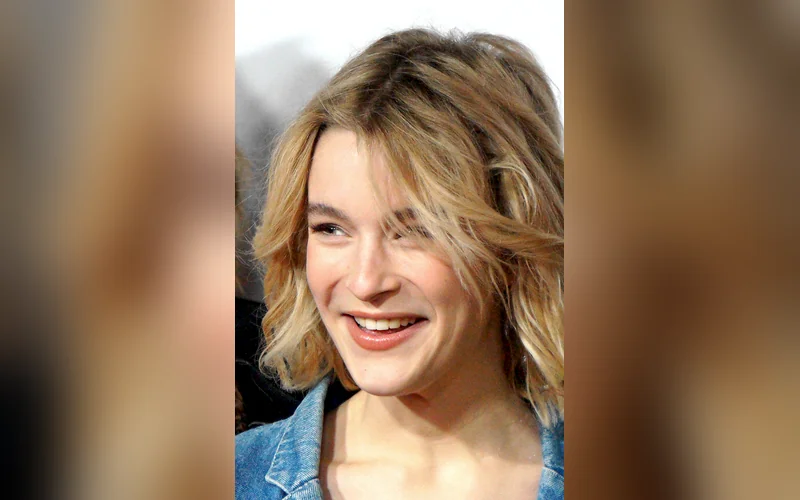
VRT has confirmed that Pommelien Thijs joined Koen De Bouw and Barbara Sarafian in Altijd welkom, a new Dutch-language tragicomic drama filmed discreetly in the Flemish Ardennes and scheduled for autumn 2026.
In 30 seconds
- VRT has scheduled Altijd welkom for autumn 2026 on VRT 1 and VRT MAX, without announcing an exact date.
- The story follows two parents and four young friends after the unexpected death of Arne.
- Filming occurred in Oosterzele, Maarkedal and elsewhere in the Flemish Ardennes.
- The confirmed cast includes Pommelien Thijs, Barbara Sarafian, Koen De Bouw and Misha Van der Werf.
VRT confirmed in August 2026 that Pommelien Thijs has joined Koen De Bouw and Barbara Sarafian in Altijd welkom, a new tragicomic series about grief filmed this summer in Oosterzele, Maarkedal and other parts of the Flemish Ardennes. The production is scheduled for VRT 1 and VRT MAX in autumn 2026, but the broadcaster has not yet published an exact premiere date. Viewers who are learning Dutch should be able to activate Dutch captions through the CC symbol in the VRT MAX player, in line with VRT’s standard accessibility provision for its programmes.
The announcement explains why Thijs, one of Flanders’ most visible singers and actors, had repeatedly been spotted away from the festival circuit. Regional reporting by Het Nieuwsblad found that members of the cast and crew stayed at the Sint-Jacobshoeve holiday property in Melden, part of the gemeente Oudenaarde. Its operator, Ine Wannijn, said the enclosed estate gave the group privacy and that the guests generally returned after filming for dinner and quiet evenings outside. In nearby Maarkedal, residents also encountered production activity around a chapel, a meadow and private homes used by the team.
Those sightings were not evidence of a celebrity mystery so much as the ordinary logistics of a location shoot. Thijs was working on a drama built around the death of a young man named Arne. According to VRT and an on-set report from Het Nieuwsblad, his mother Lieve, played by Sarafian, repeatedly brings together four of his young friends in an attempt to preserve their connection with him. De Bouw plays Arne’s father, Mark, who is less convinced by her determination. Shared meals, a commemorative festival and uncomfortable reunions expose how differently the six central characters process loss.
Thijs belongs to the younger ensemble alongside Femke Van der Steen, Brussels actor Misha Van der Werf and Willem Loobuyck. VRT has so far described the series in broad thematic terms rather than identifying every character or disclosing precisely how Thijs’s role fits into Arne’s circle. That distinction matters: her participation is confirmed, but detailed claims about her character would run ahead of the information released by the broadcaster.
Why this role is worth noticing
Altijd welkom returns Thijs to the kind of ensemble fiction that helped make her widely recognisable beyond pop music. She first built a young audience through Ketnet’s musical drama #LikeMe and later played Louise in Knokke Off. VRT NWS reported that she researched bipolar disorder before the second season of Knokke Off because she did not want to approach Louise’s condition casually. That earlier role, and the series’ subsequent circulation through Netflix under the title High Tides, introduced her acting to audiences well beyond Dutch-speaking Belgium.
The new production appears quieter and more intimate. Rather than the conspicuous wealth and volatile relationships of Knokke Off, its announced subject is the uneven rhythm of mourning: one person tries to keep a group together while others may need distance. The comic element is important because VRT is presenting Altijd welkom as tragicomedy, not as a clinical guide to bereavement. Its value will ultimately depend on whether the writing allows humour to emerge from recognisable human behaviour without trivialising loss.
The series is produced by Dingie, the company also associated with Knokke Off, and directed by Joren Slaets and Renate Raman. Emiel Van Wouwe and Slaets wrote the screenplay. Regional reports say the production received support from the Vlaams Audiovisueel Fonds, Belgium’s federal tax-shelter mechanism, Toerisme Oost-Vlaanderen and Toerisme Vlaamse Ardennen. These partnerships also help explain the unusually prominent use of the landscape rather than a largely anonymous studio setting.
The Flemish Ardennes are more than scenery
The rolling countryside and village centres around Oosterzele, Maarkedal, Kluisbergen and Oudenaarde give the story a distinctly East Flemish setting. A garden in Oosterzele was converted into a set for scenes involving the bereaved family and Arne’s friends, according to Het Nieuwsblad. Other filming took place around Maarkedal, while accommodation near the Koppenberg kept part of the company close to the locations.
That can generate modest visibility for the region, particularly among viewers who know the Flemish Ardennes mainly from cycling races. It should not, however, turn the drama into a tourism advertisement. The locations serve the emotional story first; any benefit for local hospitality, walking routes or destination marketing is secondary.
For newcomers to Belgium, the geography also illustrates a useful linguistic detail. Oosterzele, Maarkedal, Kluisbergen and Oudenaarde are Dutch-speaking gemeenten in the province of East Flanders. In French-language Belgian usage, a municipality is usually called a commune; the institutions and local signage in these towns operate primarily in Dutch. The series itself is expected to be Dutch-language.
How to watch if Dutch is not your first language
VRT MAX is the Flemish public broadcaster’s streaming service and requires a free VRT profile for its full catalogue. VRT’s official guidance says users can enable captions by selecting the CC symbol in the website, mobile application or smart-TV application. The broadcaster provides Dutch subtitles for programmes across VRT 1, VRT Canvas, Ketnet and VRT MAX, subject to limited exceptions. VRT has not announced English or French subtitles for Altijd welkom, so international viewers should not assume that translations will be available.
Where this is happening
View on map VRT →Residents temporarily travelling elsewhere in the European Union can generally retain access after verifying their Belgian residence through their VRT profile. VRT says verification may involve a Belgian mobile number or Mijn Burgerprofiel, the Flemish government’s digital citizen portal. Rights restrictions can still apply to individual titles, although an in-house Flemish production is more likely than an acquired programme to remain available. People living in Wallonia can also use VRT MAX; residence in a Dutch-speaking gemeente is not required.
There is no special form, municipal registration or paid subscription specifically for this series. Create a VRT profile, check that the application works on the intended device and activate CC once the episodes appear. For language learners, Dutch captions can make regional accents and colloquial expressions easier to follow, but they should be understood as accessibility subtitles rather than a literal transcript or translation.
VRT’s autumn announcement establishes the cast, subject and intended platforms while leaving the episode count, full character descriptions, release pattern and precise starting date undisclosed. The next meaningful update should be a trailer or programme page confirming those details. Until then, the solved ‘mystery rond Pommelien Thijs’ is simply that her quiet evenings in the Flemish Ardennes followed days spent filming a new chapter in her acting career.
What to do
Viewers should watch VRT’s programme announcements for the exact autumn 2026 premiere date, which remains unconfirmed. The series is due on both VRT 1 and VRT MAX. International residents who understand some Dutch can activate Dutch closed captions using the CC control on VRT MAX; no English or French subtitles have been confirmed. Anyone expecting to stream while outside Belgium should check VRT’s current abroad-access guidance before travelling, because availability depends on the broadcaster’s access conditions. No ticket purchase or subscription cost is identified in the article.
The Belgian angle
The production brought cast, crew and spending to municipalities in the Flemish Ardennes and will give the region sustained screen exposure. Any tourism effect remains prospective and secondary to the drama.
EvidenceWell established · 2 primary sources + 2 official documents + 1 independent reporting source · Background sources: 1Explore evidence →Hide evidence ↑
- Published:
- 25 Aug 2026, 02:00
- Retrieved by ODIN:
- 24 Aug 2026
- Published:
- 18 Aug 2026, 02:00
- Retrieved by ODIN:
- 24 Aug 2026
- Published:
- 18 Aug 2026, 02:00
- Retrieved by ODIN:
- 24 Aug 2026
- Published:
- 19 Aug 2026, 02:00
- Retrieved by ODIN:
- 24 Aug 2026
- Publication date unavailable
- Retrieved by ODIN:
- 24 Aug 2026
- Publication date unavailable
- Retrieved by ODIN:
- 24 Aug 2026
- Published:
- 6 Dec 2024, 01:00
- Retrieved by ODIN:
- 24 Aug 2026
Voices & reactions
What the main actors are doing
Reported positions, summarised — not direct quotationsThe creators’ tragicomic approach
VRT and the production team frame Altijd welkom as a story in which absurd laughter, confrontation and unexpected connection can coexist with bereavement. That approach treats humour as part of how people endure loss, rather than presenting grief as a single solemn process.
Viewers seeking a careful portrayal of grief
Audiences with personal experience of bereavement may reasonably reserve judgement until the series airs. A tragicomic tone can make difficult material approachable, but its success depends on whether individual characters receive enough depth and whether humour supports rather than diminishes their loss.
Continue reading


This story was assembled from verified evidence, with its sources and reasoning recorded as it was written.
This briefing was prepared with AI assistance and passed Belgium Impulse source, provenance and publication-quality checks. methodology.