Why is Antwerp’s famous Bolleke less popular than it used to be?
Antwerp’s Bollekesfeest drew about 200,000 visitors from 21 to 23 August 2026, yet Flemish reporting from the festival found that the amber Bolleke itself no longer enjoys the dominance it had in the 1980s.
In 30 seconds
- The City of Antwerp reported about 200,000 festival visitors over three days in August 2026.
- The city said 575 barrels of Bolleke were tapped during the event.
- De Koninck lists Bolleke as a 5.2% amber Spéciale Belge whose name comes from its rounded glass.
- The 2026 festival featured 36 bands and DJs across the Grote Markt and Groenplaats.
welcomed about 200,000 people to the from Friday 21 to Sunday 23 August 2026, where bars tapped 575 barrels of the city’s signature amber beer, according to the city government’s closing figures. For newcomers, the practical takeaway is pleasingly simple: order “een bolleke” in Dutch and you are asking for De Koninck’s 5.2% amber ale, traditionally served in the rounded glass that gave it its nickname. English is widely understood in central Antwerp, but the Dutch phrase is part of the ritual.
The crowds show that the festival remains one of the city’s largest communal celebrations. They do not, however, prove that Bolleke still commands the place in everyday drinking culture that it once did. Reporting by VRT NWS and Het Nieuwsblad during the weekend found younger visitors choosing fruit beers, lighter drinks and other brands, while Antwerp beer specialists described De Koninck’s classic ale as less popular than during the 1980s.
That conclusion needs a little restraint. Neither report published audited sales figures showing how much Bolleke’s market share has changed, and festival barrel totals cannot be compared meaningfully without equivalent figures from earlier editions. “Less popular” is therefore best read as an informed observation about changing tastes, not a measured collapse. The city’s figure of 575 barrels also demonstrates that plenty of people still drink it.
What exactly is a Bolleke?
De Koninck describes the beer as a clear, amber-coloured Spéciale Belge with light malt, hop and caramel notes. The brewery lists an alcohol content of 5.2% and says the modern Bolleke identity dates from 1952. Strictly speaking, the affectionate Antwerp word originally refers to the bulbous glass, although it now identifies both the vessel and the beer poured into it. In local speech, “een Bolleke Keuning” is another recognisable order; Keuning approximates the Antwerp pronunciation of De Koninck.
The style itself belongs to an older chapter of Belgian brewing. The Flemish Centre for Agriculture and Fisheries Marketing, VLAM, says Spéciale Belge ales emerged as an amber, top-fermented Belgian answer to imported beers. Its recognised regional products include Bolleke, Palm, Special De Ryck and Tonneke. VLAM has also noted the fashion problem facing the style: white and fruit beers gained ground from the 1990s, followed by strong consumer interest in blonde beers.
That broader choice is part of the reason an icon can remain instantly recognisable while losing habitual drinkers. A café in the early 1980s might have carried only a small selection. Today, Antwerp drinkers can move between pils, tripel, IPA, lambic, fruit beer, alcohol-free options and beers from a growing range of local and international producers. Het Nieuwsblad’s festival interviews captured that divide: some younger visitors associated Bolleke with a fuller or old-fashioned taste and preferred lighter or fruitier alternatives, while beer enthusiasts argued that residents risk overlooking the distinctiveness of their own city ale.
From roadside inn to city emblem
The brewery’s roots are older than the nickname. A history published by the says Joseph Henricus De Koninck bought the Den Plaisanten Hof inn in 1827. After his death, Elisabeth Cop and Johannes Vervliet converted it into Brouwerij De Hand, named after a hand shown on a boundary marker between Antwerp and Berchem. The hand survives in the brewery’s visual identity. The business later took the De Koninck name and remained in family ownership until Duvel Moortgat acquired it in 2010.
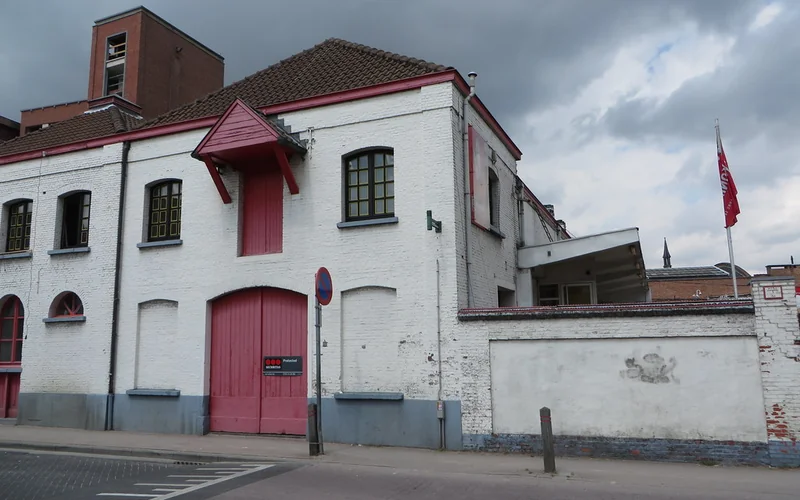
The brewery site on Mechelsesteenweg, near the Harmonie and Zurenborg neighbourhoods, now combines production and an interactive visitor route with food businesses and hospitality venues. It offers a useful introduction for residents who know the glass from café terraces but not the history behind it. Check the brewery’s own website before travelling because tour and bar hours differ; its published address is Mechelsesteenweg 291, 2018 Antwerpen.
Bolleke’s cultural weight also extends beyond one brand. added Belgian beer culture to its Representative List of the Intangible Cultural Heritage of Humanity in 2016, recognising brewing, serving, appreciation and the transmission of knowledge as living practices. That designation covers Belgium’s diverse beer culture rather than De Koninck specifically, but it helps explain why glassware, pouring customs and local vocabulary matter alongside the liquid itself.
A festival bigger than its namesake
The city’s official decision describes the Bollekesfeest as a free annual festival in Antwerp’s historic centre. The 2026 programme spread across the Grote Markt, Handschoenmarkt, Suikerrui and Groenplaats, with 36 bands and DJs and almost 3,000 minutes of live music. Food trucks and family entertainment made it possible to attend without treating beer as the sole attraction. The city also required reusable catering material, while glass containers were prohibited for participating food stands.
This creates two reasonable readings of the event. Duvel Moortgat and devoted Antwerp beer drinkers can see the festival as a powerful annual showcase for an enduring local product. Visitors who choose fruit juice, food or another drink can see it instead as a broad civic festival whose historic name no longer dictates what must be in everyone’s cup. Those views are not mutually exclusive: the Bolleke can function as a symbol even when fewer people choose it as their default beer.
Anyone drinking should remember that familiarity does not make the beer alcohol-free. Belgium’s FPS Public Health states that ordinary beer and wine may be sold or served from age 16, while other alcoholic drinks generally require a minimum age of 18; vendors can ask for official identification. The safest practical rule remains not to drive after drinking and to choose public transport, a taxi or a designated driver.
What happens next is less about whether Antwerp abandons the Bolleke than about whether the brand can translate civic affection into everyday orders. Future festival barrel totals, comparable sales data and the brewery’s efforts to reach younger or alcohol-conscious consumers would provide a firmer answer. For now, the evidence supports a more nuanced conclusion: Bolleke is less dominant than it was, but its rounded glass still carries a remarkable amount of Antwerp identity.
What to do
For visitors or newcomers in Antwerp, ordering “een bolleke” remains a simple way to request De Koninck’s 5.2% amber beer in its traditional rounded glass. Do not assume Bolleke is a generic term for every beer or that it remains every Antwerp resident’s default choice. Anyone drinking should account for its alcohol content, follow Belgian alcohol rules and arrange safe transport. The 2026 Bollekesfeest has already ended; readers interested in a future edition should check the City of Antwerp’s programme and dates before planning a trip.
The Belgian angle
The festival brought around 200,000 visits into Antwerp’s historic centre and supported hospitality, food vendors and the city’s cultural programme. The beer’s changing status primarily concerns Antwerp and Flanders rather than Belgium as a whole.
EvidenceWell established · 2 primary sources + 4 official documents + 1 independent reporting source · Background sources: 1Explore evidence →Hide evidence ↑
- Published:
- 22 Aug 2026, 02:00
- Retrieved by ODIN:
- 25 Aug 2026
- Published:
- 23 Aug 2026, 02:00
- Retrieved by ODIN:
- 25 Aug 2026
- Published:
- 23 Aug 2026, 02:00
- Retrieved by ODIN:
- 25 Aug 2026
- Published:
- 16 Mar 2026, 01:00
- Retrieved by ODIN:
- 25 Aug 2026
- Publication date unavailable
- Retrieved by ODIN:
- 25 Aug 2026
- Published:
- 19 Nov 2020, 01:00
- Retrieved by ODIN:
- 25 Aug 2026
- Published:
- 30 Nov 2016, 01:00
- Retrieved by ODIN:
- 25 Aug 2026
- Publication date unavailable
- Retrieved by ODIN:
- 25 Aug 2026
Voices & reactions
What the main actors are doing
Reported positions, summarised — not direct quotationsTraditional Antwerp beer enthusiasts
Beer specialists and loyal drinkers regard Bolleke as a distinctive local Spéciale Belge whose familiarity has caused residents to undervalue it. For this constituency, reduced everyday visibility is a reason to explain and preserve the beer’s taste, glassware and café ritual.
Younger and variety-seeking drinkers
Some younger festival visitors interviewed by Het Nieuwsblad preferred lighter, fruitier or more contemporary alternatives and described Bolleke as full-flavoured or old-fashioned. Their choices reflect a much broader drinks market rather than hostility towards Antwerp tradition.
City-festival visitors who do not drink beer
Families, non-drinkers and music audiences can treat Bollekesfeest as a free urban celebration rather than a beer-tasting obligation. The programme’s concerts, food and alcohol-free choices allow the festival name to retain symbolic value without determining every visitor’s consumption.
The story, connected
Explore the people, places and ideas in this story
Go beyond the headline. Open a card for sourced context, maps, official links and the other subjects connected to this report.
Continue reading


This story was assembled from verified evidence, with its sources and reasoning recorded as it was written.
This briefing was prepared with AI assistance and passed Belgium Impulse source, provenance and publication-quality checks. methodology.