Why has Sporting Lokeren been fighting FIFA for years?
A Brussels interim-relief judge has again suspended Sporting Lokeren’s player-registration ban, allowing the Belgian second-tier club to register new signings while its wider dispute with FIFA remains unresolved.
In 30 seconds
- A Brussels interim-relief judge suspended Lokeren’s registration ban for a third time.
- The original KSC Lokeren, registration number 282, went bankrupt in April 2020.
- FIFA treated the present club as the sporting successor and linked it to a €72,600.77 player debt.
- CAS dismissed Lokeren’s appeal on 17 July 2026 and upheld a two-window registration ban.
A interim-relief judge has lifted Sporting Lokeren’s player-registration ban for a third time, obliging the Royal Belgian Football Association (RBFA) to process registrations and giving the Challenger Pro League club immediate room to strengthen its squad. VRT NWS reported the latest ruling on 20 August, after Lokeren confirmed that both national and international registrations could resume. The order is provisional rather than a final judgment on the underlying dispute, and an appeal remains possible.
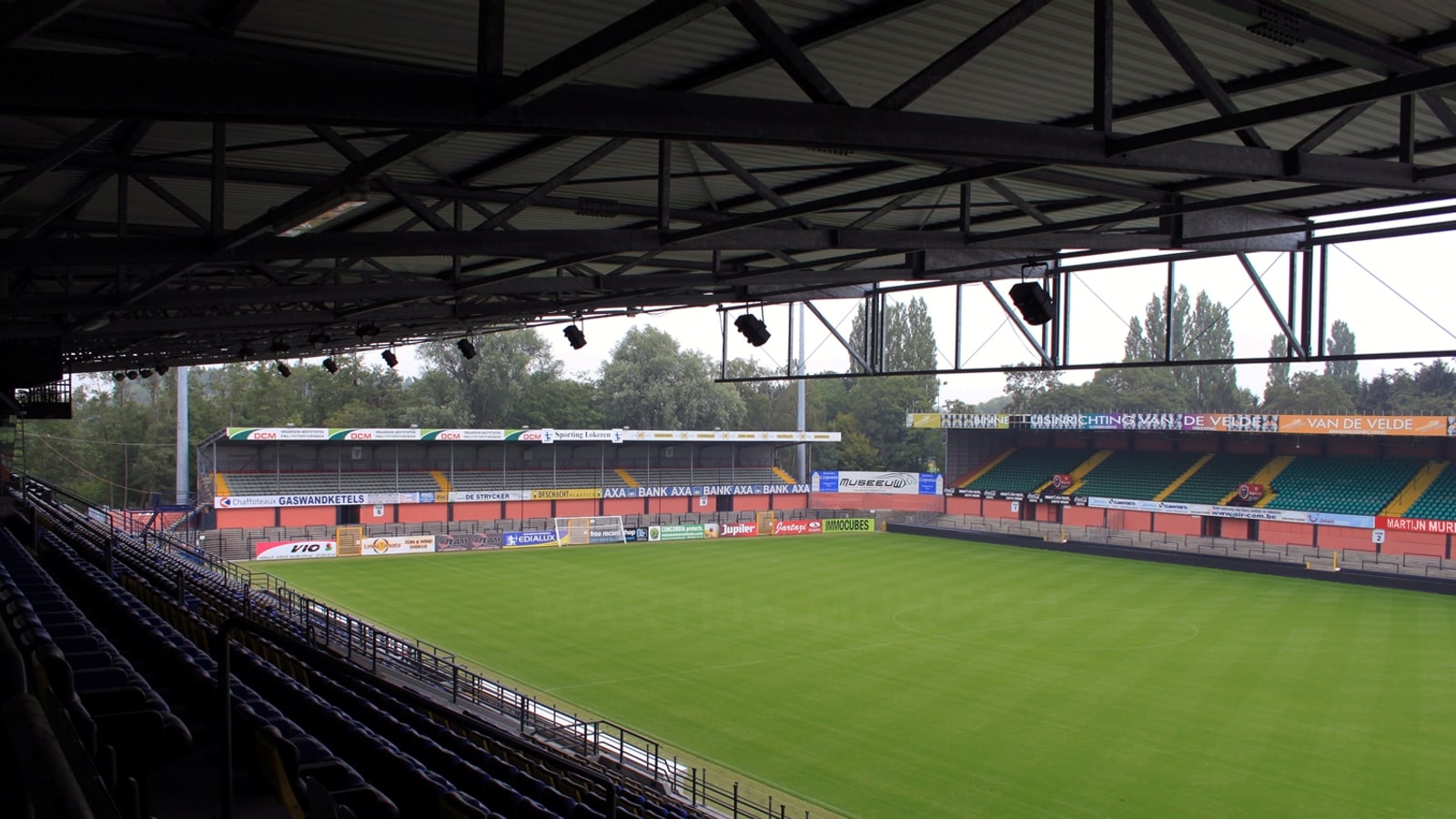
The practical effect in Lokeren is significant. CEO Thomas Bernaert told Het Nieuwsblad that the club could finally operate with the same recruitment possibilities as its competitors. Five players who had already trained with the squad — Jassim Mazouz, Luan Simnica, Modeste Jr Duku, Robin Denuit and Aboubacar Dindane — were awaiting registration. For supporters at Daknam, an argument about jurisdiction and institutional authority therefore translates directly into who can appear on the team sheet.
The dispute began after the original KSC Lokeren Oost-Vlaanderen, registration number 282, went bankrupt in April 2020. The present club emerged through KSV Temse and retained Temse’s registration number, but adopted the Lokeren name, colours and stadium. treated the new organisation as the sporting successor of the bankrupt club and held it responsible for an outstanding debt to a former player. According to a digest of the subsequent Court of Arbitration for Sport proceedings, FIFA’s Dispute Resolution Chamber ordered Lokeren Temse in June 2021 to pay €72,600.77.
Lokeren’s position is that legal continuity cannot simply be inferred from shared sporting identity. The current organisation says it is a different legal entity, built on another registration number, and should not inherit the former club’s liabilities. Club chairman Hans Van Duysen told VRT NWS that repeated bans had damaged recruitment because prospective players were deterred by uncertainty. Lokeren ultimately settled the former player’s claim, but that did not end the disciplinary conflict.
FIFA approaches the case from the opposite direction. Its rules permit sanctions against a sporting successor so that football debts cannot disappear when an insolvent club re-emerges under a closely related identity. FIFA also maintains that football disputes should pass through its own bodies and, on appeal, the Court of Arbitration for Sport in Lausanne. CAS dismissed Lokeren’s appeal on 17 July 2026 and upheld a ban covering two consecutive registration periods, according to the published case digest. The arbitrator concluded that relying on an interim order from a national court did not excuse registrations made in breach of a FIFA decision.
That clash explains why the RBFA is central even though it did not originate the sanction. FIFA cannot be compelled directly by a Belgian interim-relief judge in the same way as a Belgian association, but the RBFA implements FIFA registration restrictions domestically. The latest order therefore runs through the Belgian federation. Neither FIFA nor the RBFA had issued a detailed public response to the new ruling in the reports available at publication time.
The broader European context makes this more than a procedural curiosity. In the RFC Seraing case, the EU Court of Justice ruled in August 2025 that courts in EU member states must be able to review CAS awards thoroughly where fundamental EU-law rules are engaged. The Luxembourg court stressed that sports arbitration is often imposed by governing bodies rather than freely negotiated. That judgment does not automatically decide Lokeren’s case: the CAS arbitrator found that Lokeren had not properly substantiated an EU public-policy argument. It nevertheless reinforces the principle that FIFA’s private regulatory system cannot exclude meaningful judicial scrutiny inside the European Union.
Where this is happening
View on map Brussels →For Belgian football, the unresolved question is how sporting continuity should be balanced against corporate separation after bankruptcy. A strict successor rule protects players and other creditors; an overly broad one may burden a genuinely new club with debts it never incurred. Lokeren now has temporary sporting relief, not definitive legal closure. Van Duysen has said the club hopes to reach an agreement with FIFA but may turn to Switzerland’s Federal Supreme Court if another ban follows. The next tests are whether the RBFA or FIFA appeals the Brussels order, whether all pending players are registered, and whether a later court finally reconciles Belgian judicial protection with FIFA’s demand for uniform global rules.
What to do
For Sporting Lokeren supporters and Challenger Pro League followers, the immediate effect is practical: the club may register new players while the Brussels suspension remains operative. Prospective signings and agents should still verify registration status before relying on a deal because the underlying FIFA dispute is unresolved. Belgian clubs involved in mergers, takeovers or relaunches after insolvency should conduct specific due diligence on old player debts, FIFA proceedings and possible sporting-successor status; a new legal entity or RBFA registration number may not prevent FIFA from asserting inherited liabilities. The next decisions to watch concern the wider Belgian proceedings and any renewed enforcement of the two-window ban.
The Belgian angle
The immediate impact falls on Sporting Lokeren, its players, staff and supporters in East Flanders. The case may also influence how other Belgian clubs assess mergers, relaunches and liabilities after insolvency.
EvidenceWell established · 1 primary source + 2 official documents + 1 independent reporting source · Background sources: 1Explore evidence →Hide evidence ↑
- Published:
- 20 Aug 2026, 02:00
- Retrieved by ODIN:
- 27 Aug 2026
- Published:
- 19 Aug 2026, 02:00
- Retrieved by ODIN:
- 27 Aug 2026
- Published:
- 20 Aug 2026, 02:00
- Retrieved by ODIN:
- 27 Aug 2026
- Published:
- 1 Aug 2025, 02:00
- Retrieved by ODIN:
- 27 Aug 2026
- Publication date unavailable
- Retrieved by ODIN:
- 27 Aug 2026
- Published:
- 17 Jul 2026, 02:00
- Retrieved by ODIN:
- 27 Aug 2026
Voices & reactions
What the main actors are doing
Reported positions, summarised — not direct quotationsSporting Lokeren’s Belgian legal position
Sporting Lokeren says the present club is a separate legal organisation operating under KSV Temse’s registration number and should not inherit the bankrupt predecessor’s debts. Chairman Hans Van Duysen and CEO Thomas Bernaert frame the repeated bans as unfair constraints that have weakened recruitment and sporting competition.
FIFA and CAS sporting-continuity position
FIFA treats identity, stadium, colours and other sporting links as relevant when deciding whether a new organisation succeeds an insolvent club. CAS upheld FIFA’s disciplinary approach, reasoning that a club cannot disregard an international registration sanction merely because it obtained provisional relief from a national court later found to lack jurisdiction on the merits.
EU Court judicial-protection position
The EU Court of Justice does not reject sports arbitration, but says imposed arbitration cannot remove effective judicial protection. Courts within the EU must be able to examine whether CAS awards comply with fundamental EU rules, a framework that differs from treating Lausanne arbitration as effectively final in every circumstance.
The story, connected
Explore the people, places and ideas in this story
Go beyond the headline. Open a card for sourced context, maps, official links and the other subjects connected to this report.
Continue reading


This story was assembled from verified evidence, with its sources and reasoning recorded as it was written.
This briefing was prepared with AI assistance and passed Belgium Impulse source, provenance and publication-quality checks. methodology.