Why do so many artists say they love the Belgian public?
RTBF has examined why performers repeatedly describe Belgian audiences as unusually warm, attentive and willing to join in.
In 30 seconds
- Artists and programmers repeatedly describe Belgian audiences as warm, curious or engaged, but these assessments remain anecdotal.
- BX1 quoted Sonamos Latinoamérica’s programmer describing the Belgian public as curious and engaged.
- The CSA says RTBF’s public-service obligations include at least 300 radio broadcasts of concerts or musical performances annually.
- Belgian cultural information is split across French-, Dutch- and German-language institutions and platforms.
RTBF has examined the recurring claim that artists adore the Belgian public, gathering performers’ impressions of audiences seen as warm, responsive and receptive to humour. The practical takeaway for residents is straightforward: Belgium’s reputation is best experienced beyond the largest arena dates, in the compact concert halls, cultural centres and festivals where performers and audiences can still see and hear one another. The available evidence confirms that the compliment is frequently made; it does not establish scientifically that Belgians are better spectators than anyone else.
A compliment with some substance
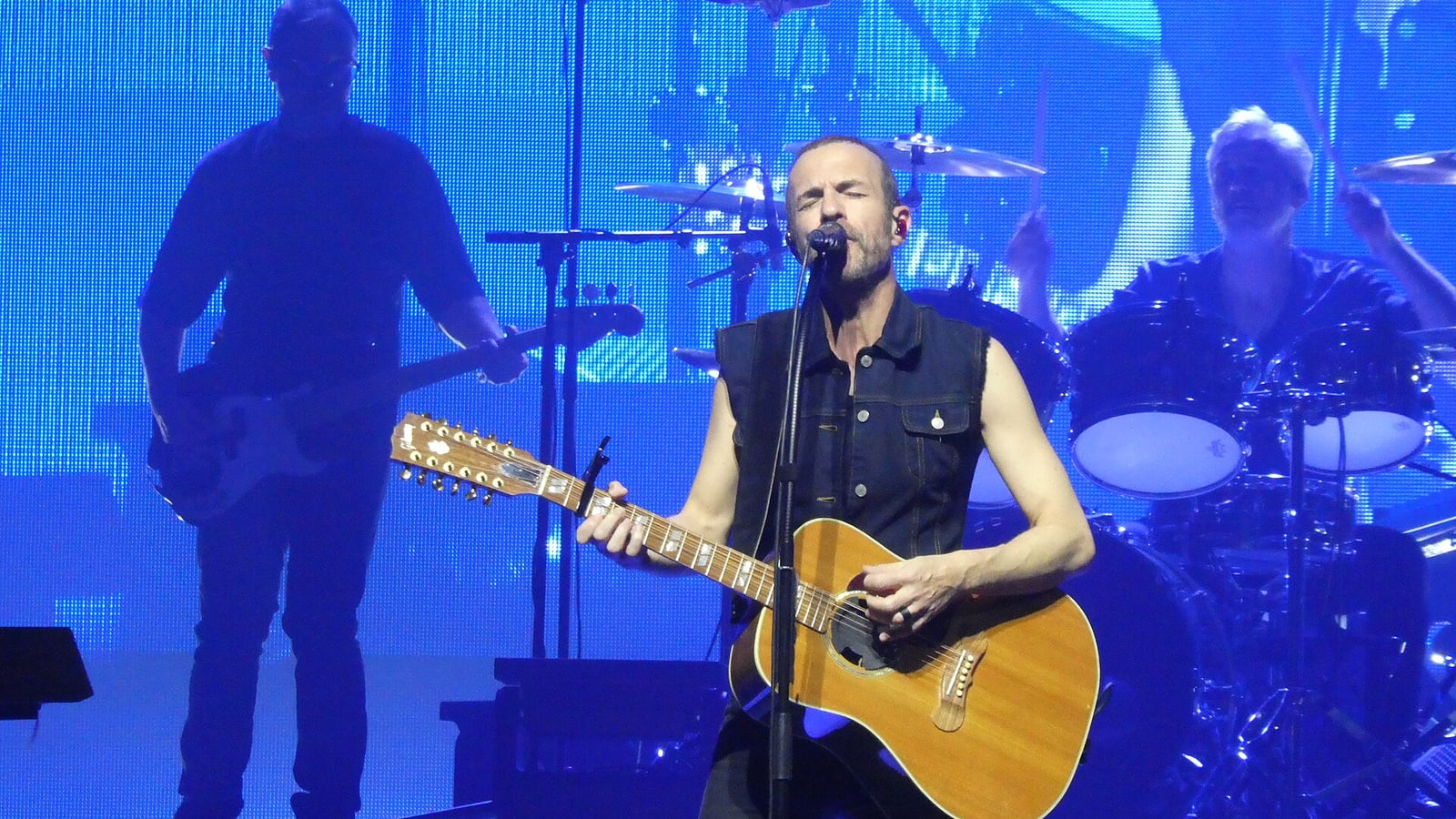
Performers returning to Belgium tend to mention connection rather than scale. In an earlier RTBF interview, French singer Calogero spoke of a strong history with his Belgian audience and said he was eager to play for it again. Patrick Bruel gave RTL Info a more architectural explanation in 2023: Forest National’s rounded configuration, proximity and accumulated concert history make the Brussels venue distinctive for artists. These are personal assessments, but their repetition across genres helps explain why the phrase has become part of Belgian concert folklore.
Smaller stages produce similar testimony. Ahead of the 2026 Sonamos Latinoamérica festival, programmer Osvaldo Hernández Nápoles told BX1 that the event offered lesser-known Latin American musicians a meeting with a curious and engaged Belgian audience. Brussels artist Edaya separately described the crowd at Bozar Rooftop as diverse, intergenerational and benevolent, according to BX1. Those descriptions are more useful than a vague national stereotype: they point to curiosity, attention and a willingness to discover unfamiliar work.
Belgium’s geography helps. Touring artists can move between Brussels, Antwerp, Ghent, Liège, Charleroi, Leuven, Hasselt and festival sites without travelling vast distances. The country also supports an unusually varied ladder of rooms: cafés and clubs, municipal cultural centres, venues such as Ancienne Belgique, Botanique and Cirque Royal, and larger halls including Forest National and ING Arena. Summer then brings festivals ranging from Couleur Café and Dour to Les Ardentes, Francofolies de Spa, Rock Werchter and Pukkelpop. Each develops its own audience habits, so there is no single “public belge.”
Language can make the welcome feel broader
Belgian audiences routinely encounter culture across linguistic borders. In Brussels, a performer may hear French, Dutch and English around the same bar after a show; other languages are commonplace in an internationally populated city. In Wallonia, French dominates, while Dutch is the normal public language in Flanders. The German-speaking Community has its own cultural network in the east. Artists who arrive with a few locally appropriate words—or who simply acknowledge that diversity—often create an immediate bond.
For newcomers, this split affects how events are found. A cultural centre may appear online as a centre culturel in French or a cultuurcentrum in Dutch. Municipal information comes from a commune in French-speaking usage and a gemeente in Dutch. Brussels residents should therefore search both language versions of their commune/gemeente website, as listings and booking links are not always identical. The federal portal Belgium.be explains the country’s communities and their culture-related responsibilities, while culture.be is the principal portal for the Fédération Wallonie-Bruxelles. In Flanders, UiTinVlaanderen and individual cultuurcentrum websites are useful equivalents. Brussels listings can also be found through agenda.brussels and venue calendars.
The institutional structure reinforces diversity rather than creating one national cultural policy. Culture is chiefly organised through Belgium’s language communities. Public-service media contribute to discovery: the Conseil supérieur de l’audiovisuel says RTBF’s public remit includes substantial cultural coverage and the radio broadcast of at least 300 concerts or musical performances annually. RTBF’s 2025 annual report also describes a Belgian Music Week mounted with the Conseil de la Musique, Court-Circuit, VI.BE and VRT, with live sessions and events in Brussels, Mons and Arlon.
Affection does not guarantee an easy market
The romantic account needs qualification. A friendly room can still be difficult to fill. BX1 reported that concert organisers and independent musicians had faced inflation, higher production costs, lost technical workers after the pandemic and increasingly late ticket purchases. Audiences may be enthusiastic once inside while remaining cautious at the box office, especially for unfamiliar names. High energy at a sold-out show therefore says little about the financial health of the wider live sector.
There is also selection bias. Artists are normally asked about the public while promoting a Belgian date, when courtesy and marketing both favour praise. Memorable nights at Forest National or a packed festival are more likely to be retold than an ordinary midweek performance. No comparable cross-country audience survey located for this article ranks Belgian spectators for warmth, attention or participation. “Artists love Belgium” should consequently be treated as a durable cultural reputation supported by testimony, not a verified league table.
Even so, the reputation has practical value. A responsive audience can encourage artists to add dates, test new material or return to smaller territories that might otherwise sit between the larger French, Dutch and German markets. It also gives emerging acts a reason to include Brussels or Wallonia in a first European run. Federal organisers used that same idea when presenting the 2026 Belgian Party at the Cinquantenaire: the official announcement described a free cross-generational programme where emerging artists could reach a large public alongside established names.
For anyone hoping to understand the phenomenon, the best route is to vary the room as well as the artist. Compare a standing concert at Botanique with a seated performance at Cirque Royal; try a discovery night at Le Vecteur in Charleroi or a local centre culturel; then attend a multilingual Brussels festival. Check whether a ticket is standing or seated, whether the performance language is specified, and whether the venue accepts Article 27 tickets, Belgium’s reduced-price cultural-access mechanism for eligible users in the French-speaking system.
What happens next is not a definitive verdict but another season of tests. Touring announcements, late ticket sales and pressure on venue costs will show whether enthusiasm continues to translate into viable concerts. The underlying question remains open: perhaps artists are reacting less to an inherently Belgian temperament than to a compact country whose small rooms, linguistic crossings and festival habits make participation unusually visible. Either way, the compliment survives because enough performers and audiences recognise the experience when the lights go down.
What to do
To test the reputation yourself, attend both a major hall and a smaller venue; search event listings in French and Dutch; check culture.be, agenda.brussels, UiTinVlaanderen and commune/gemeente calendars; confirm the performance language and accessibility arrangements; and ask a partner social organisation about Article 27 eligibility where relevant.
The Belgian angle
Brussels benefits from multilingual audiences and a dense venue network, while Wallonia’s centres culturels and festivals give artists access to audiences beyond the capital. Comparable Dutch-language circuits operate through Vlaamse cultuurcentra and venues in Antwerp, Ghent, Leuven and Hasselt.
EvidenceWell established · 1 primary source + 3 official documents + 1 independent reporting source · Background sources: 2Explore evidence →Hide evidence ↑
- Publication date unavailable
- Retrieved by ODIN:
- 18 Aug 2026
- Published:
- 24 Mar 2026, 01:00
- Retrieved by ODIN:
- 18 Aug 2026
- Published:
- 1 Jul 2026, 02:00
- Retrieved by ODIN:
- 18 Aug 2026
- Published:
- 12 Jun 2023, 02:00
- Retrieved by ODIN:
- 18 Aug 2026
- Publication date unavailable
- Retrieved by ODIN:
- 18 Aug 2026
- Published:
- 13 Jul 2026, 02:00
- Retrieved by ODIN:
- 18 Aug 2026
- Publication date unavailable
- Retrieved by ODIN:
- 18 Aug 2026
- Publication date unavailable
- Retrieved by ODIN:
- 18 Aug 2026
Continue reading


This story was assembled from verified evidence, with its sources and reasoning recorded as it was written.
This briefing was prepared with AI assistance and passed Belgium Impulse source, provenance and publication-quality checks. methodology.