Why did demand for Leuven’s Eindejaarscorrida overwhelm its website?
Heavy demand for places in Leuven’s 2026 Eindejaarscorrida overwhelmed the registration website when sales opened on 1 September, and organisers were still reporting access problems days later.
In 30 seconds
- Registration opened on 1 September 2026 and the website was overwhelmed by demand.
- DCLA is offering 7,000 paid places across the 4 km, 8 km and 12 km races.
- The event takes place on Sunday 27 December 2026 in central Leuven.
- Paid entries cost €15; the under-nine children’s kilometre is free.
Heavy demand for places in Leuven’s Eindejaarscorrida overwhelmed the event’s registration website when entries opened on 1 September, preventing prospective runners from reliably booking for one of the city’s largest participatory races. Organiser Johan De Haes told VRT NWS that additional online capacity had been arranged, but the volume of traffic still brought the system down. By 4 September, regional broadcaster ROBtv was reporting renewed failures and said the organisers were seeking a solution.
The disruption matters immediately to runners in Leuven and the wider Flemish Brabant region because the available places are strictly limited. Daring Club Leuven Atletiek, or DCLA, is offering 7,000 paid entries across races of four, eight and twelve kilometres. Leuven’s municipal information page confirms that each entry costs €15, while a one-kilometre run for children under nine is free and requires no registration.
Demand was not unexpected. ROBtv reported before entries opened that all places for the 2025 race had sold out within a week, even after capacity rose from 6,500 to 7,000 runners. The broadcaster quoted De Haes explaining that the 2026 allocation would be released in two batches, at 10:00 and 18:00, partly to avoid forcing enthusiasts to wait at their computers around midnight and partly to give people who could not register during working hours another opportunity.
That effort to make access fairer produced a frustrating paradox: a staggered release intended to widen participation instead concentrated thousands of requests into two highly anticipated moments. VRT NWS reported De Haes as saying that extra technical capacity had nevertheless been provided. The precise cause of the failure—whether the main event site, the booking module, the payment service or several components reached their limits—has not been publicly established.
For would-be participants, the important distinction is between unusually high demand and a completed registration. A slow or unavailable page does not itself show that all 7,000 places have been allocated. Neither DCLA nor the City of Leuven had published a verified breakdown of successful registrations by distance in the sources reviewed, so runners should avoid assuming that a failed attempt means a race is sold out. They should also avoid unofficial transfers until the organiser clarifies availability and procedures.
The episode reflects the Eindejaarscorrida’s growth from a modest local event into a fixed point of Leuven’s sporting calendar. A City of Leuven retrospective says the race began in 1997 with fewer than 500 participants and had grown beyond 6,000 by its twenty-fifth anniversary. The city and DCLA have continued to describe it as a convivial urban run rather than an event whose size should expand without limit. Before registrations opened this year, De Haes told ROBtv that capacity would remain at 7,000 because further growth could weaken that atmosphere.
That choice creates two legitimate perspectives. DCLA and its municipal partner must protect safety, volunteer capacity and the character of a course through central Leuven. Prospective runners, however, reasonably expect a registration system capable of handling predictable demand and a transparent process when technical failures affect who obtains a scarce place. The website outage does not settle that tension; it makes the allocation method more consequential.
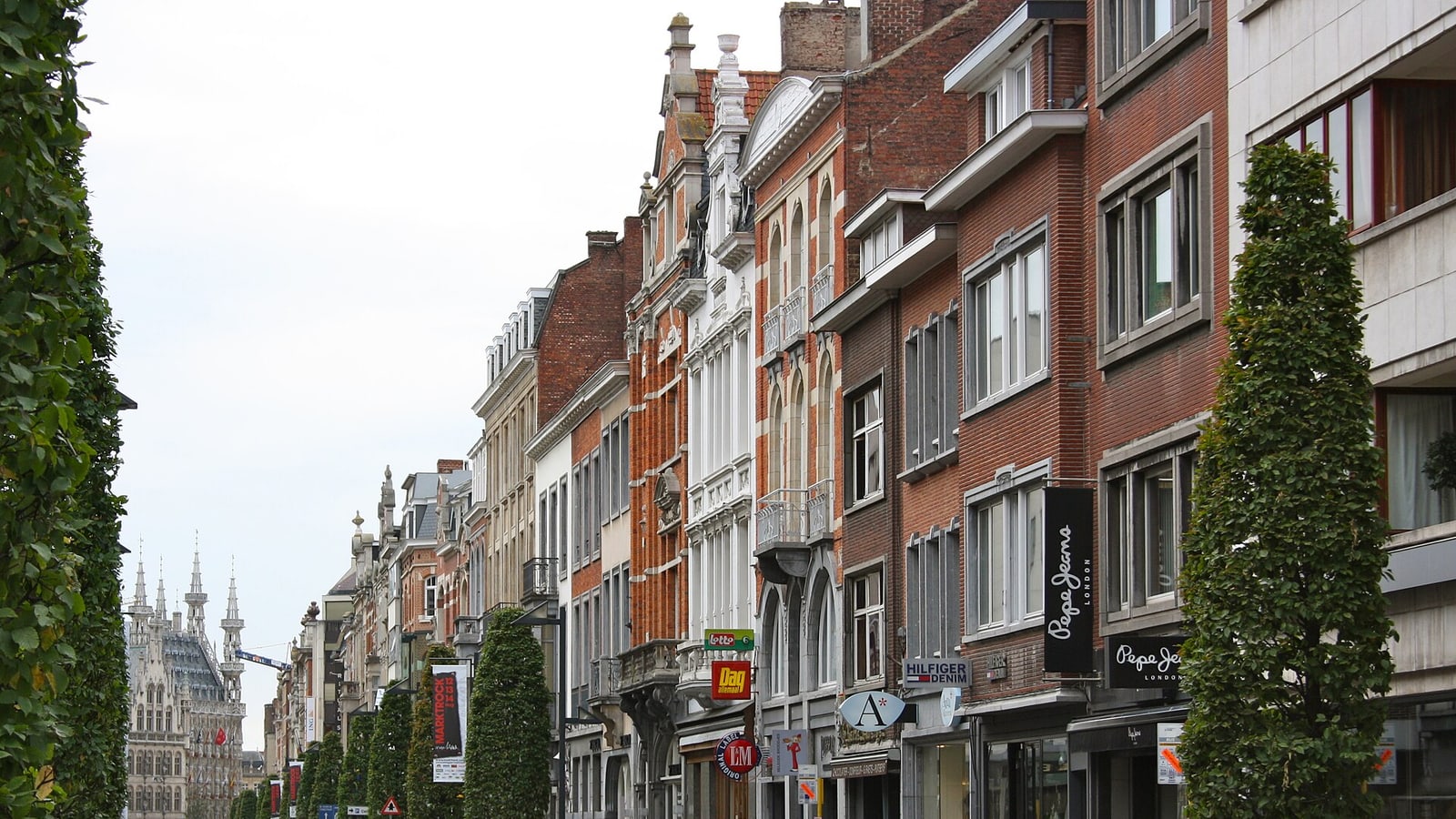
The race itself is scheduled for Sunday 27 December. According to the City of Leuven, runners will start on Bondgenotenlaan and finish on Monseigneur Ladeuzeplein, with the programme beginning at 09:45. These are central public spaces, so the event will also affect residents, businesses, visitors and local transport. De Lijn lists the Corrida among Leuven events eligible for the city’s €1 event ticket on direct bus services, offering an alternative to driving into the centre.
There is no meaningful EU-institutional dimension beyond Leuven’s international population: this remains a Flemish city-sport story. The next test is practical. DCLA must stabilise registration, state how many places remain in each race and explain whether unsuccessful users will receive another fair opportunity. Until it does, the strongest confirmed conclusion is not that the Corrida has sold out, but that public enthusiasm again exceeded the digital gateway built to receive it.
What to do
Runners should rely on DCLA and City of Leuven channels for confirmed availability, retain evidence of any completed payment and avoid assuming that a failed page means the race is sold out. De Lijn plans a €1 Leuven event ticket for direct bus travel on race day.
The Belgian angle
The race draws runners and supporters into central Leuven and requires the use of Bondgenotenlaan, Monseigneur Ladeuzeplein and surrounding streets. Residents, local businesses and transport users can expect event-related activity and mobility measures on 27 December.
EvidenceWell established · 1 primary source + 2 official documents + 1 independent reporting source · Background sources: 1Explore evidence →Hide evidence ↑
- Published:
- 1 Sept 2026, 02:00
- Retrieved by ODIN:
- 4 Sept 2026
- Published:
- 31 Aug 2026, 02:00
- Retrieved by ODIN:
- 4 Sept 2026
- Published:
- 4 Sept 2026, 02:00
- Retrieved by ODIN:
- 4 Sept 2026
- Publication date unavailable
- Retrieved by ODIN:
- 4 Sept 2026
- Published:
- 28 Dec 2022, 01:00
- Retrieved by ODIN:
- 4 Sept 2026
- Published:
- 16 Apr 2026, 02:00
- Retrieved by ODIN:
- 4 Sept 2026
Continue reading


This story was assembled from verified evidence, with its sources and reasoning recorded as it was written.
This briefing was prepared with AI assistance and passed Belgium Impulse source, provenance and publication-quality checks. methodology.