Why are families protesting a new school charge in Liège?
A dispute at Collège Sainte-Véronique in Liège has become a practical test of Belgium's French Community rules on school costs.
In 30 seconds
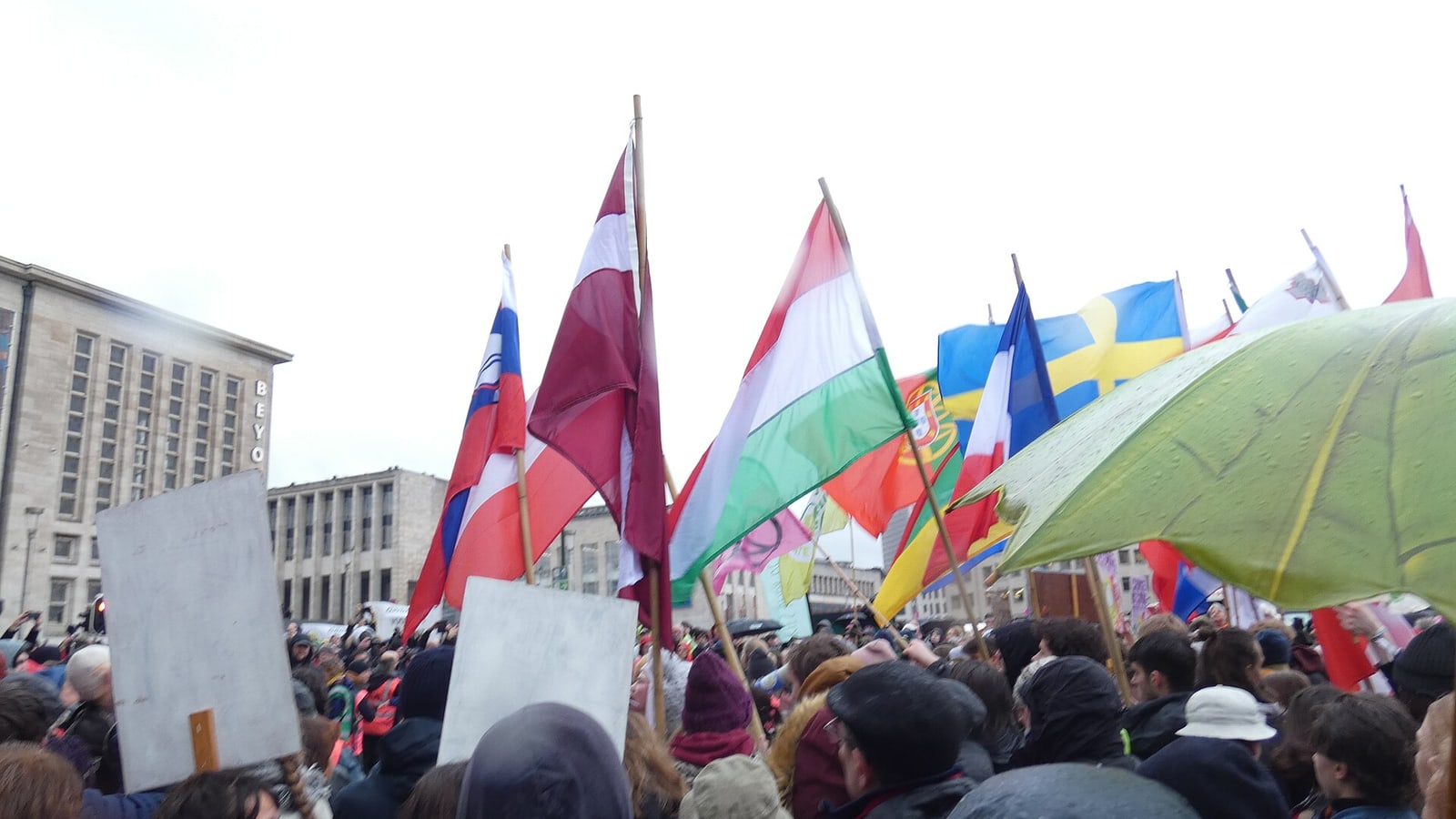
- French-language reports say around 100 demonstrators opposed a new minerval at Sainte-Véronique in Liège.
- DH reported on 15 June 2026 that the school's management suspended classes again amid the dispute.
- Sainte-Véronique's own rules reproduce the French Community rule banning direct or indirect tuition fees in compulsory education.
- Permitted school costs must be linked to specific services and, in many cases, charged at real cost rather than as a single blanket payment.
The subject is Collège Sainte-Véronique, a Catholic secondary school in central , run by the ASBL Groupe Sainte-Véronique and located on . The immediate dispute concerns a newly contested school charge described in French-language coverage as a minerval. In Belgium's , compulsory education is regulated by the , with as education minister in the Degryse government. Schools may invoice certain real-cost items, but the reproduced in Sainte-Véronique's own rules states that no direct or indirect tuition fee may be charged in nursery, primary or secondary education, subject to narrow exceptions.
Background
Belgium's school system is built on a long compromise between freedom of education, parental choice and public regulation. The tradition protected the coexistence of official and free networks, while later community reforms made education largely a competence of the language communities. In the French Community, the modern Code de l'enseignement attempts to reconcile school autonomy with the constitutional principle that access to compulsory education is free. That tension is visible whenever a school presents a new contribution as necessary for its educational project and families experience it as a barrier to access.
What to do
Parents should not rely on the label alone. Ask: Is this compulsory? What service does it cover? Is it charged at real cost? Is it in the written estimate? Can it be paid in instalments? What happens if we do not pay? For school leaders, the lesson is equally concrete: itemise, explain the legal basis, separate optional from compulsory costs and keep pupils out of payment disputes.
The Belgian angle
The impact is strongest in Liège, where pupils, parents, teachers and the school's management face disruption before the end of the school year. It also resonates across Wallonia and French-speaking Brussels because many families choose between official schools and subsidised free schools, including Catholic schools, while relying on the same public rules on school costs.
EvidenceWell established · 3 primary sources + 2 official documentsExplore evidence →Hide evidence ↑
- Publication date unavailable
- Retrieved by ODIN:
- 24 Jun 2026
- Published:
- 15 Jun 2026, 02:00
- Retrieved by ODIN:
- 24 Jun 2026
- Publication date unavailable
- Retrieved by ODIN:
- 24 Jun 2026
- Publication date unavailable
- Retrieved by ODIN:
- 24 Jun 2026
- Published:
- 22 Aug 2025, 02:00
- Retrieved by ODIN:
- 24 Jun 2026
Voices & reactions
What the main actors are doing
Reported positions, summarised — not direct quotationsParents and pupil protesters
Families opposing the new minerval frame the issue as access and fairness. Their Belgian framing is stronger than a generic 'school fee row': in compulsory education, they can point to the French Community rule that schools cannot impose a direct or indirect tuition fee. Their practical concern is whether a requested contribution becomes a condition for belonging to the school community, especially for households already managing transport, meals, materials and activity costs.
Sainte-Véronique management and organising authority
The school side is likely to frame the dispute around autonomy, educational projects and real operating costs. Its own rules say the Groupe Sainte-Véronique organises many activities and provides a solidarity mechanism for families in difficulty. The reported phrase that a school cannot decide its choices democratically reflects a management view that consultation does not mean every operational or financial decision becomes a family vote.
Fédération Wallonie-Bruxelles regulator
The institutional perspective is not about whether a Catholic or private subsidised school may have its own identity; Belgium explicitly protects freedom of education. The regulator's frame is whether the fee respects the Code de l'enseignement: authorised costs must be itemised, linked to specific services and transparent. The French Community can sanction breaches, including warnings, fines and in repeat cases consequences for subsidies.
European education policy context
EU institutions do not set Belgian school-fee rules, but their framing differs from Anglo-wire-style consumer language. The European Commission's Pathways to School Success approach treats school costs as part of equity and inclusion: education systems should give all learners a chance to fulfil their potential regardless of socio-economic background. That makes the Liège dispute part of a wider European concern over hidden barriers to schooling.
The story, connected
Explore the people, places and ideas in this story
Go beyond the headline. Open a card for sourced context, maps, official links and the other subjects connected to this report.
Continue reading
This story was assembled from verified evidence, with its sources and reasoning recorded as it was written.
This briefing was prepared with AI assistance and passed Belgium Impulse source, provenance and publication-quality checks. methodology.