Who can steady Musea Brugge after its director’s sudden departure?
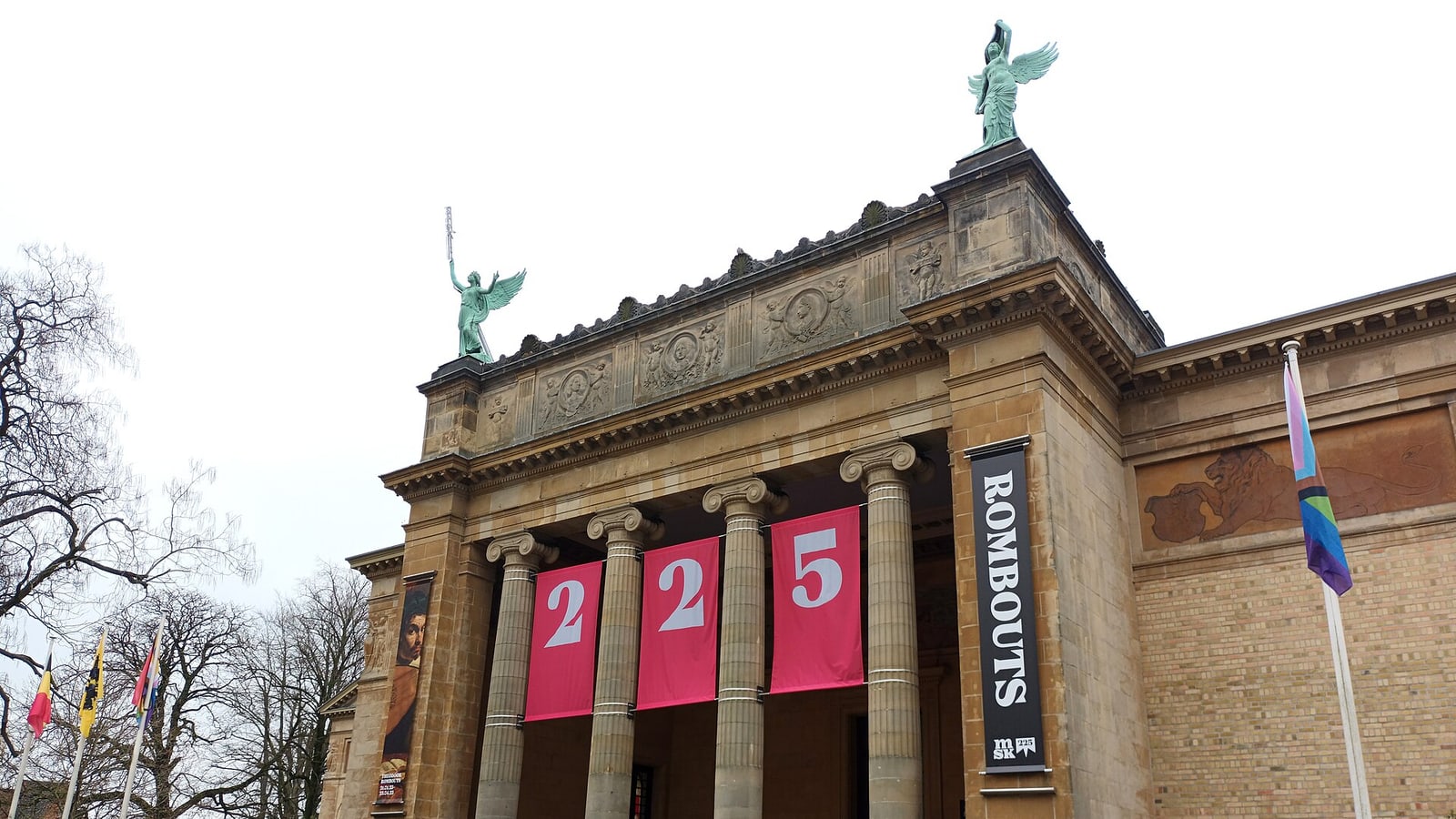
Musea Brugge director Kristl Strubbe resigned on 1 September after thirteen months in charge, leaving the City of Bruges to stabilise a depleted leadership team just months after opening the internationally ambitious BRUSK art hall.
In 30 seconds
- Strubbe resigned on 1 September 2026 after thirteen months as director.
- The city cited insufficient mutual trust and cohesion within the management team.
- Strubbe denies allegations of toxic leadership reported through anonymous staff testimony.
- Bruges is initially seeking an interim successor within its own administration.
Kristl Strubbe resigned as director of Musea Brugge on 1 September, forcing the City of Bruges to seek an internal replacement after what the city described as a breakdown of trust and cohesion within the museum group’s management team. Her departure, expected to take effect around mid-September, comes only four months after the opening of BRUSK, the city’s new art hall and the centrepiece of its effort to strengthen Bruges as an international cultural destination.
For residents, museum staff and visitors, the immediate issue is whether the city can preserve day-to-day stability and BRUSK’s exhibition programme while repairing relations behind the scenes. The stakes also extend to Flemish taxpayers: Musea Brugge receives an annual €2.758 million operating grant from the Flemish Community under its 2024-2028 heritage agreement, which explicitly calls for an integrated and supportive human-resources policy.
Strubbe had led the organisation since August 2025. The City of Bruges said she had been recruited to introduce change but concluded that she could no longer carry that work forward because mutual confidence within the leadership team was insufficient. Strubbe rejects allegations of toxic leadership reported by Het Nieuwsblad and De Standaard, saying no formal complaint or adverse finding emerged from a recent staff-wellbeing survey. She told the newspapers that reform required trust and that she had encountered a wall.
The allegations remain contested and should not be treated as established findings. The newspapers reported, citing staff testimony, that members of the management team approached the city together during the summer because they considered the situation untenable. They also described claims of an atmosphere of fear and numerous long-term absences. Culture alderman Nico Blontrock of CD&V said relations between Strubbe and the city had remained sound and declined to discuss the accusations in greater detail.
The resignation compounds an earlier loss of expertise. Exhibition chief Elviera Velghe moved to Abby in Kortrijk, while research chief Anne van Oosterwijk is leaving to lead Ghent’s Museum of Fine Arts. Other communication and personnel roles have also changed, according to reporting by Het Nieuwsblad and De Standaard. That makes succession more than a matter of filling one vacant office: the next leader must reassess a proposed organisational structure that had not yet been fully implemented.
Bruges has asked city chief executive Colin Beheydt and cultural-policy coordinator Steven Slos to identify an interim successor inside the municipal administration. The city is not currently planning an external vacancy, and the interim figure would not necessarily need an art-historical background, Het Nieuwsblad reported. Mayor Dirk De fauw of CD&V has argued that someone from within the administration should first restore order.
That approach has opened a clear political divide. Pol Van Den Driessche of N-VA wants an extraordinary council committee meeting to establish how the situation deteriorated and how the city intends to respond. Jasper Pillen of Anders.Brugge says mediation, an audit or another wellbeing assessment may be necessary if the administration cannot provide adequate answers. Eva Vanhoorne of Groen opposes a hurried internal appointment and is calling for a full recruitment process overseen by expert selectors, with knowledge of the art world treated as essential.
The timing is especially awkward because BRUSK is meant to connect Bruges’ medieval collections with contemporary international art. The city counted 73,001 attendees across its opening festival in May, including 22,069 visitors to BRUSK itself. Musea Brugge’s wider network received 858,990 visits in 2025, with France, Britain, the Netherlands and Germany among its largest foreign markets, according to Visit Bruges. Its governance is therefore a local Flemish responsibility, not an EU institutional matter, but the consequences touch an international audience and Bruges’ cultural economy.
The broader question is whether a municipal museum service can combine administrative accountability, scholarly independence and rapid institutional change without exhausting its staff. Bruges previously replaced the single-director model with a management team in 2021 before returning to an overarching director under Strubbe, making the present crisis part of a longer search for workable governance.
Attention now turns to the interim appointment, the city council’s demand for scrutiny and any independent examination of workplace conditions. Exhibition schedules remain in place, but the city has not yet identified a successor or published a timetable for a permanent recruitment process. Until it clarifies both the personnel concerns and the future management model, BRUSK’s successful public launch will sit uneasily beside an unresolved crisis at the top.
What to do
No closure or cancellation has been announced. Visitors can continue to use Musea Brugge venues and attend scheduled exhibitions, while staff and institutional partners await clarity about leadership and decision-making.
The Belgian angle
The crisis concerns a major West Flemish cultural employer and one of Flanders’ most internationally visible museum groups. Flemish funding obligations make workplace governance and organisational continuity relevant beyond Bruges.
EvidenceWell established · 2 primary sources + 4 official documents + 1 independent reporting source · Background sources: 1Explore evidence →Hide evidence ↑
Source currently unavailable. 1 cited source is currently unavailable. Belgium Pulse preserves the original URL, retrieval date and admitted evidence; an archive link is shown when available.
- Published:
- 2 Sept 2026, 02:00
- Retrieved by ODIN:
- 3 Sept 2026
- Published:
- 3 Sept 2026, 02:00
- Retrieved by ODIN:
- 3 Sept 2026
- Published:
- 3 Sept 2026, 02:00
- Retrieved by ODIN:
- 3 Sept 2026
- Published:
- 3 Apr 2025, 02:00
- Retrieved by ODIN:
- 3 Sept 2026
- Published:
- 12 May 2026, 02:00
- Retrieved by ODIN:
- 3 Sept 2026
- Published:
- 8 Jan 2026, 01:00
- Retrieved by ODIN:
- 3 Sept 2026
- Published:
- 1 Jul 2024, 02:00
- Retrieved by ODIN:
- 3 Sept 2026
- Published:
- 11 Mar 2025, 01:00
- Retrieved by ODIN:
- 3 Sept 2026
Continue reading
This story was assembled from verified evidence, with its sources and reasoning recorded as it was written.
This briefing was prepared with AI assistance and passed Belgium Impulse source, provenance and publication-quality checks. methodology.