What should residents know about the unauthorised caravan stay in Hélécine?
Travelling families had installed caravans without prior permission on Hélécine’s former football ground by 16 August 2026, according to La DH.
In 30 seconds
- La DH reported an unauthorised caravan occupation of Hélécine’s former football ground on 16 August 2026.
- No independently confirmed caravan count, departure date, court order or damage assessment was publicly available.
- Wallonia directs communes and landowners facing unplanned occupations to the CMGV for specialist mediation.
- Seven Walloon local authorities participated in the region’s supported reception scheme in 2025; Hélécine was not listed.
Travelling families had installed their caravans without prior authorisation on the former football ground in Hélécine, Walloon Brabant, by Sunday 16 August 2026, according to La Dernière Heure. The occupation was still being handled at municipal level when the report appeared; no independently confirmed departure date, court order or evidence of damage was available. For residents, the practical route is straightforward: report a specific problem to the Commune de Hélécine or the local police, use 101 only when police assistance is needed and 112 for an immediate emergency, and do not attempt to move vehicles or negotiate access personally.
What is confirmed — and what is not
The central fact is an unauthorised occupation of an old football site. La DH’s report identifies the location and the absence of prior municipal consent, but publicly accessible material does not establish how many people or caravans were present, precisely when they arrived, how long they intended to stay, or whether the land was needed for a scheduled activity. Those gaps matter. An occupation without permission is a legal and administrative issue, but it does not by itself prove nuisance, criminal conduct or damage.
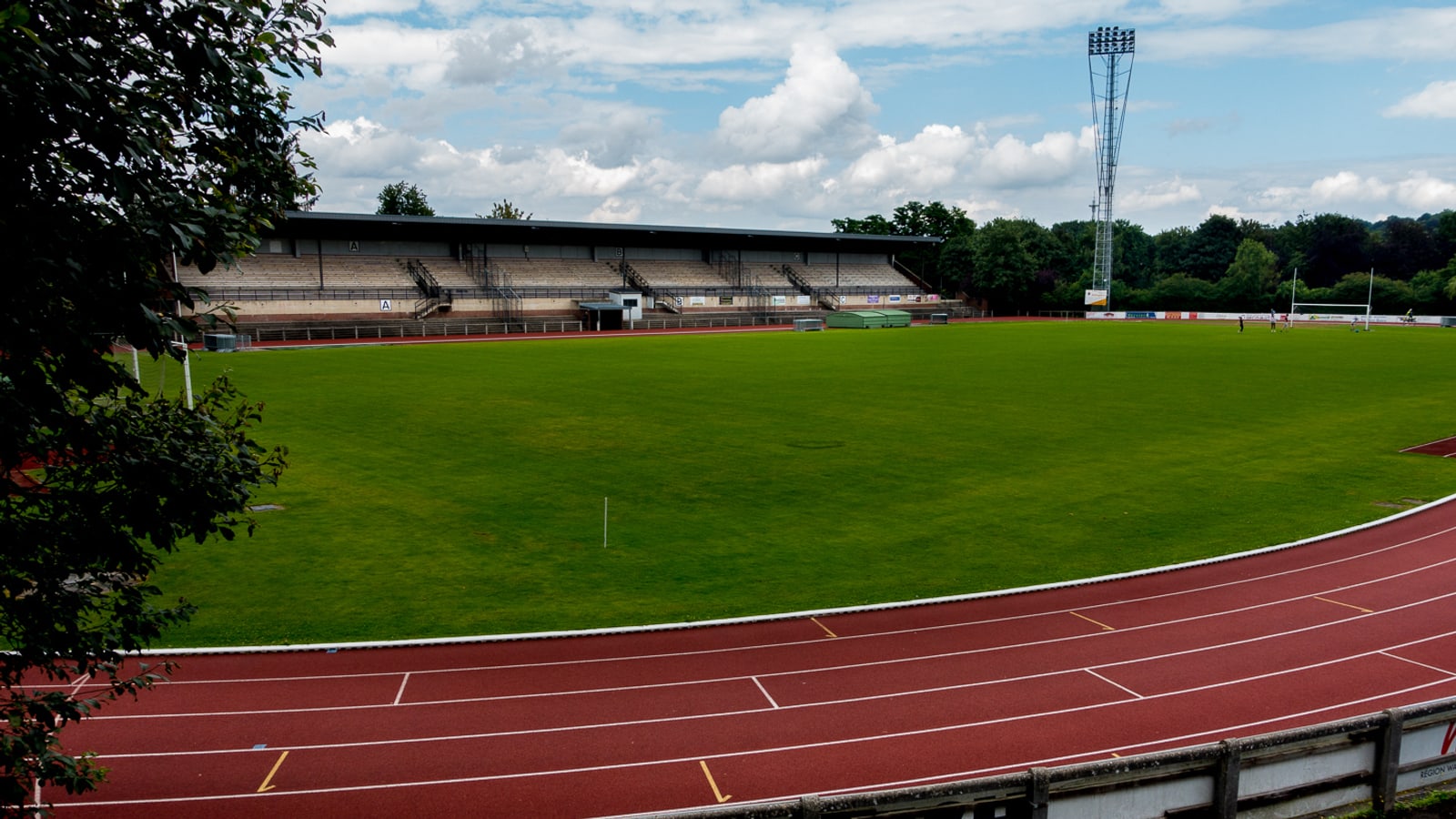
The site appears to be the former FC Hélécine ground on Rue du Moulin, opposite the Château d’Hélécine. The Atouts Camps directory describes that 1.6-hectare former football field as a recognised youth-camp location with water and electricity and an authorisation running to September 2027. That makes conflicting use of the land a plausible concern, although no published source reviewed for this article confirms that a youth group lost a booking because of the caravan stay.
In Wallonia, an unplanned occupation normally brings several actors into the same conversation: the bourgmestre, communal services, the landowner, police and, where requested, the Centre de Médiation des Gens du voyage et des Roms en Wallonie, or CMGV. The Walloon social-action portal specifically advises communes, intercommunales and private owners facing an unplanned occupation to contact the CMGV. Its role is mediation, not policing: it can help establish who represents the group, what services are needed, which rules apply and whether an agreed departure can be arranged.
Why the response is not simply automatic eviction
A bourgmestre has administrative-police powers to protect public order, safety and sanitation. The available procedure nevertheless depends on who owns the land, the applicable police regulations, whether a concrete disturbance exists and whether the occupants have been heard. A forced departure may require a judicial decision and its execution by the competent authorities; residents and private organisations cannot carry it out themselves.
That distinction was tested in Walloon Brabant in 2024. In a separate case involving roughly 50 caravans on a provincial parking area, the Brabant wallon court of first instance rejected the province’s urgent application after finding that urgency had not been demonstrated, according to the judgment published by Unia. An earlier unilateral order in that dispute was also set aside because the occupants had not been heard. The rulings did not create permission to occupy any available land. They showed instead that property rights, public-order evidence and procedural fairness must all be considered.
For a resident affected by blocked access, persistent noise, unsafe traffic, waste or a suspected unauthorised connection, the useful report is a factual one: note the location, time and observable problem, then contact the commune or police. Photographs should be taken only from a lawful public position and without targeting children or publishing identifiable people online. General complaints about the identity of the occupants are neither useful evidence nor a substitute for reporting a concrete incident.
The structural shortage behind recurring disputes
Wallonia officially defines Gens du voyage as communities of different origins characterised by mobile housing and movement for part of the year. The term covers several distinct groups and should not automatically be treated as synonymous with Roma. In Dutch-language communication, the broad equivalent is woonwagenbewoners; local government is a commune in French and a gemeente in Dutch. Hélécine’s administration operates in French, so residents seeking assistance should expect municipal notices and procedures primarily in French.
The Walloon government says seven local authorities organised supported temporary stays in 2025: Amay, Bastogne, Charleroi, Ottignies-Louvain-la-Neuve, Sambreville, Verviers and Wasseiges. Its standard for a supported reception area includes drinking water, electricity and sanitation for family groups of at least 15 caravans. Hélécine was not on that published list. The region offers eligible communes annual support of up to €30,000 for staffing and operating an accueil site, through the Guichet des pouvoirs locaux, and requires a local reference person to coordinate bookings, utilities, waste and communication with neighbours.
Unia argues that this provision remains structurally inadequate. In April 2026, the equality body said none of Belgium’s three regions met the minimum reception-site standards associated with the European Social Charter. It recorded 46 reports concerning Roma and Travellers in 2025, while warning that mistrust and fear of stigmatisation contribute to under-reporting. Its position is that too few lawful stopping places help produce repeated unauthorised occupations and expulsions. Municipalities, meanwhile, must still protect land, keep facilities available for their intended users and respond when safety or sanitation is demonstrably affected.
That is the balance Hélécine now has to manage: permission and local rules matter, but so do proportionate procedure and the shortage of viable alternatives. The next meaningful facts will be whether the commune reaches a temporary agreement, sets a voluntary departure date, identifies another site or begins court proceedings. Until it communicates one of those outcomes, claims that an eviction is imminent—or that the group can remain indefinitely—should be treated cautiously.
What to do
For a non-emergency administrative question, contact the Commune de Hélécine in French and describe the precise location and issue. Contact the local police for a concrete policing concern, 101 when police assistance is required and 112 for immediate danger. Landowners should document ownership and impacts, avoid self-help removal and seek legal advice or CMGV mediation.
The Belgian angle
The immediate impact is confined to Hélécine and any scheduled users of the former football ground. At Walloon level, the case adds to pressure on communes and the regional government to expand predictable, serviced reception capacity.
EvidenceWell established · 1 primary source + 2 official documents + 1 independent reporting source · Background sources: 2Explore evidence →Hide evidence ↑
- Published:
- 16 Aug 2026, 02:00
- Retrieved by ODIN:
- 18 Aug 2026
- Publication date unavailable
- Retrieved by ODIN:
- 18 Aug 2026
- Published:
- 23 Jul 2026, 02:00
- Retrieved by ODIN:
- 18 Aug 2026
- Published:
- 7 Apr 2026, 02:00
- Retrieved by ODIN:
- 18 Aug 2026
- Published:
- 21 Nov 2024, 01:00
- Retrieved by ODIN:
- 18 Aug 2026
- Publication date unavailable
- Retrieved by ODIN:
- 18 Aug 2026
Continue reading


This story was assembled from verified evidence, with its sources and reasoning recorded as it was written.
This briefing was prepared with AI assistance and passed Belgium Impulse source, provenance and publication-quality checks. methodology.