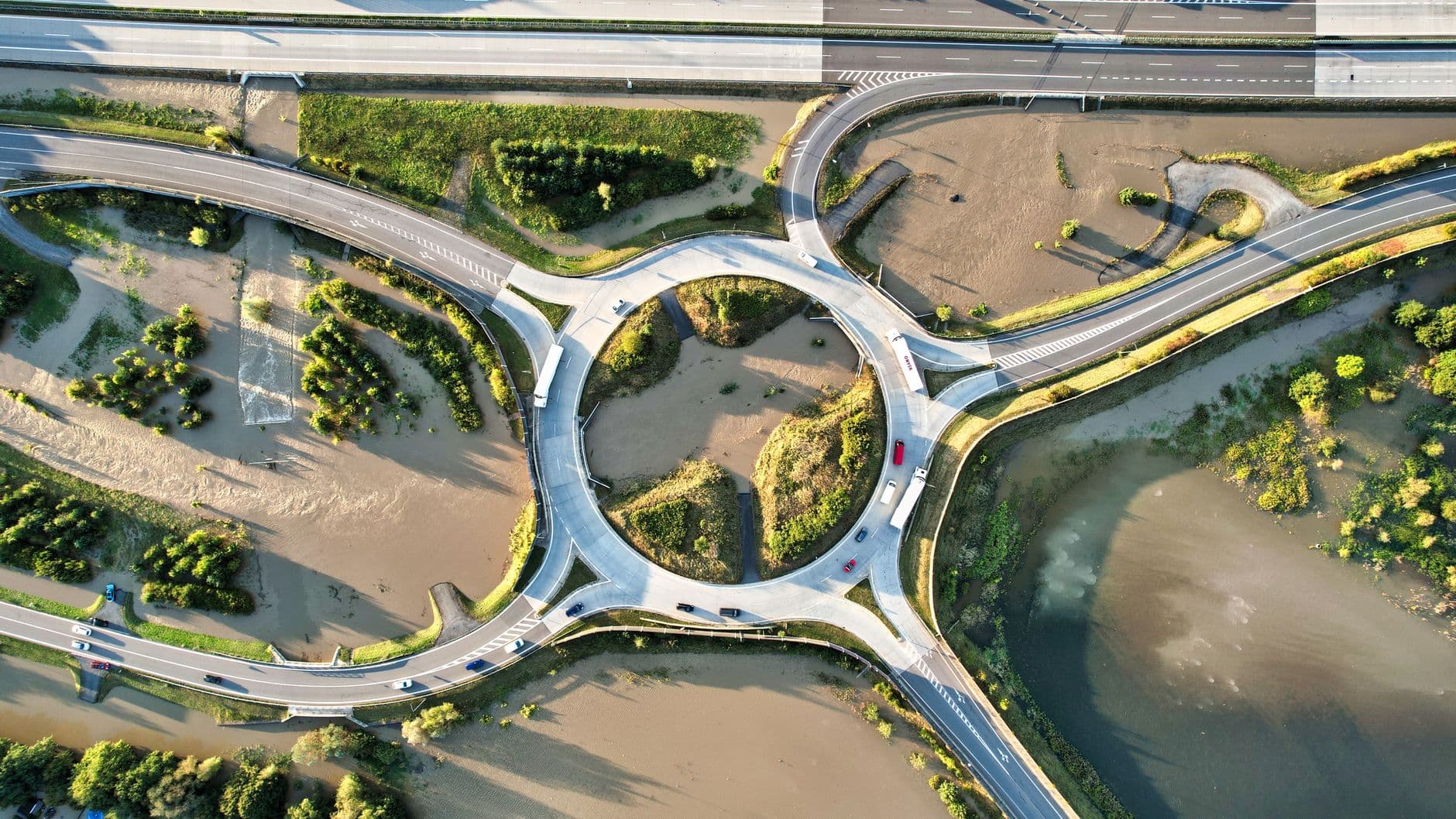
What should cyclists and drivers do after a car-bike collision on a Belgian roundabout?
A 45-year-old cyclist from Herentals was lightly injured after a collision with a car on a roundabout, according to Het Nieuwsblad. The immediate practical takeaway for anyone cycling or driving in Belgium is simple: if there is any injury, even apparently light, secure the scene, call emergency help if needed, stay at the site for official findings, and record the details before insurance discussions begin. This is a local incident, not a national crisis. But it is a useful reminder for expats, commuters and families using Flemish roads that Belgian rules after an accident are formal, language-specific and insurance-driven. In Dutch-language Flanders, the words you will see or hear are important: fietser means cyclist, lichtgewond means lightly injured, aanrijding means collision, auto means car, rotonde means roundabout, and vaststellingen means official findings or records. What to do first 1. Check injuries. If anyone is hurt, call 112 for urgent medical help. For police help without immediate medical emergency, 101 is the police emergency number. In practice, if a cyclist has fallen, hit their head, has pain, shock or unclear injuries, treat it as an injury accident. 2. Make the place safe. Article 52 of the Belgian traffic code says anyone involved in an accident must take necessary measures for safety and traffic flow. Use hazard lights, a warning triangle when relevant, and move yourself out of traffic if you can do so safely. 3. Do not simply clear the scene when someone is injured. The Belgian road code states that a vehicle does not have to be moved when an accident has caused bodily injury. Those involved in an injury accident must remain at the scene so a competent authority can make the necessary findings, unless someone temporarily leaves to get help after giving their name and address. 4. Exchange identity and insurance details. People over 15 involved in an accident must show ID when requested by others involved. Drivers should provide insurer and vehicle details. Cyclists should note the licence plate, driver identity, insurer, time, weather, road signs and whether there was a marked fietspad. 5. Take photos before memories diverge. Photograph the roundabout approaches, yield signs, bicycle markings, vehicle positions, damage, injuries if appropriate, and any witnesses. Do not post identifiable accident images online; keep them for police, insurer or legal use. Why roundabouts confuse newcomers Belgian roundabouts are not all designed the same way. Some have cyclists on the carriageway, some have a marked cycle lane around the circle, and others send cyclists across separate cycle crossings near exits. The priority question depends on the exact markings and signs. The general Belgian rule is that a driver entering a junction must be extra cautious, and a driver crossing a cycle path must give priority to lawful users of that cycle path. Motorists must also avoid endangering cyclists, keep at least one metre lateral distance in built-up areas and 1.5 metres outside built-up areas, and approach cyclist crossings at moderate speed. But a cyclist should not assume every crossing around every roundabout gives the same priority: look for B1 yield signs, shark-tooth markings, blue cycle-path signs, zebra crossings and cycle-crossing blocks. For Herentals residents, the local authority is the gemeente Herentals in Antwerp province. Police handling normally falls within the local police structure for the area, with documents and initial communication likely to be in Dutch. In Brussels, paperwork may be in Dutch or French; in Wallonia, French dominates. Emergency operators can route help, but insurance forms and municipal follow-up often require attention to the local language. Insurance and paperwork For material-only crashes, Belgian drivers often use the European accident statement, known in Dutch as the Europees aanrijdingsformulier and in French as the constat europeen d'accident. If there is injury, police involvement becomes more important. A cyclist may also need to contact a family civil-liability insurer, legal protection insurer, health mutuality, employer if commuting, or bicycle insurer if one exists. Keep medical proof. A light injury can still develop into neck pain, concussion symptoms or lost work time. Ask for a medical certificate, keep pharmacy receipts, and record the timeline of symptoms. If you commute by bike, tell your employer promptly because Belgian workplace accident rules may apply to commuting accidents. The broader view Cycling is part of daily life in Flanders, especially in towns like Herentals where school, work, sport and station trips often overlap with car traffic. Roundabouts are intended to calm traffic and reduce severe side-impact collisions, but they also concentrate decision-making into a few seconds: drivers check entering traffic, exiting traffic, pedestrians and cyclists; cyclists read signs while judging whether vehicles have seen them. Statbel’s road-accident data show why small local incidents matter as a pattern. Belgium’s official statistics cover injury accidents recorded by police, but Statbel notes that light casualties, especially among vulnerable road users such as cyclists and pedestrians, are likely underreported. That means the everyday fietser Herentals lichtgewond type of case is not just a newspaper brief; it belongs to a larger road-safety picture that official data only partly captures. The service lesson is not to panic after a lichtgewond aanrijding auto case. It is to treat the first 30 minutes seriously: safety, help, police when injured, evidence, language-aware paperwork, and medical follow-up.
Trust & Evidence📚 4 sources· 🧠 AI-checked· Trust status: not yet independently verifiedView evidence & verification Hide
Verification record
- 📚 4 verified sources — Het Nieuwsblad · Wegcode.be - Royal Decree of 1 December 1975, Belgian traffic code · Statbel - Road accidents · VIAS Institute - Newsroom
- 🧠 Low confidence — AI-checked
- 🇧🇪 Belgian impact: High
- 📜 Provenance recorded & timestamped
Evidence is generated from the OIS evidence chain and reviewed before appearing on Belgium Pulse.
Powered by OIS / Evidentia
About this story
The subject is a reported collision between a car and a 45-year-old cyclist from Herentals on a roundabout, used here as a practical guide to Belgian post-accident steps for cyclists, drivers and newcomers. The named Belgian entities are the gemeente Herentals, Belgian emergency numbers 112 and 101, the Belgian road code hosted on Wegcode.be, and Statbel, the federal statistics office.
How to read this story
The history
Belgium’s current road code is rooted in the Royal Decree of 1 December 1975 and remains the operational reference until replacement by new regional and federal road-public-space codes. Cycling has become more prominent in Flemish mobility policy, while accident handling still relies heavily on police findings and insurance documentation.
Regional impact
The direct regional relevance is Flemish and local: Herentals is a Dutch-speaking municipality in Antwerp province, so police, municipal and insurance interactions will usually start in Dutch. The same Belgian traffic-code duties apply nationally, but language and local police follow-up differ by region.
Local impact
In Herentals and nearby Kempen municipalities, the everyday risk is concentrated around mixed-use roads where school cycling, commuter traffic and local car trips meet. Residents should expect Dutch-language follow-up through the gemeente, local police and insurers.
International angle
For international residents, the main angle is procedural adaptation: Belgian accident handling relies on local-language documentation, police findings for injury cases and insurer communication that may be less informal than in some home countries.
What this means for you
Save 112 and 101; photograph the scene; do not leave an injury accident before official findings unless seeking help; keep medical proof; use Dutch terms in Flanders; and contact your insurer, mutuality and employer quickly if the ride was work-related.
Opposing perspectives
- Cyclists and vulnerable-road-user advocates
Cyclists and road-safety advocates tend to stress that roundabouts require infrastructure that makes priority visible and slows exiting vehicles. From this view, the key lesson is not only personal caution after an aanrijding auto rotonde incident, but better markings, protected cycle paths and driver behaviour that recognises cyclists as vulnerable users.
- Drivers and local traffic planners
Drivers and municipal traffic planners often focus on predictability: roundabouts can be safer than traditional junctions, but only when signs, cycle crossings and sightlines are unambiguous. They may argue that both cyclists and motorists need clearer layouts and consistent local rules rather than assuming every roundabout works the same way.
- Insurers and legal-protection providers
Insurers and legal-protection providers mainly care about evidence, liability and medical proof. Their practical concern is that a lightly injured cyclist may leave too quickly, fail to document the scene, or delay medical examination, making later reimbursement and responsibility harder to establish.
Related to this story
Pulse Insight — This topic connects to 10 associations, 3 funding programmes, 127 upcoming events and 4441 jobs through the Flanders ecosystem.
Live connections from the Belgium Impulse ecosystem — not recommendations.
This briefing was prepared with AI assistance and reviewed by a Belgium Impulse editor before publication. methodology.