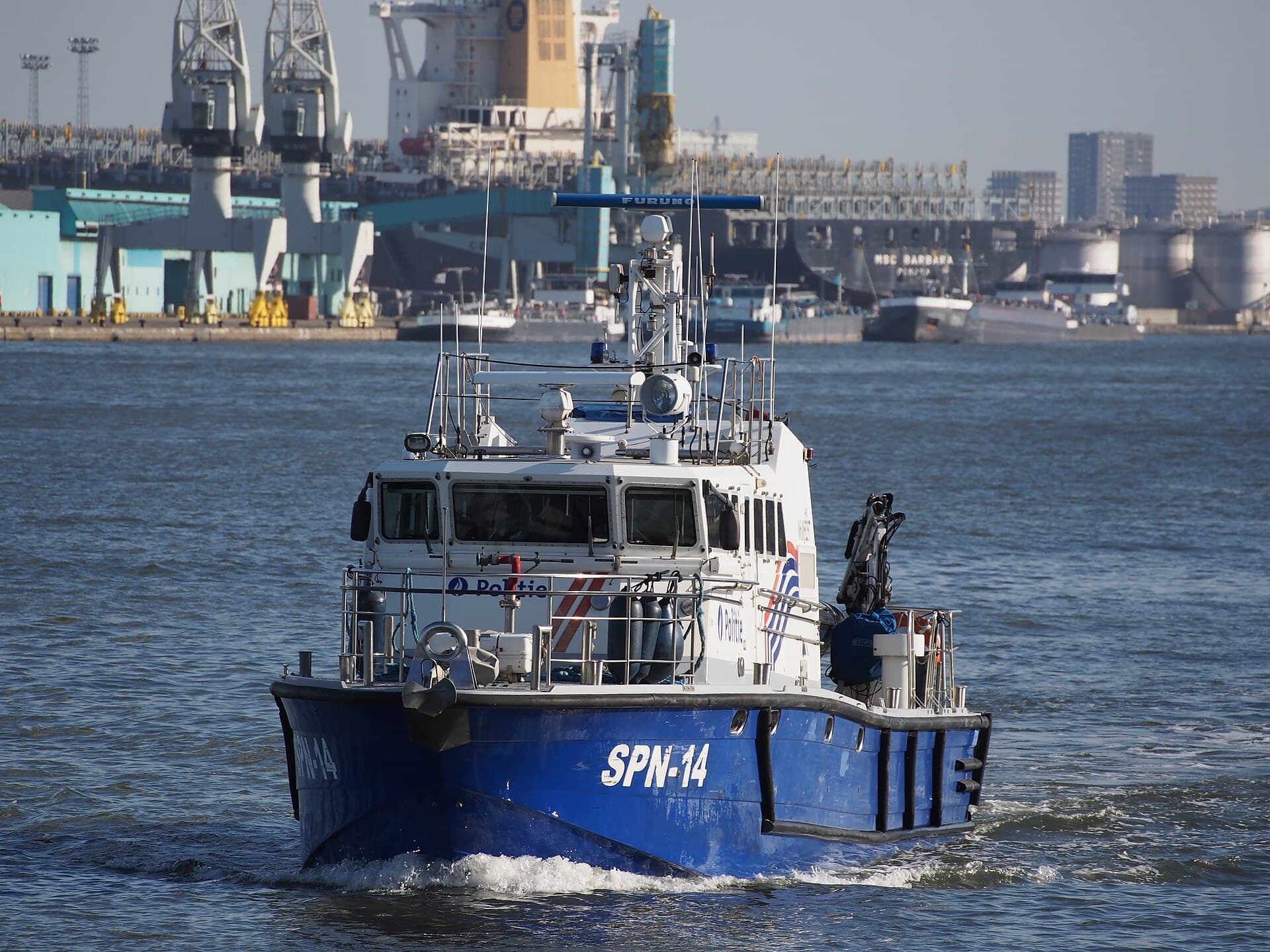
What does an Antwerp police inspector’s cocaine case say about Belgium’s drug fight?
A chief inspector from Antwerp Police has been reported by Het Nieuwsblad as standing trial over alleged cocaine use, a case that lands directly inside Belgium’s most sensitive public-order debate: how Antwerp can police cocaine networks when the credibility of enforcement itself is under scrutiny. For readers in Belgium, including expats and EU staff, the point is practical rather than symbolic. Antwerp is not just a local crime story; it is one of Europe’s main cocaine entry points, linked to the Port of Antwerp-Bruges, Belgian Customs, Federal Police operations and EU-level port-security policy. The individual case remains a court matter and must be treated as alleged unless and until a judgment is available, but the institutional question is wider: police integrity, internal controls and public confidence are now part of the same security problem as container scanning and street enforcement.
Trust & Evidence📚 6 sources· 🧠 AI-checked· Trust status: not yet independently verifiedView evidence & verification Hide
Verification record
- 📚 6 verified sources — Het Nieuwsblad · European Union Drugs Agency · European Commission · Europol …
- 🧠 High confidence — AI-checked
- 🇧🇪 Belgian impact: High
- 📜 Provenance recorded & timestamped
Evidence is generated from the OIS evidence chain and reviewed before appearing on Belgium Pulse.
Powered by OIS / Evidentia
About this story
The subject is an alleged drug-use case involving a chief inspector of Antwerp Police, reported in Flemish local media under the framing 'hoofdinspecteur politie Antwerpen staat zelf terecht cocainegebruik'. The case intersects with Antwerp’s wider cocaine-security environment: the city has faced years of organised-crime pressure linked to port trafficking, neighbourhood violence, intimidation and corruption risks. Relevant entities include Antwerp Police, the Antwerp justice system, Belgian Customs and Excise, the Federal Police, Port of Antwerp-Bruges, the European Commission, Europol and the European Union Drugs Agency.
How to read this story
The history
Antwerp’s drug-security debate has escalated over more than a decade as cocaine seizures rose sharply at the port, culminating in record levels in 2023 before falling in later statistics. EU and Belgian authorities have warned that lower seizure volumes do not necessarily mean lower trafficking; they may reflect changed routes, smaller consignments and more complex concealment. Belgium’s police oversight architecture also sits in a post-Dutroux institutional history, where public trust, external scrutiny and internal accountability became central to policing reform.
Regional impact
The immediate regional impact is in Antwerp, where residents have lived with drug-related violence, nuisance policing, port-security operations and political promises to confront organised crime. The case could sharpen local pressure for clearer communication from Antwerp Police and for visible disciplinary and judicial follow-up.
Local impact
In Antwerp, the case could affect how residents interpret police actions in neighbourhoods such as Kiel and Hoboken, where anti-nuisance and drug operations are highly visible. It also raises a workplace-integrity question inside the police zone.
International angle
The international dimension is the cocaine supply chain: South American production, European seaports, Dutch-Belgian distribution networks, EU port security, and cooperation with partners such as the United States.
What this means for you
For residents, the practical takeaway is to separate the court allegation from the broader institution: one case should not be used to prejudge all officers, but it does justify asking how police zones test, discipline and communicate when integrity questions arise.
Opposing perspectives
- Enforcement-first Antwerp and federal security officials
The enforcement camp, associated with Antwerp’s police operations, Belgian Customs, Federal Police and former Antwerp mayor turned Prime Minister Bart De Wever, frames the cocaine problem as a cross-border organised-crime threat. In this view, visible patrols, port controls, international intelligence-sharing and tougher disruption of trafficking networks are necessary because criminal groups operate across Belgium, the Netherlands, Latin America and other transit routes.
- Judicial and integrity-focused Belgian institutions
Judicial voices and police-oversight advocates frame the issue less as a simple question of more operations and more seizures, and more as a rule-of-law stress test. From this perspective, an alleged cocaine-use case involving a senior police officer matters because corruption risks, internal discipline and trust in evidence-handling can weaken prosecutions as seriously as a missed container scan.
- EUDA and public-health specialists
The EUDA framing differs from a pure crime-control narrative. It links cocaine availability to health harms, treatment demand, violence and marginalised users, while noting that trafficking patterns adapt when enforcement tightens. That means Antwerp’s problem cannot be read only through police success or failure; it is also a European demand, harm-reduction and market-resilience issue.
Related to this story


Pulse Insight — This topic connects to 10 associations, 3 funding programmes, 127 upcoming events and 4441 jobs through the Flanders ecosystem.
Live connections from the Belgium Impulse ecosystem — not recommendations.
This briefing was prepared with AI assistance and reviewed by a Belgium Impulse editor before publication. methodology.