What did Charlotte de Witte and FKA twigs reveal about Rock Werchter’s changing identity?
Charlotte de Witte drew an overflow crowd to The Barn at Rock Werchter on Friday 3 July 2026, capping a festival day on which FKA twigs, Franz Ferdinand and Royel Otis demonstrated the breadth of the modern Werchter programme.
In 30 seconds
- Charlotte de Witte played The Barn on Friday 3 July 2026, and the tent filled before her set.
- FKA twigs combined electronic music, choreography and theatrical staging in a four-star performance according to De Standaard.
- De Morgen awarded five stars to both Franz Ferdinand and Royel Otis.
- Rock Werchter 2026 ran from 2 to 5 July in Werchter, Flemish Brabant.
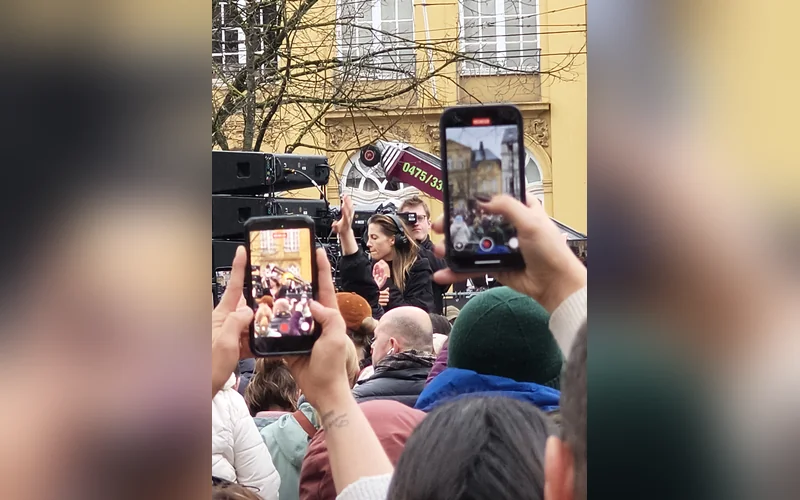
Charlotte de Witte turned The Barn into Rock Werchter’s most contested destination on Friday 3 July 2026, drawing so many people that late arrivals could no longer enter the tent and had to follow her closing techno set from outside. De Standaard reported that access was already extremely difficult more than 20 minutes before she began. For anyone planning a future Werchter visit, the immediate takeaway is to treat the published starting time as the latest possible arrival rather than the time to begin walking: for an in-demand act in The Barn or KluB C, build a generous queueing margin into the day.
The crowd pressure was a measure of De Witte’s position in Belgian music. The Ghent-born DJ did not approach the occasion as a conventional rock headliner transplanted into a dance slot. According to De Standaard’s festival reporting, she framed the performance around club culture as a place of gratitude, affection and collective movement. That concept suited a tent in which the audience, lights and relentless pulse could function as one environment, although the number of people outside again raised the question of whether a larger stage would have matched demand more safely and comfortably.
The episode was not unprecedented. VRT NWS documented a similar overflow at De Witte’s 2023 Werchter appearance, when The Barn’s reported 20,000-person capacity proved insufficient and disappointed visitors gathered around the exterior screen. The recurrence matters more than a single frustrating queue: it suggests that techno is no longer a specialist detour within Rock Werchter. A Belgian electronic artist can now generate the kind of audience movement once associated primarily with major guitar bands.
A day built on contrasts
De Witte supplied the forceful finale inside The Barn, but FKA twigs delivered its most elaborate piece of performance art earlier in the evening. De Standaard awarded the British artist four stars and described a production combining electronic music, tightly controlled choreography, costume changes and pole work before ending with the exposed piano ballad “Cellophane”. The paper noted that parts of the music were not performed live, yet judged the result more daring than most conventional pop and rock festival shows.
That distinction is useful. FKA twigs was not merely decorating a collection of songs with dancers; the movement, staging and music formed the work together. De Morgen’s live coverage similarly argued that festival shows seldom reach such a high musical and visual level. Her appearance therefore tested an old assumption about authenticity at outdoor events: a performance can rely on programmed elements and still demand exceptional physical control, vocal presence and artistic authorship.
Franz Ferdinand and Royel Otis offered more direct pleasures. De Morgen gave both acts five stars, presenting them as highlights of a day that moved easily between dance, art-pop and guitar music. De Standaard was more reserved about Royel Otis, awarding three stars while acknowledging the Australian duo’s infectious songs and rapid rise from its 2023 Pukkelpop appearance to Werchter’s Main Stage. That difference between reviews is a reminder that star ratings capture a critic’s response, not a settled verdict.
For Franz Ferdinand, the appeal lay in the durable economy of a band built for a festival crowd: sharp rhythms, recognisable hooks and little need for elaborate explanation. Royel Otis represented the newer route to the same large stage, helped by viral covers and two albums. Put beside FKA twigs and De Witte, the pair completed a convincing portrait of a festival that retains “Rock” in its name while treating genre boundaries as increasingly porous.
What this says about Werchter
Rock Werchter began in 1975 and has evolved from its rock-focused origins into a multi-genre event. VRT’s account of the festival’s fiftieth anniversary described how dance, techno and hip-hop progressively claimed space alongside rock and pop, bringing a more varied audience. The 2026 Friday programme made that evolution tangible rather than theoretical: Royel Otis played the Main Stage, while Franz Ferdinand, FKA twigs and De Witte occupied consecutive evening slots in The Barn.
There are two legitimate readings of that transformation. Listeners who value breadth can see a festival responding intelligently to how people now consume music, without requiring them to identify with one scene. Traditional rock fans may instead worry that the event’s original identity has become little more than a brand name. The strongest answer is found in the performances themselves. Franz Ferdinand’s reception showed that guitar music still commands the field; De Witte’s crowd showed that it no longer has an exclusive claim on peak-time intensity.
The placement problem remains unresolved. An enclosed stage can concentrate sound, darkness and visual design in ways that benefit both FKA twigs and De Witte. Moving either show to the Main Stage might increase access while weakening the production’s intimacy. Yet repeatedly programming an artist whose following exceeds the tent’s practical capacity leaves visitors choosing between arriving very early and missing another act, or watching from outside. Future timetables will show whether the organisers regard that tension as an acceptable feature of festival discovery or a cue to promote De Witte to an outdoor closing slot.
Practical notes for international residents
Werchter is a village in the gemeente Rotselaar, in Dutch-speaking Flemish Brabant; Leuven and Aarschot are the principal rail gateways. In 2026, the festival’s official transport page said each admission ticket included a separate return train ticket to one of those stations, followed by free De Lijn shuttle buses. The festival wristband itself was not a train ticket, while special limited-capacity night trains required a different paid ticket. These details can change each edition, so visitors should consult the current Dutch, French or English pages on Rockwerchter.be and the NMBS/SNCB festival portal before travelling.
Where this is happening
View on map Rock Werchter →The official festival guidance also allowed an empty non-glass bottle and provided free drinking-water points, including one near The Barn. Free basic earplugs were available at the information stand. International visitors can use English with festival staff in most practical situations, but place and station names differ by language: Leuven is Louvain in French, while Aarschot normally retains its Dutch name. Check the destination printed on the ticket rather than relying on memory.
For urgent help, use an on-site steward or first-aid post. Belgium’s official 112 service says its free 112 BE application can transmit a caller’s location to the emergency centre and offers accessibility functions for people who cannot speak or hear. It is worth installing before a crowded event, though it should only be used for a genuine emergency.
Rock Werchter ended its 2026 edition on 5 July, so the next meaningful developments will come with future line-ups and stage allocations. The question is no longer whether techno, performance-led art-pop and indie rock belong at Werchter. Friday demonstrated that they do. What remains uncertain is whether the festival’s infrastructure and scheduling can keep pace when an act programmed for a tent attracts a main-stage-sized public.
What to do
For future editions, download the official app, study clashes before arrival and reach The Barn early for a high-demand act. Claim the correct NMBS/SNCB ticket separately, verify whether a paid night-train reservation is needed, carry an empty non-glass bottle, use hearing protection and install the official 112 BE app for genuine emergencies.
The Belgian angle
The event temporarily brings large visitor flows to Werchter and the wider Rotselaar-Leuven-Aarschot area, making rail connections, De Lijn shuttles and local traffic management central to the experience.
EvidenceWell established · 1 primary source + 3 official documents + 2 independent reporting sourcesExplore evidence →Hide evidence ↑
- Published:
- 3 Jul 2026, 02:00
- Retrieved by ODIN:
- 18 Aug 2026
- Published:
- 3 Jul 2026, 02:00
- Retrieved by ODIN:
- 18 Aug 2026
- Published:
- 4 Jul 2026, 02:00
- Retrieved by ODIN:
- 18 Aug 2026
- Publication date unavailable
- Retrieved by ODIN:
- 18 Aug 2026
- Publication date unavailable
- Retrieved by ODIN:
- 18 Aug 2026
- Published:
- 1 Jul 2026, 02:00
- Retrieved by ODIN:
- 18 Aug 2026
- Publication date unavailable
- Retrieved by ODIN:
- 18 Aug 2026
Voices & reactions
What the main actors are doing
Reported positions, summarised — not direct quotationsListeners who favour a broad festival programme
This constituency sees the succession of Franz Ferdinand, FKA twigs and Charlotte de Witte as evidence that Werchter reflects contemporary listening habits. Genre variety lets one ticket serve several musical communities and gives adventurous performances access to a very large public.
Rock fans concerned about the festival’s identity
Some long-standing attendees regard the growing prominence of pop and electronic music as a dilution of the event’s rock heritage. From this perspective, the name creates an expectation that guitar-led acts should remain the programme’s defining feature rather than one strand among many.
Visitors prioritising access and crowd comfort
People unable to enter The Barn can reasonably argue that demand should determine stage placement. They may prefer De Witte on the Main Stage, even if an outdoor setting cannot reproduce the darkness, visual concentration and club-like atmosphere of an enclosed tent.
Programmers prioritising the artistic setting
Festival programmers can counter that stage allocation involves more than raw capacity. FKA twigs and Charlotte de Witte both benefit from controlled lighting and immersive production, so moving them outdoors could make the performances more accessible while making the artistic experience less effective.
Continue reading


This story was assembled from verified evidence, with its sources and reasoning recorded as it was written.
This briefing was prepared with AI assistance and passed Belgium Impulse source, provenance and publication-quality checks. methodology.