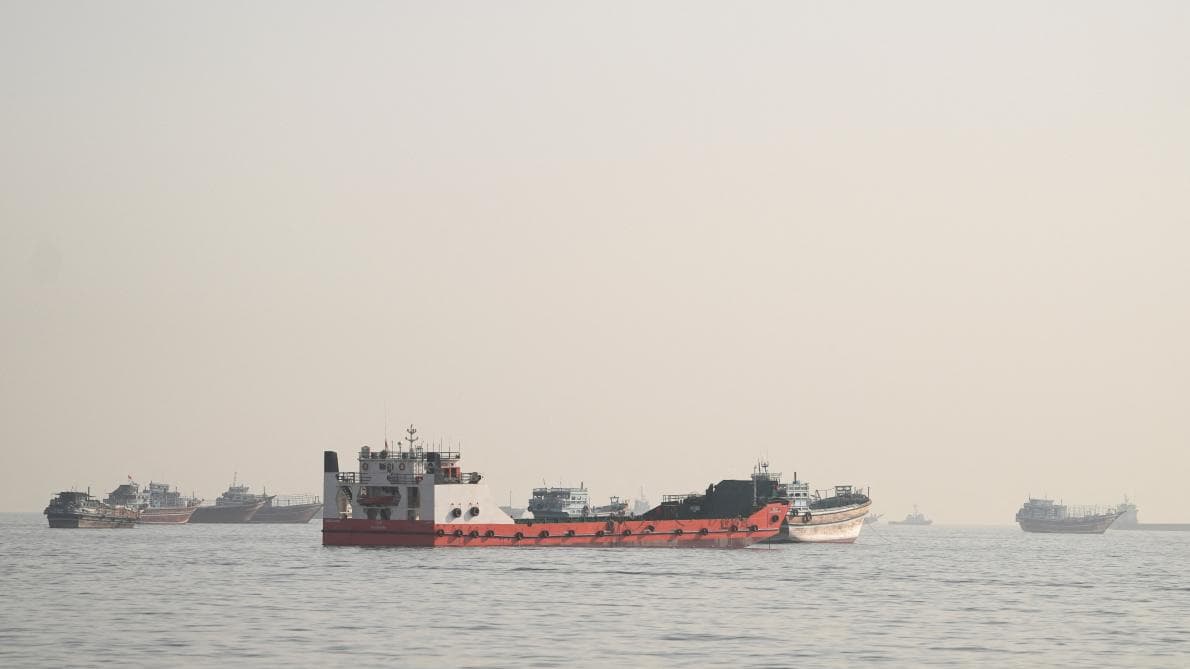
U.S. strike kills three Indian sailors on MT Settebello
India's shipping minister Sarbananda Sonowal said three Indian seafarers initially reported missing after a U.S. strike on the Palau-flagged MT Settebello have been confirmed dead. India's Ministry of External Affairs said the vessel had 24 Indian crew members, 21 of whom were rescued after the attack off Oman, and said its embassy in Muscat was coordinating with Omani authorities. U.S. Central Command said the tanker was targeted after the crew failed to comply with American directions during enforcement of a blockade linked to the Iran conflict. The incident matters beyond India because it turns a contested maritime-security operation into a fatal civilian shipping case near the Strait of Hormuz, where the U.S. Energy Information Administration estimates about one-fifth of global petroleum liquids consumption moved in 2024. For Europe and Belgium, the immediate issue is not direct casualty exposure but the risk of higher fuel, freight and insurance costs if commercial shipping avoids the Gulf route.
Verified by Validiris·📚 7 sources·🧠 AI-checked·🇧🇪 Belgian: LowWhy you can trust this
The Iran Conflict: Nuclear, Regional and Diplomatic
The decades-long confrontation between Iran and its adversaries — the United States, Israel, Saudi Arabia, and proxies across the region — covering the nuclear file, sanctions, the JCPOA collapse, the post-October 2023 escalation, and current diplomatic openings.
About this story
MT Settebello (Palau-flagged chemical and oil-products tanker) is the commercial vessel hit off Oman. The Gulf of Oman (sea lane between Oman, Iran, Pakistan and the Arabian Sea) links the Strait of Hormuz to wider Indian Ocean trade. Sohar (Omani port city north-west of Muscat) was the nearest named coastal reference in maritime alerts. Sarbananda Sonowal (India's minister for ports, shipping and waterways) confirmed the deaths. India's Ministry of External Affairs (New Delhi's foreign ministry) lodged the diplomatic protest. U.S. Central Command (the U.S. military command covering the Middle East) framed the strike as blockade enforcement. United Kingdom Maritime Trade Operations (Royal Navy-linked reporting centre for merchant shipping incidents) issued the maritime incident details cited by security sources. EMASoH/AGENOR (European-led maritime awareness mission launched in 2020, politically supported by Belgium and several European states) is the European framework for de-escalation and navigation monitoring in the Hormuz area.
How to read this story
The history
The Strait of Hormuz has repeatedly turned maritime incidents into wider diplomatic crises. In 2019, attacks on tankers in the Gulf of Oman and Iran's seizure of the British-flagged Stena Impero led European governments, including Belgium, to support EMASoH in January 2020. In April 2024, Iran seized the Portuguese-flagged MSC Aries near the Gulf of Oman, again underlining crew vulnerability and flag-state complexity. The 2026 crisis has added a new layer: U.S. blockade enforcement alongside Iranian restrictions, making neutral commercial vessels harder to separate from strategic pressure campaigns.
The geopolitics
The strike shows how blockade enforcement can blur into contested control of commercial sea lanes. Washington presents its actions as enforcing restrictions on Iran-linked traffic; India frames the result through civilian crew safety and free navigation. Iran's leverage comes from geography, while Europe has limited direct coercive power but a strong interest in keeping Hormuz commercially usable.
Why now
The story is timely because India's shipping minister said on 11 June 2026 that the three sailors first listed as missing after the 10 June strike had been confirmed dead, changing the incident from a search-and-rescue case into a fatal diplomatic dispute.
What to watch
Watch for a formal Indian demarche or U.S. explanation of the engagement rules, any Omani rescue update, and insurer or shipping-company reactions. A rise in war-risk premiums or further vessel diversions would show the incident is affecting markets beyond the single tanker.
International angle
The incident sits at the junction of U.S.-Iran military pressure, Indian labour and shipping exposure, Omani rescue coordination and European energy security. Belgium's role is indirect but real: Belgian-backed EMASoH was designed precisely for maritime awareness and de-escalation in the Hormuz area, while EU economies remain exposed to fuel and freight shocks from Gulf instability.
What this means for you
Belgian readers should not expect an immediate domestic rule change, but businesses using Gulf-linked supply chains should monitor freight quotes, fuel surcharges and delivery times. Travellers and exporters should also watch for airspace or shipping advisories if the Gulf conflict widens, because logistics costs can move before consumer prices do.
What happens next
India is expected to press Washington for fuller explanations while arranging repatriation of survivors and the deceased seafarers' remains. Omani authorities and maritime agencies could clarify the rescue timeline and vessel condition. The larger signal to watch is whether U.S. blockade rules become stricter, whether shipping insurers raise war-risk premiums, and whether European maritime monitoring channels seek a de-escalation role.
Potential consequences
The immediate consequence could be diplomatic strain between India and the United States, especially if New Delhi judges that civilian crew protection was insufficient. Commercially, more shipowners may avoid exposed routes, turn off tracking systems or demand higher premiums, increasing collision and insurance risks. For Belgium and the EU, sustained disruption could feed into diesel, jet-fuel, heating and freight prices, though the scale depends on whether traffic resumes or the conflict widens.
Opposing perspectives
- Indian government / Ministry of External Affairs
The Indian government frame is protection of civilian seafarers and commercial navigation. India's Ministry of External Affairs said the attack endangered Indian crew and called for de-escalation, safe navigation and an end to attacks on commercial shipping, treating the case as a diplomatic and maritime-safety issue rather than only a U.S.-Iran military episode.
- U.S. Central Command
U.S. Central Command's stated frame is blockade enforcement. It said the vessel was targeted after the crew failed to comply with American directions, placing the strike inside a wider effort to prevent traffic linked to Iranian ports while allowing compliant and humanitarian vessels to move.
- Forward Seamen's Union of India
The Forward Seamen's Union of India frame is worker safety and proportionality. Its general secretary Manoj Yadav questioned whether detention or other non-lethal measures could have been used, arguing that military forces should have known crew nationalities and should prioritise the lives of merchant sailors caught in conflict zones.
Timeline
- 2020-01-20·European governments including Belgium politically supported the creation of EMASoH for maritime awareness in the Strait of Hormuz.
- 2026-03-03·The Stimson Center warned that a soft closure of Hormuz could transmit the Iran war into energy, insurance and freight markets.
- 2026-06-10·India's Ministry of External Affairs said MT Settebello was attacked off Oman with 24 Indian crew on board.
- 2026-06-11·India's shipping minister Sarbananda Sonowal said the three missing Indian seafarers were confirmed dead.
Glossary
- Strait of Hormuz
- A narrow waterway between Iran and Oman linking the Persian Gulf to the Gulf of Oman, central to global oil and LNG shipping.
- EMASoH/AGENOR
- A European-led maritime awareness and monitoring initiative launched in 2020 for the Strait of Hormuz area; AGENOR is its military track.
- War-risk premium
- An additional insurance cost charged when ships enter waters where conflict, seizure, mines or missile attacks create exceptional risk.
- Palau-flagged vessel
- A ship registered under Palau's flag state system, meaning Palau has legal responsibilities for aspects of the vessel's registry and oversight.
Related to this story
Live connections from the Belgium Impulse ecosystem — not recommendations.
This briefing was prepared with AI assistance and reviewed by a Belgium Impulse editor before publication. methodology.