Travellers on RFC Liège's training pitches: what happens when a Belgian club's grounds are occupied?
Traveller families moved onto RFC Liège's training grounds in mid-July 2026, and the club says the start of its pre-season must be postponed, according to La Dernière Heure.
In 30 seconds
- Traveller families occupied RFC Liège's training grounds in mid-July 2026, forcing the club to postpone the start of pre-season training, according to La Dernière Heure.
- RFC Liège holds matricule 4, was founded in 1892, and is the club at the origin of the 1995 Bosman ruling; it currently plays in Belgium's second tier.
- Occupation of private land is generally a civil matter in Belgium: removal typically requires a justice-of-the-peace order unless a departure date is negotiated, often via the CMGV in Wallonia.
- The CMGV and the UVCW have long documented a shortage of legal, equipped halting sites (aires d'accueil) for Travellers in Wallonia, especially during the summer travelling season.
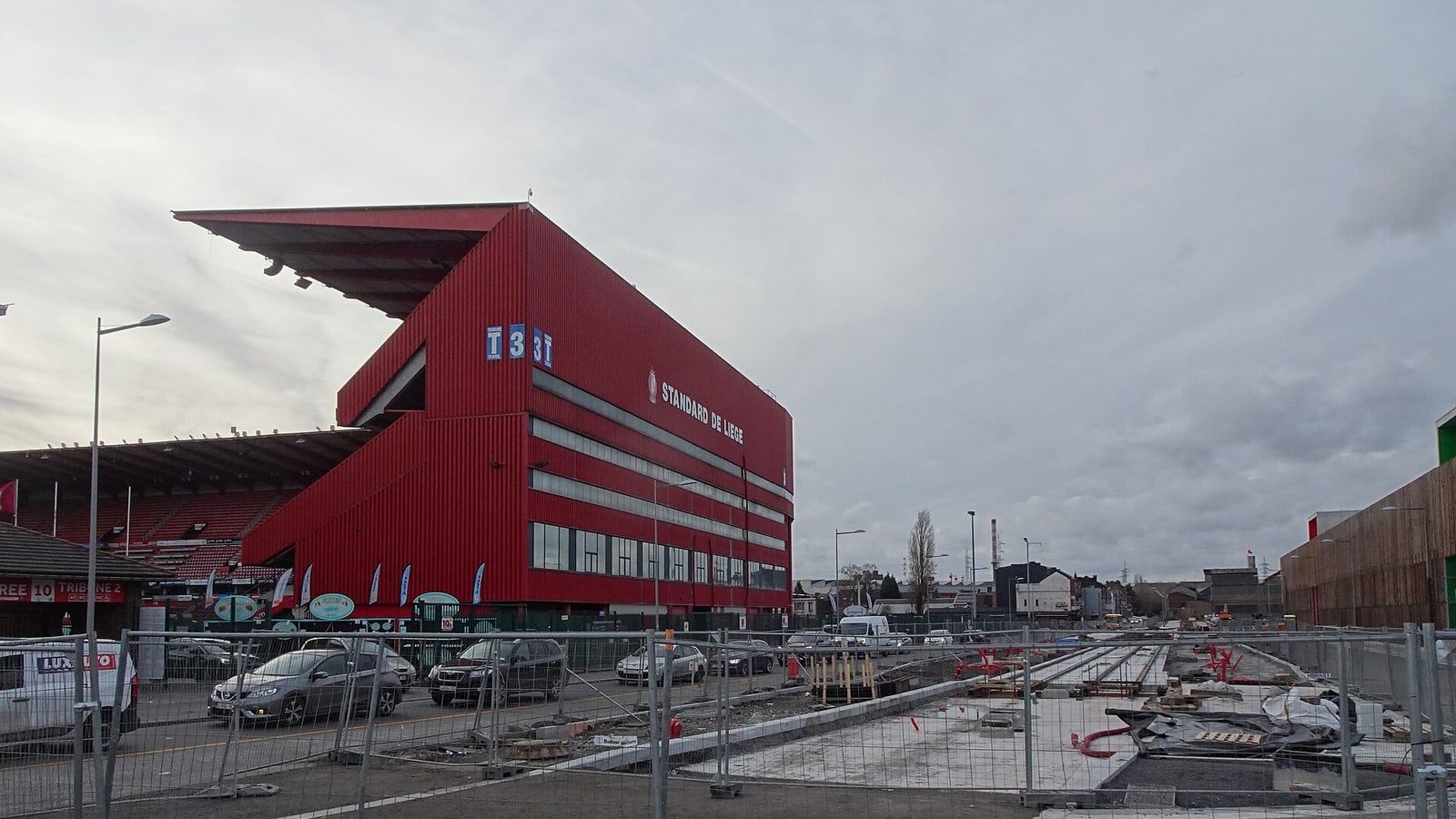
RFC Liège is one of Belgium's oldest football clubs (founded 1892, matricule 4, five national titles) and the club at the origin of the 1995 Bosman ruling; it currently plays in the national second tier. The “gens du voyage” are Belgium's itinerant Traveller communities, who move in family convoys, particularly in summer, and rely on equipped halting sites (aires d'accueil) that remain scarce in Wallonia. The Centre de Médiation des Gens du Voyage et des Roms en Wallonie (CMGV) is the region's official mediation body for such situations; the Union des Villes et Communes de Wallonie (UVCW) represents the municipalities that must manage them.
Background
Summer occupations of sports fields and open land by Traveller convoys are a recurring phenomenon across Wallonia and Flanders, documented for years by mediation bodies and municipal associations. Belgium has also faced international criticism: the Council of Europe's European Committee of Social Rights found in 2012 (FIDH v. Belgium) that the country fell short of its obligations on Traveller accommodation. RFC Liège itself is a storied institution — Belgium's matricule 4 and the club whose dispute with Jean-Marc Bosman produced the 1995 ruling that transformed European football's transfer system.
What to do
Clubs and landowners facing an occupation should report it to the local police zone at once, contact the commune, engage the CMGV in Wallonia (or the Flemish administration and gemeente in Flanders), and document the grounds for insurance — then physically secure vehicle access points afterwards. Families with children at affected clubs should follow official club channels for revised training schedules.
The Belgian angle
In Wallonia, communes carry the operational burden of each occupation while the stock of equipped aires d'accueil remains limited; the UVCW has repeatedly pressed the regional level to co-finance sites. Liège, as a major Walloon city on summer travel routes, faces the tension more often than most.
EvidenceDeveloping · 1 primary source + 1 official document · Background sources: 2 · some details remain unconfirmedExplore evidence →Hide evidence ↑
- Published:
- 16 Jul 2026, 02:00
- Retrieved by ODIN:
- 16 Jul 2026
- Publication date unavailable
- Retrieved by ODIN:
- 16 Jul 2026
- Publication date unavailable
- Retrieved by ODIN:
- 16 Jul 2026
- Publication date unavailable
- Retrieved by ODIN:
- 16 Jul 2026
Continue reading


This story was assembled from verified evidence, with its sources and reasoning recorded as it was written.
This briefing was prepared with AI assistance and passed Belgium Impulse source, provenance and publication-quality checks. methodology.