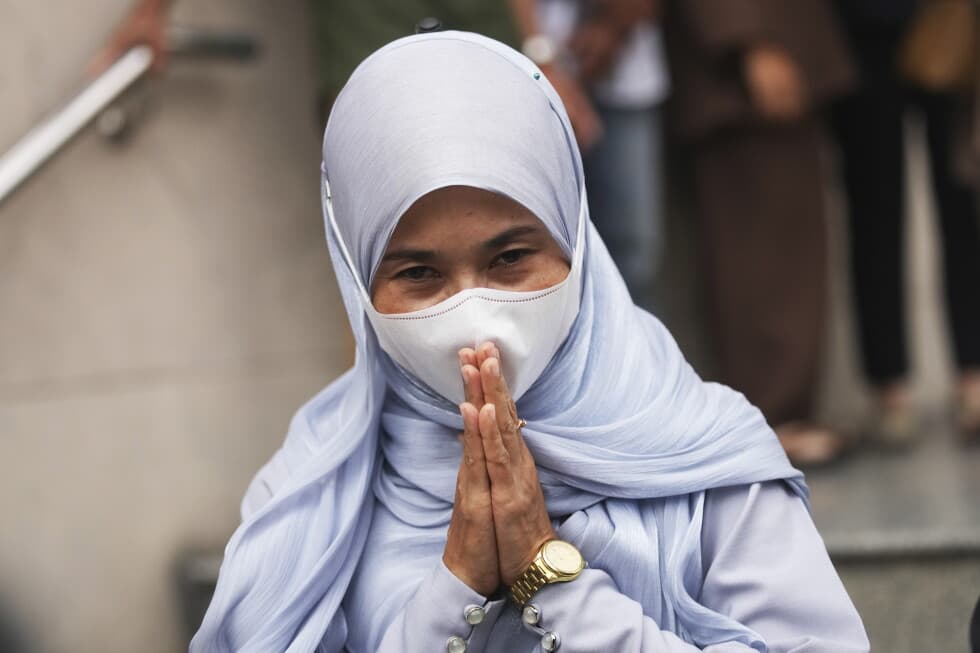
Thai court condemns two men over 2015 Bangkok shrine bombing
A Thai court has sentenced Yusufu Mieraili and Bilal Mohammed to death for the 17 August 2015 bombing of Bangkok's Erawan Shrine, a ruling the court said followed convictions for premeditated and attempted murder. The court said the attack killed 20 people and wounded more than 100, ending a case delayed for years by COVID-19 disruptions and translation problems. The defendants, both described in the case as Uyghur men, had denied the charges. The ruling revives two unresolved questions around the attack: whether Thai courts can close a mass-casualty case that long carried doubts about motive and evidence, and whether Thailand will move from capital sentencing to execution. The case matters beyond Thailand because the shrine was a tourist landmark, the victims included foreign visitors, and the death penalty sits at odds with the EU's abolitionist position.
Verified by Validiris·📚 6 sources·🧠 AI-checked·🇧🇪 Belgian: LowWhy you can trust this
About this story
Erawan Shrine (a Hindu shrine to Brahma in Bangkok's Ratchaprasong commercial district) is a major place of worship and tourist stop. Ratchaprasong (central Bangkok shopping and hotel area) has also been a site of political demonstrations. Yusufu Mieraili (Uyghur defendant in the Thai bombing case) and Bilal Mohammed, also known as Adem Karadag (Uyghur defendant accused of leaving the backpack bomb), were arrested after the 2015 attack. Uyghurs (a mainly Muslim Turkic minority from China's Xinjiang region) have been central to competing theories about motive. Bangkok Southern Criminal Court (a Thai criminal court handling cases in the capital) previously acquitted Wanna Suansan (Thai woman accused of helping rent accommodation) in 2024. Prayut Chan-o-cha (Thai prime minister after the 2014 military coup) led Thailand when the attack occurred. Thailand (Southeast Asian kingdom and major tourism destination) retains capital punishment.
How to read this story
The history
The Erawan Shrine bomb exploded on 17 August 2015, when the Royal Thai Police said a device had been left in a backpack at a crowded shrine area. Contemporary reporting and court coverage placed the death toll at 20 and the injured at more than 100. A 2015 security debate quickly developed around possible motives: Thai authorities pointed at people-smuggling retaliation, while some analysts linked the attack to anger over Thailand's July 2015 deportation of Uyghurs to China. In 2024, the Bangkok Southern Criminal Court acquitted Wanna Suansan, finding insufficient evidence against her.
The geopolitics
The unresolved motive theories touch wider China-Turkey-Thailand sensitivities around Uyghurs, migration routes and forced return. Thai authorities presented a people-smuggling retaliation theory, while some analysts saw a possible response to Thailand's 2015 deportation of Uyghurs to China. That ambiguity keeps the case partly geopolitical even though the ruling itself is a domestic Thai criminal judgment.
Why now
The story is timely because the Thai court issued its ruling on 11 June 2026 after a trial that reporting says was delayed by COVID-19 disruption and translation problems.
What to watch
Watch for confirmation of appeal filings, publication or fuller reporting of the court's reasoning, any statement from Thailand's prison authorities, and possible EU or NGO reactions if the death sentences become final.
International angle
The case is international because the 2015 bombing struck a tourist landmark, killed foreign visitors and involved Uyghur defendants whose alleged motive was debated against the backdrop of Thailand's deportation of Uyghurs to China. For Europe, the ruling also intersects with the EU's global campaign against capital punishment and with consular risk awareness for travel to Thailand.
What this means for you
Belgian travellers do not need to treat this verdict as a new security alert by itself, but it is a reminder to check official travel advice before visiting Thailand and to know consular contact routes. Belgian tour operators and families with relatives travelling in Bangkok should distinguish this historical court ruling from current risk levels.
What happens next
The defendants are expected to have legal avenues to challenge the convictions or sentences under Thai procedure, although the available reporting did not specify the timetable. Editors should watch for a written judgment, defence appeals, any royal-pardon process if sentences become final, and EU or human-rights reactions if Thailand moves toward executions.
Potential consequences
The verdict could bring a measure of judicial closure for victims' families, but it may also renew scrutiny of Thailand's death penalty, prison appeals process and handling of minority defendants. For Thailand's tourism sector, the immediate security impact is limited because the attack is historical, yet the ruling returns the bombing to international attention. EU institutions could raise the case if executions become a realistic prospect.
Opposing perspectives
- Thai court and prosecution frame
The court-centred view is that a long-delayed criminal case has finally produced accountability for a mass-casualty attack. The strongest version of this frame is procedural: the defendants were convicted of murder and attempted murder, and the court imposed the harshest penalty because the single act violated multiple laws.
- Human-rights and abolitionist constituency
The abolitionist frame separates punishment from accountability. It accepts the gravity of the 2015 bombing but argues that death sentences are incompatible with human-rights standards, especially in a case marked by translation delays, alleged mistreatment claims and unresolved motive disputes. Cornell Law School's database places Thailand among states retaining capital punishment.
- Uyghur and due-process observers
This frame focuses on the defendants' minority status and the disputed motive. It stresses that Thai authorities and analysts advanced different explanations over time, from people-smuggling retaliation to anger over Uyghur deportations to China. The strongest concern is not that the attack was minor, but that a capital case demands unusually clear evidence and language access.
Timeline
- 2015-08-17·A bomb exploded at Bangkok's Erawan Shrine, killing 20 people and injuring more than 100.
- 2015-08-19·Thai authorities released and analysed CCTV footage showing a suspect leaving a backpack at the shrine.
- 2016·The two main defendants pleaded not guilty when their trial began, according to later case reporting.
- 2024-11-07·The Bangkok Southern Criminal Court acquitted Wanna Suansan, a co-accused Thai woman, for insufficient evidence.
- 2026-06-11·A Thai court sentenced Yusufu Mieraili and Bilal Mohammed to death.
Glossary
- EU abolitionist position
- The European Union opposes capital punishment in all circumstances and regularly raises death-penalty cases in human-rights diplomacy.
Related to this story
Live connections from the Belgium Impulse ecosystem — not recommendations.
This briefing was prepared with AI assistance and reviewed by a Belgium Impulse editor before publication. methodology.