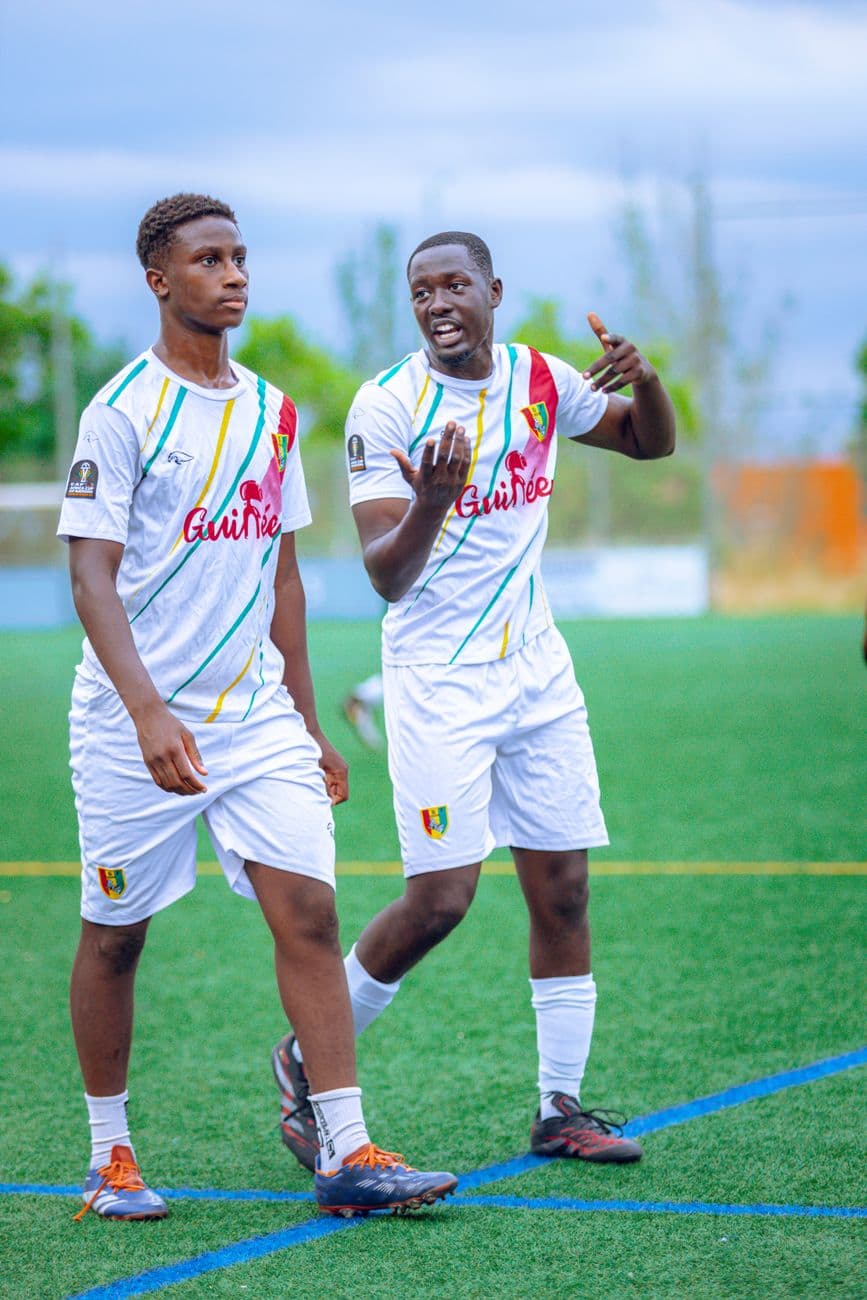
Saeta says FIFA made Haiti alter World Cup shirts
Saeta says FIFA required changes to Haiti's World Cup shirts after deciding that imagery linked to the Battle of Vertières and the Haitian Revolution could be read differently under equipment rules. The Colombian supplier says the design, prepared with the Haitian Football Federation, was meant as a historical tribute rather than a political statement. The dispute lands just as Haiti returns to the men's World Cup for the first time since 1974, with FIFA's tournament schedule placing the team in Group C against Scotland, Brazil and Morocco. The episode is mainly a football-governance story: how far FIFA's neutrality rules can reach into national symbols. For Belgian readers, the resonance is direct but secondary. Belgium is also in the 2026 tournament, and FIFA's kit enforcement previously touched the Red Devils at Qatar 2022 over the word "Love" on an away shirt collar.
Verified by Validiris·📚 8 sources·🧠 AI-checked·🇧🇪 Belgian: LowWhy you can trust this
About this story
Saeta (Colombian sportswear supplier to Haiti's national football team) designed the contested shirts with the Haitian Football Federation, the body that runs Haitian football. FIFA (Zurich-based world football governing body, founded in 1904) approves World Cup equipment and applies tournament kit rules. Haiti (Caribbean republic that declared independence from France on 1 January 1804) is returning to the men's World Cup after a 52-year gap. The Battle of Vertières (18 November 1803, near Cap-Haïtien) was the decisive French defeat in the Haitian Revolution. Jean-Jacques Dessalines (Haitian revolutionary leader, 1758-1806) proclaimed Haiti's independence and became its first ruler. CONCACAF (North, Central American and Caribbean football confederation) ran Haiti's qualification route. Scotland, Brazil and Morocco are Haiti's Group C opponents, according to FIFA's tournament schedule. The Royal Belgian Football Association, or RBFA (Belgium's national football federation), faced FIFA kit scrutiny during the 2022 World Cup.
How to read this story
The history
Haiti's shirt imagery refers to a foundational event rather than a current campaign. Historical accounts describe Vertières, fought on 18 November 1803, as the final major battle before Haiti declared independence on 1 January 1804. Comparable football-kit disputes show how governing bodies separate accepted heritage from political messaging unevenly. UEFA allowed Ukraine's Euro 2020 map outline but ordered one slogan combination removed after Russian objections. At the 2022 World Cup, FIFA's enforcement of armband and kit rules affected several European teams, including Belgium's away shirt collar detail.
Why now
The story is timely because the shirt decision emerged immediately before Haiti's first 2026 World Cup group match window. Saeta's statement and FIFA portrait imagery indicated that the team would not present the original design in match-facing tournament material.
What to watch
Watch Haiti's opener against Scotland and the official match photographs for confirmation of the altered design. The other signals are any new Saeta sales notice, Haitian Football Federation comment, or FIFA clarification on how it interpreted the imagery under equipment rules.
International angle
The dispute sits inside a global tournament run from FIFA's Zurich governance system and staged across North America. It matters beyond Haiti because every national federation entering the World Cup must submit equipment to the same approval logic, including Belgium's RBFA. The episode also shows how Caribbean, European and global football audiences can read the same image through very different political histories.
What this means for you
Belgian and EU-based fans do not need to take action, but anyone buying World Cup shirts should expect approved match versions and retail versions to diverge in politically sensitive cases. For clubs, federations and kit designers, Haiti's case is a reminder to test historical graphics against FIFA's broad interpretation of political imagery before launch.
What happens next
Haiti is expected to play its Group C matches in the modified kit unless FIFA or the supplier announces another approval. The next practical signals are the team's opener against Scotland, then matches against Brazil and Morocco. Any further dispute would probably emerge through match imagery, supplier communication or FIFA equipment enforcement rather than a formal legal process.
Potential consequences
The likely consequence is reputational rather than sporting: Haiti may gain sympathy among neutral fans while FIFA faces another round of scrutiny over consistency. Suppliers may become more cautious with historical or cultural graphics for national-team kits. For Belgium and other European federations, the lesson is that even small design details can be questioned once tournament approval moves from domestic presentation to FIFA-controlled match use.
Opposing perspectives
- Saeta and Haitian football identity
Saeta's statement argues that the shirts were built as a celebration of Haitian pride, resilience and history, not as a political message. In that frame, FIFA's ruling trims away exactly the kind of national memory that smaller football nations use to make a World Cup return culturally meaningful.
- FIFA tournament regulators
The FIFA-regulation frame is that World Cup equipment must be controlled before matches because symbols can be interpreted internationally in ways designers did not intend. The Scottish Sun cites FIFA's rule language on political, religious, discriminatory or personal images, making predictability and neutrality the governing body's strongest argument.
- El Pais framing on sporting neutrality
El Pais frames the episode as a test of who gets to define politics in football. Its strongest reading is that a history of anti-colonial independence can be treated as sensitive while other World Cup symbols and ceremonies pass through FIFA's wider political environment.
Timeline
- 1803-11-18·Historical accounts describe the Battle of Vertieres as the decisive battle in the Haitian Revolution.
- 1804-01-01·Jean-Jacques Dessalines proclaimed Haiti's independence from France.
- 1974-06-15·Haiti made its previous men's World Cup appearance at the 1974 tournament in West Germany.
- 2022-11-21·Historical reports say FIFA enforcement affected Belgium's away-shirt collar detail at the Qatar World Cup.
- 2025-11-18·CONCACAF qualification records show Haiti secured its 2026 World Cup place.
- 2026-06-10·Saeta said FIFA requested modifications to Haiti's World Cup shirt design.
Related to this story
Live connections from the Belgium Impulse ecosystem — not recommendations.
This briefing was prepared with AI assistance and reviewed by a Belgium Impulse editor before publication. methodology.