PSNI deploys water cannon as Belfast unrest targets migrant communities
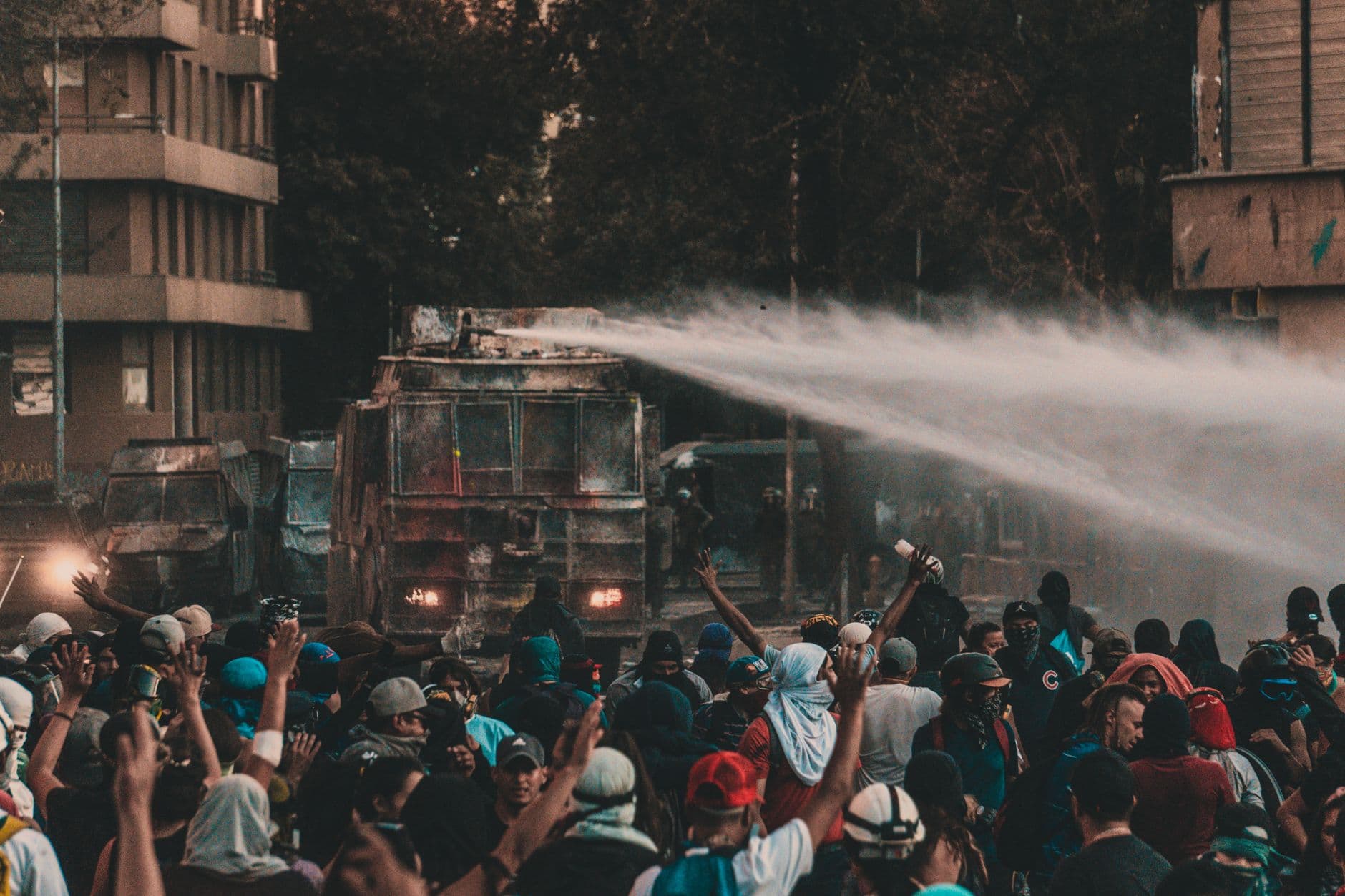
The Police Service of Northern Ireland used water cannon near Newtownabbey after masked crowds threw petrol bombs, bricks and other objects during a second night of anti-immigrant unrest around Belfast. The disorder followed a knife attack in north Belfast in which Stephen Ogilvie was seriously injured. Belfast Magistrates' Court heard that Hadi Alodid, 30, has been charged with attempted murder, possession of a knife and making threats to kill; he was remanded in custody and has not entered a plea. The Police Service of Northern Ireland said there was no information suggesting the stabbing was terrorism-related. Northern Ireland's Executive and UK Prime Minister Keir Starmer condemned the rioting, while Ogilvie's family said the attack should not be used to divide communities. The wider issue is not only public order: the violence also reopens arguments over asylum, the Irish border and online mobilisation by far-right networks.
Evidenced on the trust ledger·📚 11 sources·🧠 AI-checked·🇧🇪 Belgian: LowWhy you can trust this
UK Politics and Brexit: Origins to Today
A decade-and-a-half of British politics through the lens of Brexit — from David Cameron's 2013 EU pledge through the 2016 referendum, the long Withdrawal Agreement process, the 2020 exit, and into the post-Brexit Labour government's relationship with Brussels.
About this story
Belfast (capital of Northern Ireland and part of the United Kingdom) is the centre of the unrest. Newtownabbey (town north of Belfast in County Antrim) includes the Sandyknowes roundabout and Antrim Road area where police used water cannon. The Police Service of Northern Ireland, or PSNI (Northern Ireland's post-2001 police force), is leading the public-order response. Stephen Ogilvie (the injured Belfast man named by police and his family) is recovering from the knife attack. Hadi Alodid (30-year-old Sudanese man living in Belfast) is the defendant charged in Belfast Magistrates' Court. Stormont (the devolved Northern Ireland government estate) houses the Northern Ireland Executive, led jointly by First Minister Michelle O'Neill of Sinn Fein and deputy First Minister Emma Little-Pengelly of the Democratic Unionist Party. Naomi Long (Northern Ireland justice minister and Alliance Party leader) oversees justice policy. The Common Travel Area (UK-Ireland mobility arrangement predating EU membership) and the 1998 Good Friday Agreement (peace settlement for Northern Ireland) frame the border debate.
How to read this story
The history
The Belfast Agreement, published by the UK government in 1998, created the political framework that ended most Troubles-era violence and made cross-border cooperation with Ireland central to stability. GOV.UK guidance says the Common Travel Area lets British and Irish citizens move, live and work across the UK and Ireland, while non-British and non-Irish nationals remain subject to national immigration rules. The present unrest also follows the UK's 2024 anti-immigration riots after the Southport killings, when false claims about the suspect spread online, and Northern Ireland's June 2025 race-related disorder after allegations that later collapsed in court.
The geopolitics
This is not a great-power story, but it sits inside a wider Western pattern: migration, violent crime, social-media amplification and distrust of institutions are increasingly fused by far-right networks. Northern Ireland adds a distinctive geopolitical layer because the UK-Ireland border is both a migration route in political debate and a core symbol of the post-1998 peace settlement.
Why now
The immediate trigger was the 8 June knife attack in north Belfast, followed by the 10 June court appearance of Hadi Alodid and the circulation of graphic material and claims online. The second night of unrest became news when the PSNI deployed water cannon near Newtownabbey.
What to watch
Watch whether the PSNI reports further arrests, whether unrest continues around hotels or neighbourhoods believed to house migrants, and whether the 8 July court hearing proceeds as scheduled. Politically, the key signals are any UK or Irish review language around the Common Travel Area and any platform-enforcement response to incitement claims.
International angle
The cross-border issue is the UK-Ireland Common Travel Area, because some politicians are using the case to question how asylum and immigration controls operate between the Republic of Ireland and Northern Ireland. For EU readers in Belgium, the relevant link is Ireland's EU membership, the post-Brexit sensitivity of the Irish border and the EU's wider attempt to regulate systemic online harms.
What this means for you
For Belgian readers, there is no direct travel or legal change. The practical takeaway is situational awareness: Belgians travelling to Belfast should follow local police and transport updates, while Belgian organisations working with migrant communities can treat the case as another example of how fast online rumours can produce offline safety risks.
What happens next
The criminal case against Hadi Alodid is expected to proceed through Belfast Magistrates' Court, with the next listed hearing reported for 8 July. The PSNI could make further arrests linked to the disorder, while Northern Ireland ministers will face pressure over community protection, public-order resources and online incitement. UK and Irish politicians may also revisit arguments over the Common Travel Area.
Potential consequences
If the unrest continues, Belfast's migrant communities could face displacement, businesses may close early, and police resources may be diverted from normal duties into public order. Politically, the case could harden arguments over asylum policy and the UK-Ireland border. At EU level, the episode may feed pressure for faster enforcement against online incitement, though any regulatory response would need to distinguish illegal hate and threats from lawful political speech.
Opposing perspectives
- Northern Ireland Executive
The Northern Ireland Executive's frame is that the stabbing is now a legal case and cannot justify collective punishment. Its joint statement argues that violent crowds are endangering the same communities they claim to defend, and that justice should be left to the courts rather than street retaliation.
- Migration-control advocates in the UK and Ireland
Migration-control advocates frame the case around the Common Travel Area and asylum enforcement. Their strongest argument is that the suspect's reported route through Dublin shows a security and immigration-control gap that must be reviewed without dismissing public concern as racism.
- Digital-safety regulators and civil-society researchers
The digital-safety frame is that the riot shows how violent imagery and identity-based claims can move from platforms into streets. The European Commission's DSA guidance and academic research by Olteanu, Castillo, Boy and Varshney support the concern that platforms must anticipate public-security risks around illegal or hateful content.
Timeline
- 1998-04-10·The Belfast Agreement was reached, setting the framework for Northern Ireland power-sharing and UK-Irish cooperation.
- 2026-06-08·Stephen Ogilvie was seriously injured in a knife attack in north Belfast, according to court and police-linked accounts.
- 2026-06-09·Violent anti-immigrant unrest broke out in Belfast, with homes, vehicles and public infrastructure targeted.
- 2026-06-10·Belfast Magistrates' Court heard charges against Hadi Alodid, and the PSNI later used water cannon near Newtownabbey.
- 2026-07-08·The next court date in Alodid's case has been reported for 8 July.
Glossary
- Common Travel Area
- A UK-Ireland arrangement, predating EU membership, that gives British and Irish citizens reciprocal rights to travel, live, work, study and vote in certain elections across the two states.
- Digital Services Act
- An EU regulation requiring online platforms, especially very large platforms, to manage risks such as illegal content, public-security threats and harms to fundamental rights.
- Stormont
- The Belfast estate and shorthand name for Northern Ireland's devolved Assembly and Executive.
How this story developed
2 reports on this subject — earliest first. You are reading the highlighted entry.
- PSNI deploys water cannon as Belfast unrest targets migrant communities· You are here
- Belfast police arrest 19 after anti-immigrant riots
Related to this story
Live connections from the Belgium Impulse ecosystem — not recommendations.
This briefing was prepared with AI assistance and reviewed by a Belgium Impulse editor before publication. methodology.