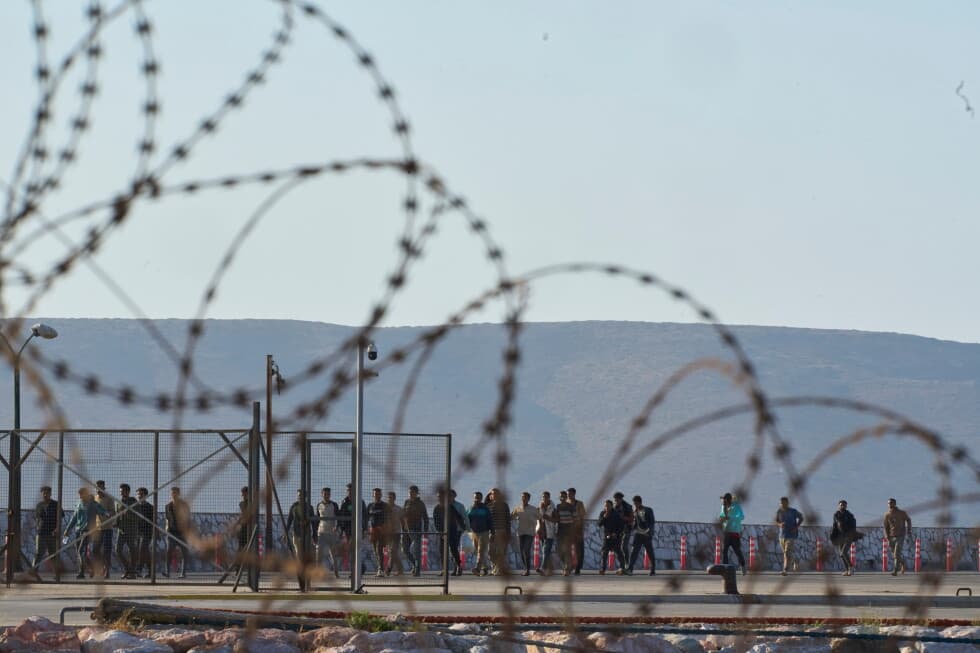
Pope Leo presses Europe on migration during Canary Islands visit
Pope Leo XIV used the final leg of his 6-12 June visit to Spain to put Europe’s migration choices back in moral, not only administrative, terms. The Holy See’s itinerary placed meetings with migrant-support organisations at Arguineguín on Gran Canaria and with migrants at Tenerife’s Las Raíces Center at the end of a tour that had also included Madrid, Barcelona and the Sagrada Família. News coverage of the visit says the pontiff linked deaths on Atlantic and Mediterranean routes to political indifference, trafficking and the lack of safe routes. The timing matters because the European Commission says the EU Migration and Asylum Pact enters application in June 2026, shifting member states toward common screening, faster procedures and a permanent solidarity framework. For Belgian readers, the story is not Spanish local politics alone: it is a test of the European migration settlement that Belgium helped finalise during its 2024 EU Council presidency.
Verified by Validiris·📚 9 sources·🧠 AI-checked·🇧🇪 Belgian: MediumWhy you can trust this
About this story
Pope Leo XIV (the Roman Catholic pontiff elected in 2025) is making his fourth foreign trip. The Holy See (the Vatican’s sovereign diplomatic authority) published the official Spain itinerary. The Canary Islands (Spanish Atlantic archipelago off north-west Africa) are a major EU arrival point for sea migration. Gran Canaria and Tenerife (two of the archipelago’s main islands) hosted the migration-focused leg. Arguineguín (a port on Gran Canaria) became associated with overcrowded arrivals during the 2020 Canary route crisis. Las Raíces Center (a migrant reception site on Tenerife) was listed by the Holy See as a papal stop. Pedro Sánchez (Spain’s Socialist prime minister since 2018) has backed regularisation measures. Vox (Spanish far-right party founded in 2013) opposes looser migration policy. The EU Migration and Asylum Pact (adopted in 2024, entering application in June 2026) rewrites EU asylum and border rules. Caminando Fronteras (Spanish migrant-rights monitoring NGO) tracks deaths on Spain’s southern maritime routes.
How to read this story
The history
The migration symbolism echoes Pope Francis’s July 2013 visit to Lampedusa, where the papacy made migrant deaths at sea a central European conscience issue. The Canary route has since become a recurring pressure point: Caminando Fronteras counted 1,906 deaths on the Atlantic route to the Canary Islands in its 2025 monitoring, after an even deadlier 2024. The EU response has evolved from emergency relocation fights after the 2015 migration crisis to the 2024 Migration and Asylum Pact, which the Council says replaced fragmented rules with common screening, Eurodac changes, border procedures and burden-sharing.
The geopolitics
Migration through the Atlantic and Mediterranean routes is shaped by instability, poverty, climate pressures, smuggling networks and EU cooperation with origin and transit countries. The European Commission says the pact embeds migration in international partnerships, while critics argue that such partnerships can externalise European responsibility to states with weaker rights safeguards.
Why now
The trigger is Pope Leo XIV’s 6-12 June Spain visit, whose final two days were scheduled for migrant encounters in the Canary Islands. It coincides with the European Commission’s June 2026 entry-into-application date for the EU Migration and Asylum Pact.
What to watch
Watch whether the Holy See publishes full texts from the Arguineguín and Tenerife remarks, how Spain’s government and opposition use the visit domestically, and whether the European Commission reports early implementation gaps as member states apply the pact’s screening and solidarity systems.
International angle
The story’s centre is European and cross-border: Spain’s Canary Islands are an EU external-border arrival point, while Belgium and other inland member states are tied in through common asylum rules and solidarity obligations. The pope’s message therefore lands inside a live EU governance test, not simply a Spanish church-state moment.
What this means for you
Nothing immediate changes for Belgian residents because of the papal visit itself. The practical issue is the EU pact: asylum lawyers, reception operators, municipalities and NGOs in Belgium should expect more attention to screening, Eurodac data, return procedures and solidarity choices as federal authorities implement the common rules.
What happens next
Pope Leo is expected to return to Rome after the Tenerife leg on 12 June, according to the Holy See itinerary. The policy follow-up moves to EU and national implementation: member states, including Belgium, must operate the new screening, procedure, Eurodac and solidarity rules as the pact enters application, while courts, NGOs and EU institutions could test how rights safeguards work in practice.
Potential consequences
The visit could strengthen religious and civil-society pressure on European governments just as the pact’s stricter procedures begin. It will not by itself change EU law, but it may sharpen public scrutiny of detention, returns, search-and-rescue coordination and cooperation with transit countries. In Belgium, the main consequence is political: parties and NGOs can use the papal intervention as a reference point in debates over implementation and reception capacity.
Opposing perspectives
- Holy See / Catholic social teaching
The papal frame treats migration first as a question of human dignity. The Holy See’s itinerary deliberately placed migrant encounters at Arguineguín and Las Raíces, and the pontiff’s message, as reported, argues that legal control cannot erase obligations to rescue people, protect the vulnerable and create safer pathways.
- European Commission and Council mainstream
The European Commission frames the pact as a way to combine secure external borders, faster procedures, rights guarantees and solidarity so that no member state is left alone. The Council’s 2024 adoption statement, led during Belgium’s presidency, presents the reform as a practical compromise after years of deadlock.
- Migration-rights and academic critics
The German Marshall Fund analysis argues that the pact still leaves first-entry countries carrying much of the burden, institutionalises border procedures and encourages externalisation. This view sees the Canary Islands visit as a warning that deterrence-heavy systems may shift responsibility without preventing deaths.
- Restrictionist parties in Spain and Europe
Vox-style restrictionist politics would frame the visit differently: humanitarian language should not weaken border enforcement, returns or national control over admissions. From that perspective, the EU pact is acceptable only if it produces visible reductions in irregular arrivals and avoids open-ended relocation obligations.
Timeline
- 2013-07·Pope Francis visited Lampedusa, making migrant deaths at sea a central papal theme.
- 2020-09-23·The European Commission proposed the New Pact on Migration and Asylum.
- 2023-12-20·EU negotiators reached political agreement on the pact.
- 2024-05-14·The Council of the EU adopted 10 pact legislative acts during Belgium’s Council presidency.
- 2026-05-06·The Holy See published Pope Leo XIV’s Spain itinerary.
- 2026-06-11·The Holy See scheduled Pope Leo’s meeting with migrant organisations at Arguineguín.
- 2026-06-12·The Holy See scheduled Pope Leo’s meeting with migrants at Las Raíces Center and return to Rome.
Glossary
- EU Migration and Asylum Pact
- A package of EU laws adopted in 2024 to harmonise asylum procedures, screening, Eurodac data use, returns and solidarity between member states.
- Eurodac
- The EU biometric database used to help identify asylum applicants and people entering irregularly, expanded under the new pact.
- Solidarity mechanism
- A pact system under which EU countries support pressured member states through relocations, money, operational support or responsibility offsets.
- First-entry country
- The EU member state where an asylum seeker first enters the Union and which often carries initial responsibility for processing.
Related to this story

Live connections from the Belgium Impulse ecosystem — not recommendations.
This briefing was prepared with AI assistance and reviewed by a Belgium Impulse editor before publication. methodology.