Peruvian police use World Cup mascots in drug raid
A viral Peruvian police disguise raid points to a wider cocaine-enforcement chain that reaches European ports, including Antwerp.
In 30 seconds
- Police said officers dressed as World Cup mascots were used to approach a suspected drug dealer in Peru.
- The target remains a suspect unless Peruvian courts establish guilt.
- EUDA says EU Member States reported 419 tonnes of cocaine seized in 2023.
- EUDA says Belgium, Spain and the Netherlands reported the highest EU seizure volumes in 2023.
How we got here
- 2023-10-31
Earlier reports described Peruvian officers using Halloween disguises in a drug raid.
- 2024-12-24
Coverage citing Peruvian police described a Grinch-costume raid in San Bartolo.
- 2025-06-05
EUDA published its 2025 European cocaine situation analysis.
- 2026-06-12
The video lead described Peruvian police using World Cup mascot costumes in a suspected drug-dealer operation.
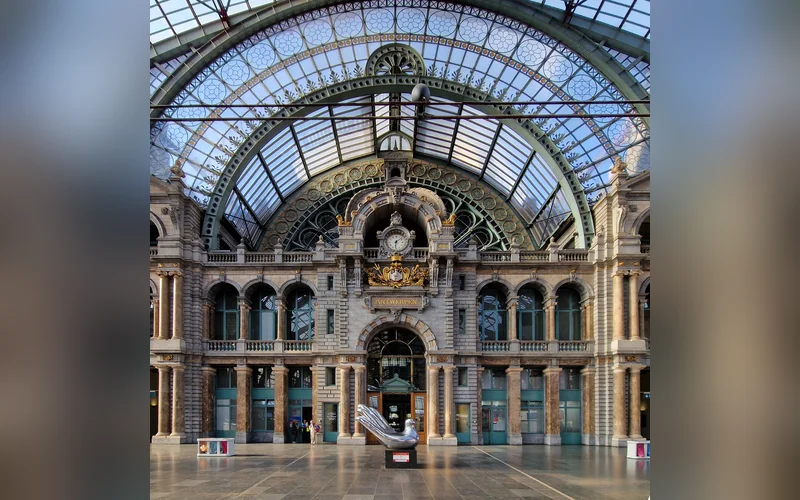
Peru (Andean country on South America's Pacific coast, with major legal and illicit coca-growing areas) is the setting for the raid. Peruvian National Police (Peru's national civilian police force, under the Interior Ministry) has previously publicised disguised operations by specialist units. World Cup mascots (promotional characters associated with FIFA World Cup tournaments) were used in this case as a disguise rather than as a football story. FIFA World Cup (the global football tournament run by FIFA every four years) gives the costumes instant public recognition. The European Union Drugs Agency, or EUDA (Lisbon-based EU agency that monitors drug markets and harms, renamed from EMCDDA in 2024), provides the European cocaine-market context. Europol (EU law-enforcement cooperation agency based in The Hague) tracks organised-crime methods affecting EU ports. Antwerp port (Belgium's largest seaport and a major European container hub) is relevant because EUDA identifies Belgium among Europe's main cocaine-entry countries.
Background
Peruvian police have repeatedly turned costume raids into public spectacles. A police post cited in December 2024 coverage said an officer dressed as the Grinch helped arrest three suspected members of a San Bartolo drug-dealing group. Earlier reports described officers using Halloween characters in 2023 and comic-book costumes in Lima in 2024. The tactic belongs to undercover policing rather than conventional crowd control: the disguise buys a few seconds of surprise before uniformed officers move in. EUDA's 2025 cocaine analysis gives the broader timeline, saying EU Member States reported record cocaine seizures for a seventh consecutive year in 2023.
The wider picture
This is not a great-power story, but it is geopolitical in the organised-crime sense. Cocaine markets connect weak rural governance, maritime trade, port corruption and European demand. Europol's port-crime analysis frames EU ports as strategic infrastructure vulnerable to criminal infiltration, while EUDA's drug-market work shows why Belgium's exposure cannot be separated from developments in South American production and trafficking routes.
Why now
The story is timely because the video lead was published on 12 June 2026 and used a World Cup visual hook ahead of the 2026 tournament cycle. Its news value comes less from the scale of the arrest than from the unusual disguise tactic and the wider visibility it gives to Peruvian anti-drug policing.
What happens next
Watch for any Peruvian police or prosecutorial update confirming charges, seized material, the suspect's status and the location of the operation. For the European angle, watch EUDA's next cocaine update and Belgian customs data from Antwerp, especially whether seizures, smaller loads or port-related arrests shift in 2026.
What to do
Nothing changes directly for Belgian residents because of this raid. The practical takeaway is interpretive: viral drug-policing videos often show the visible retail end of a much larger market. Belgian readers should separate the spectacle from the structural issue: cocaine availability in Europe is shaped more by maritime logistics, port security, corruption controls and public-health demand than by any single street-level arrest.
EvidenceDeveloping · 1 primary source + 2 official documents · Academic sources: 1 · Background sources: 1 · some details remain unconfirmedExplore evidence →Hide evidence ↑
- Published:
- 12 Jun 2026, 02:00
- Retrieved by ODIN:
- 12 Jun 2026
- Published:
- 5 Jun 2025, 02:00
- Retrieved by ODIN:
- 12 Jun 2026
- Published:
- 28 Mar 2023, 02:00
- Retrieved by ODIN:
- 12 Jun 2026
- Published:
- 24 Dec 2024, 01:00
- Retrieved by ODIN:
- 12 Jun 2026
- Published:
- 1 Jul 2023, 02:00
- Retrieved by ODIN:
- 12 Jun 2026
Continue reading

This story was assembled from verified evidence, with its sources and reasoning recorded as it was written.
This briefing was prepared with AI assistance and passed Belgium Impulse source, provenance and publication-quality checks. methodology.