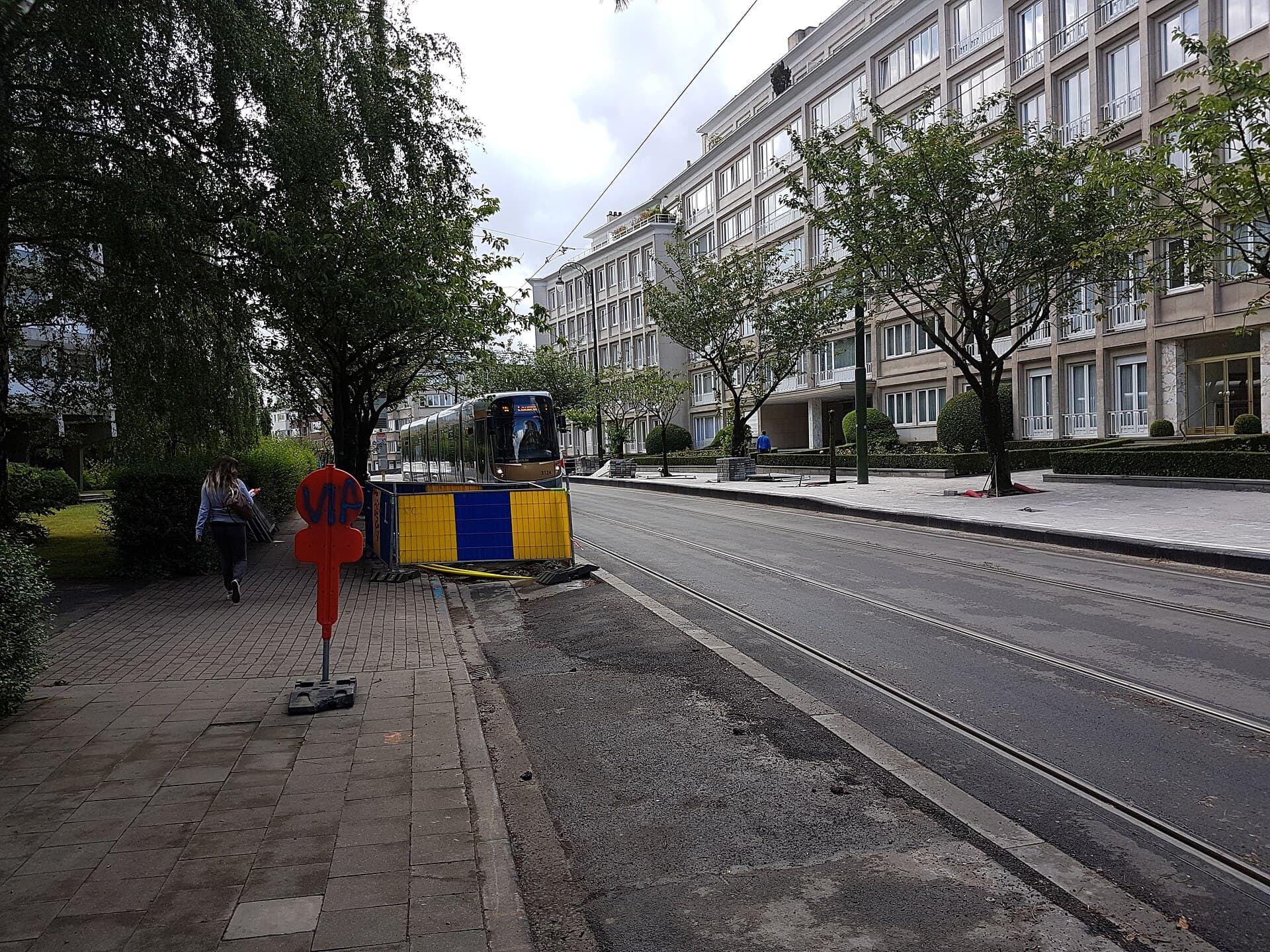
MIVB scales Brussels transport for Cup and Pride weekend crowds
On 11 May 2026, MIVB said it was adjusting the network for the Croky Cup, Jam’in Jette and Brussels Pride over 14–16 May. The operator said the frequencies on line 6 were doubled because all line 2 trains would also run to Koning Boudewijn for the Cup final on 14 May. For fan routing, MIVB said tram 7 was strengthened between Buyl and Heizel with a six-minute headway from 12:00 to 20:00, tram 9 ran only to Stadion from 10:00 to 20:00, and bus 83 was rerouted between Tircher and Esplanade. MIVB said N18 Noctis buses ran every 20 minutes between 00:30 and 03:00, and announced that Jam’in Jette could be reached through dedicated stops in Jette. It also said bus lines 29, 38, 46, 48, 50, 63, 65, 66, 71, 89 and 95 were locally limited or rerouted during Pride, while keeping core entry links via metro 1/5 and trams 4, 10, 92, 93 available. The City of Brussels said centre-city traffic was adapted from 14:00 to 18:00, and certain streets were closed from 5:00 for Pride safety.
Verified by Validiris·📚 5 sources·🧠 AI-checked·🇧🇪 Belgian: HighWhy you can trust this
About this story
STIB-MIVB, formally the Maatschappij voor Intercommunaal Vervoer te Brussel, is the main public-transport operator for the Brussels Capital Region and also operates under the French acronym STIB in bilingual communication. It runs Brussels' metro, tram, bus and night-bus services across 19 Brussels communes and nearby municipalities. MIVB, the same company in Dutch-language shorthand, is the entity at the centre of these operational decisions. Koning Boudewijn Stadium, also called Stade Roi Baudouin, is Brussels’ principal football venue and was the site of the 2026 Croky Cup final. Union Saint-Gillis and RSC Anderlecht are major Brussels football clubs from the municipalities of Saint-Gilles and Anderlecht, and their matchup created a very concentrated supporter flow on match day. The Croky Cup is Belgium’s domestic knockout cup competition run under the KBVB/URBSFA calendar. Jam’in Jette is a recurring open-air music festival in Jeugdpark, Jette, on 15 and 16 May. Brussels Pride is the annual citywide LGBTQIAP+ rights event, and in 2026 it marked its 30th edition. Noctis is MIVB’s late-evening/night bus service brand used to absorb demand when daytime routes need diversion or short-term reinforcement. The City of Brussels is the municipal authority that sets temporary road-use and street-closure notices in the inner city during high-impact events.
How to read this story
The history
This weekend plan follows a recurring Brussels model rather than a one-off emergency. In 2025, MIVB also used temporary boosts and reroutes for a festival weekend, combining a music event with Jam’in Jette and city-centre management, which shows that event-driven micro-planning has become standard operating practice. At the municipal level, Pride management similarly follows an established calendar pattern: the city repeatedly publishes route- and time-specific traffic adaptations for major parades before the weekend. The 2026 event cycle therefore fits a documented sequence in Brussels where event density is handled through short-lived operational layering—frequency increases on trunk lines, feeder diversions, and road-access limits in the centre—rather than a general timetable redesign.
Why now
The update was published immediately before a three-day calendar in which three large events overlapped, creating a clearly predictable peak. That overlap made advance planning essential, because the Cup final, Jam’in Jette and Brussels Pride each required different passenger streams converging on limited hubs in the same weekend.
What to watch
Watch for event-day disruption feeds and station notices from MIVB’s official app and web channels, plus City of Brussels updates if road closures change during execution. Track any additional late notices on bus-line substitutions near central Pride and spectator sectors around Heysel.
Local impact
The strongest local pressure was around three nodes: the Heysel/Koning Boudewijn access axis for football supporters, Jette’s Jeugdpark area for festival movement, and central Brussels streets used by Pride parades and visitors. Residents in those sectors can face altered stop access and longer transfer times, even if their own destination is outside the event routes.
International angle
Brussels is an international city with global visitors and institutions, so a congested weekend transport setup affects not only local residents but also conference travellers, diplomatic and EU-linked staff, and international students using the same trunk lines. The episode also illustrates a European-capital template for compact multilingual urban mobility planning during stacked sports and rights events.
What this means for you
Commuters should pre-plan alternate stops, check the live MIVB service map before departure, and leave extra transfer time around the 12:00–20:00 peak windows. Event organisers should share fallback routes between tram, metro and bus modes. Students and staff who normally rely on direct feeder lines in Jette or central Brussels should expect temporary stop skipping and plan for additional walking or a different station approach.
What happens next
Immediate follow-up depends on demand and safety feedback during operation. MIVB and city actors typically refine variant maps, station staff deployment and bus re-routing in real time if passenger flow pressure exceeds the planned levels. In practical terms, users should monitor operator and city channels for late updates around midday and overnight windows. If this weekend pattern proves effective, Brussels transport and city managers are likely to reuse the same template for future event clusters where sports, festivals and civic parades overlap.
Potential consequences
If coordination works, the weekend sees smoother flows, fewer dangerous platform congestions, and more predictable transfers in the busiest districts. If flows are still heavy, temporary changes can trigger frustration among riders on feeder lines that lose direct stops, and that can reduce trust in reliability for regular transit users. Event-heavy weekends also test inter-operator communication, because even small service substitutions can ripple into NMBS, De Lijn, and regional bus trip planning. Over time, successful plans strengthen the model of pre-emptive crowd management; weaker execution can push authorities toward stronger preemptive restrictions in future seasons, including broader temporary shutdowns or stricter mobility advisories.
Timeline
- 2026-05-11·MIVB published a temporary service plan for Croky Cup, Jam’in Jette and Brussels Pride in the 14-16 May weekend.
- 2026-05-14·Croky Cup final plans were activated, including doubled line-6 service and match-specific rerouting around the stadium corridor.
- 2026-05-15·Jam’in Jette weekend service pattern ran in both evening and night windows, with Noctis N18 reinforcement.
- 2026-05-16·Brussels Pride day included city-centre traffic adaptation and bus rerouting in designated Pride corridors.
Glossary
- STIB-MIVB
- The Brussels regional transport company (French STIB, Dutch MIVB) that runs metro, tram, bus and night-bus services in Brussels.
- Noctis
- MIVB’s branded night-bus system for overnight mobility and event-linked late demand.
- Ascension weekend
- The period around Thursday, 14 May 2026, in Belgium including the Christian holiday Thursday and weekend bridge dynamics that often boost holiday travel.
Related to this story

Pulse Insight — This topic connects to 10 associations, 3 funding programmes, 97 upcoming events and 848 jobs through the Brussels ecosystem.
Live connections from the Belgium Impulse ecosystem — not recommendations.
This briefing was prepared with AI assistance and reviewed by a Belgium Impulse editor before publication. methodology.