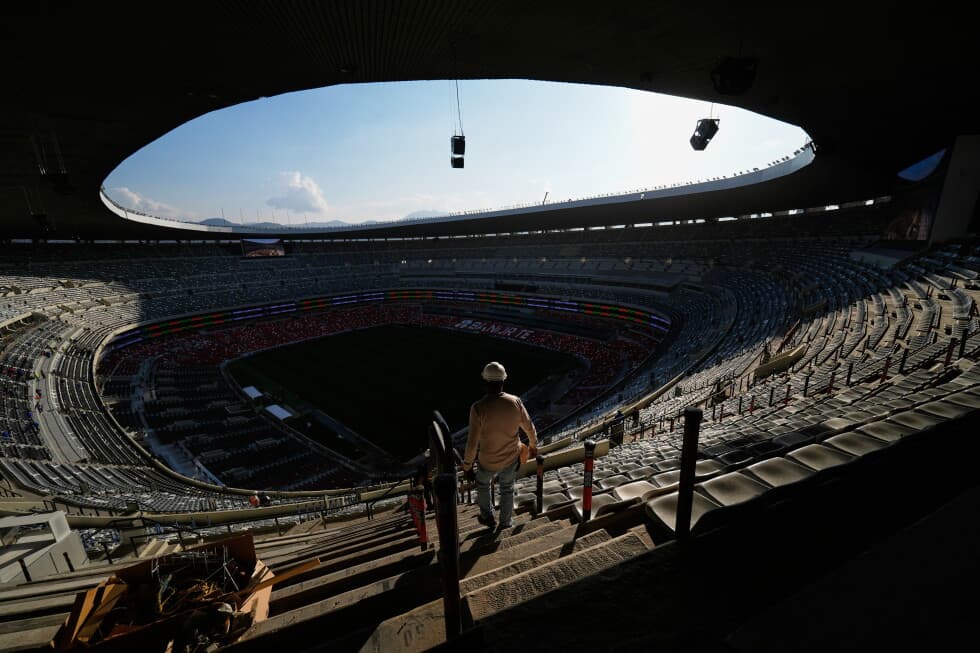
Mexico opens World Cup under heavy security in Mexico City
Mexico starts the 2026 FIFA World Cup on 11 June with the opening match against South Africa in Mexico City, while President Claudia Sheinbaum's government says it has reinforced security around stadiums, fan zones and transport hubs. The Associated Press says a teachers' union protest camp has complicated access to the Zocalo fan festival, and Mexican authorities say alternative public viewing venues are available if the central square cannot be used. The Mexican Football Federation expects the tournament to generate about $3bn for hotels, restaurants and sports venues. The National Search Commission's public register also underlines why families of missing people have used the tournament spotlight: Mexico's official missing-persons database remains a live, contested public issue. The football event remains the centre of gravity, but its opening day shows how mega-events can concentrate unresolved disputes over wages, security, public spending and national image.
Verified by Validiris·📚 6 sources·🧠 AI-checked·🇧🇪 Belgian: LowWhy you can trust this
About this story
FIFA (the Zurich-based world football governing body, founded in 1904) organises the men's World Cup. Mexico City (Mexico's capital and one of three Mexican host cities in 2026) stages the opener. The Zocalo (Mexico City's central square, formally Plaza de la Constitucion) is the planned main fan-festival site. Estadio Azteca, branded Estadio Banorte for commercial purposes and Mexico City Stadium for FIFA use, is the historic venue that hosted World Cup finals in 1970 and 1986. Claudia Sheinbaum (Mexico's president since 2024) leads the host-country government response. CNTE, the Coordinadora Nacional de Trabajadores de la Educacion (a dissident Mexican teachers' union), is pressing wage and pension demands. Guadalajara and Monterrey (major Mexican host cities) also stage matches. South Africa (Mexico's opening opponent) hosted the 2010 World Cup. The Red Devils (Belgium's men's national team) begin their own Group G campaign later in the tournament.
How to read this story
The history
FIFA's published tournament format expanded the men's World Cup from 32 to 48 teams for 2026, creating 104 matches across Canada, Mexico and the United States. Mexico is not a novice host: Estadio Azteca was central to the 1970 and 1986 tournaments, including finals remembered for Pele's Brazil and Diego Maradona's Argentina. South Africa's 2010 World Cup offers a closer precedent for the social backdrop: academic and historical accounts of that tournament describe disputes over public spending, urban beautification, security and whether mega-events serve residents as well as visitors.
The bigger picture
The opening day is not a classic state-to-state crisis, but it sits inside a broader politics of national image. Mexico is using the World Cup to project competence, hospitality and economic opportunity, while protesters are using the same global attention to foreground labour demands, violence and disappearances. That tension is common when mega-events become showcases for states.
Why now
The story is timely because the World Cup begins on 11 June in Mexico City, and protest activity around the Zocalo has created uncertainty over the main fan-festival site immediately before kickoff.
What to watch
Watch whether the Zocalo fan festival opens as planned, whether authorities rely on alternative viewing sites, and whether the Mexico-South Africa match proceeds without public-order incidents. For Belgian readers, the next sporting marker is Belgium's Group G opener on 15 June.
International angle
The tournament is the first men's World Cup shared by three host countries, and Mexico's opener is the first public test of that North American model. The story also connects directly to Belgium because the Red Devils enter the same expanded competition days later, while European audiences follow FIFA's handling of fan access, policing and host-city pressure.
What this means for you
Belgian readers travelling in Mexico should monitor official local security and transport instructions around match sites and fan zones. Fans watching from Belgium should expect the tournament conversation to include off-field issues from day one, while bars, broadcasters and supporters' groups can plan around Belgium's later Group G schedule.
What happens next
Mexico is expected to play South Africa on 11 June, while authorities could redirect fans to alternative viewing sites if the Zocalo remains obstructed. The tournament then moves through early group matches in Mexico, Canada and the United States. Belgium's supporters will shift attention to the Red Devils' first Group G match later in the opening round.
Potential consequences
If security operations hold and the match proceeds smoothly, Mexico can frame the opening day as proof that social pressure did not overwhelm the tournament. If fan-zone access remains unstable or protests escalate, FIFA and local authorities could face harder choices over crowd routing, public messaging and police posture. For Belgium's tournament audience, the immediate effect is mostly reputational and logistical rather than sporting.
Opposing perspectives
- Mexican federal government / Claudia Sheinbaum
President Claudia Sheinbaum's position is that the World Cup can proceed safely while public viewing is kept flexible. Mexican authorities say alternative free venues can absorb fans if the Zocalo is blocked, and the government's strongest argument is that security planning and decentralised fan sites can protect both visitors and residents.
- CNTE teachers' union
CNTE's strongest argument is that the World Cup gives workers leverage because the government is investing political capital and public space in an international spectacle. The union's campaign presents wage, pension and working-condition demands as more urgent than cosmetic upgrades around fan zones.
- Families of missing people in Mexico
Families of missing people use the tournament spotlight to argue that Mexico's international image should not eclipse the search crisis. The National Search Commission says the official register is constantly updated, and families' strongest frame is that visibility during a global event can pressure authorities to maintain searches and investigations.
Timeline
- 1970-06-21·Estadio Azteca hosted the 1970 World Cup final.
- 1986-06-29·Estadio Azteca hosted the 1986 World Cup final.
- 2026-06-10·Reports from Mexico City described teachers' protests around the Zocalo ahead of the opener.
- 2026-06-11·Mexico was scheduled to open the World Cup against South Africa in Mexico City.
- 2026-06-15·Belgium was scheduled to begin Group G against Egypt in Seattle.
- 2026-07-19·The World Cup final is scheduled for New York/New Jersey.
Related to this story
Live connections from the Belgium Impulse ecosystem — not recommendations.
This briefing was prepared with AI assistance and reviewed by a Belgium Impulse editor before publication. methodology.