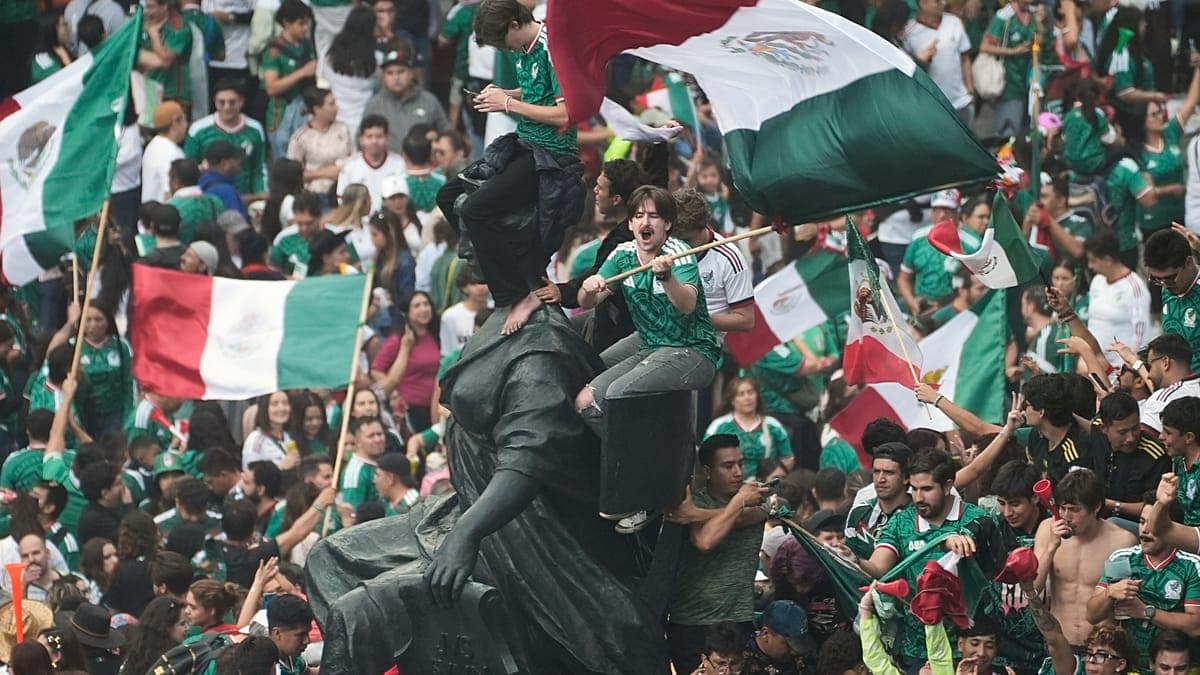
Mexico beats South Africa in World Cup opener
Mexico began the 2026 FIFA World Cup with a 2-0 win over South Africa at Azteca Stadium, turning the tournament’s first night into a home-soil statement rather than a ceremonial warm-up. Match reports recorded goals by Julian Quinones and Raul Jimenez, a capacity crowd of 80,824 and three red cards, including dismissals for South Africa’s Sphephelo Sithole and Themba Zwane and Mexico’s Cesar Montes. The result gives Mexico early control of Group A before games against South Korea and Czechia. For South Africa, returning to the World Cup for the first time since 2010, the defeat leaves immediate pressure before its next group match. The broader significance is cultural as much as tactical: Mexico is co-hosting a tournament mostly staged in the United States, and the opening win gave its supporters a full national moment at one of football’s landmark stadiums.
Verified by Validiris·📚 7 sources·🧠 AI-checked·🇧🇪 Belgian: LowWhy you can trust this
About this story
Mexico national football team, commonly nicknamed El Tri, is the co-host nation’s men’s side and has twice reached World Cup quarter-finals, both when Mexico hosted in 1970 and 1986. South Africa national football team, known as Bafana Bafana, returned to the men’s World Cup after last appearing as 2010 host. Azteca Stadium in Mexico City, officially branded for tournament purposes as Mexico City Stadium, is a historic venue that staged World Cup finals in 1970 and 1986. Javier Aguirre, Mexico’s head coach and a midfielder in the 1986 World Cup, is leading the national team in a home tournament. Julian Quinones, a Colombia-born Mexico forward, scored the opening goal. Raul Jimenez, Mexico’s veteran striker, scored the second. Sphephelo Sithole, Themba Zwane and Cesar Montes were the three players dismissed in the match. FIFA is world football’s Zurich-based governing body and organiser of the World Cup.
How to read this story
The history
The fixture deliberately echoed the 2010 World Cup opener, when South Africa hosted Mexico in Johannesburg and drew 1-1 on 11 June 2010 after Siphiwe Tshabalala’s famous goal and Rafael Marquez’s equaliser. Mexico also opened its 1986 home World Cup with a 2-1 win over Belgium, with Javier Aguirre in the side. The 2026 edition is structurally different: tournament references record 48 teams, 104 matches and a new Round of 32, making early group points less final than in older 32-team editions but still valuable for seeding and momentum.
Why now
The story is timely because the 2026 FIFA World Cup opened on 11 June 2026, and Mexico’s win was the tournament’s first competitive result rather than a pre-event storyline.
What to watch
Watch Mexico’s second Group A match against South Korea and South Africa’s response against Czechia. Disciplinary decisions from the red cards may also shape both teams’ available squads for the next fixtures.
International angle
The match launched the first World Cup shared by three host countries: Mexico, the United States and Canada. Its immediate football impact is Group A, but its wider tournament impact is the North American hosting model, where Mexico supplies history and atmosphere while the United States stages most matches and the final.
What this means for you
For Belgian viewers and venues showing the World Cup, the opener signals a long tournament with late European viewing windows, high emotion and a broader knockout path. Red Devils followers can use early group matches to judge how refereeing, travel, heat and home advantage may influence Belgium’s own campaign.
What happens next
Mexico is expected to build its qualification push around the next Group A match against South Korea, while South Africa must respond against Czechia after losing both points and disciplinary control. Coaches will also wait on the consequences of the red cards, because suspensions could affect selection and tactics in the second round of group matches.
Potential consequences
Mexico’s win could deepen home belief and reduce pressure before tougher Group A tests, but the late red card also warns against emotional overreach. South Africa’s route narrows because goal difference and discipline may matter in the expanded format. For the tournament as a whole, a noisy host win helps FIFA’s opening-week spectacle, especially in Mexico, where fewer matches are being staged than in the United States.
Opposing perspectives
- Mexico camp / Javier Aguirre
Mexico’s camp can frame the opener as proof that home pressure can be turned into energy. In post-match remarks, Aguirre stressed the value of starting with a win while still arguing that Mexico can improve, a useful balance for a side expected to advance from Group A.
- South Africa camp / Hugo Broos
South Africa’s camp can argue that the scoreline was shaped by the level jump and the dismissals, not simply by a lack of quality. In post-match remarks, Broos accepted the need to improve while presenting the match as a harsh lesson against a strong host side.
Timeline
- 2010-06-11·South Africa and Mexico drew 1-1 in the opening match of the 2010 World Cup in Johannesburg.
- 2024-02-04·FIFA announced Mexico City would host the opening match of the 2026 World Cup schedule.
- 2026-06-11·Mexico beat South Africa 2-0 at Azteca Stadium in the 2026 World Cup opener.
- 2026-06-18·Schedule references list Mexico against South Korea and South Africa against Czechia as the next Group A fixtures.
Glossary
- Group A
- The first of the World Cup’s 12 first-round groups; in 2026 it contains Mexico, South Africa, South Korea and Czechia.
- Round of 32
- The added first knockout round in the expanded 48-team World Cup format.
- VAR
- Video Assistant Referee, the review system officials can use for major decisions such as goals, penalties and red cards.
Related to this story
Live connections from the Belgium Impulse ecosystem — not recommendations.
This briefing was prepared with AI assistance and reviewed by a Belgium Impulse editor before publication. methodology.