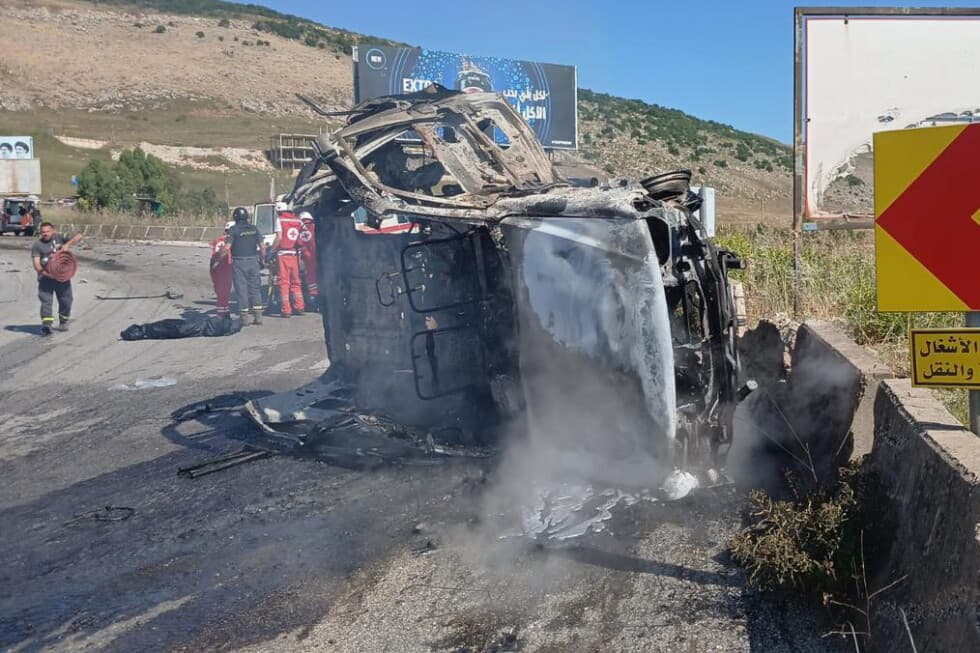
Israel strikes southern Lebanon as ceasefire diplomacy stalls
Israel carried out new air and artillery strikes in southern Lebanon on 12 June, and Lebanon's Health Ministry reported one person injured, keeping pressure on a fragile diplomatic track that has failed to produce a durable halt to the Israel-Hezbollah war. The Israeli military says its operations target Hezbollah positions and threats to its forces, while Lebanese officials say repeated strikes violate sovereignty and undermine negotiations for withdrawal and a comprehensive ceasefire. The latest attacks follow a deadly week: Lebanon's army said an Israeli strike killed three soldiers on 6 June, and UN Secretary-General Antonio Guterres has warned that recurring hostilities show the need for a credible monitoring mechanism along the Blue Line. The central issue is no longer a single strike but whether Washington-led diplomacy can bind Israel, Lebanon's state institutions and Hezbollah to any enforceable settlement.
Verified by Validiris·📚 6 sources·🧠 AI-checked·🇧🇪 Belgian: LowWhy you can trust this
The Iran Conflict: Nuclear, Regional and Diplomatic
The decades-long confrontation between Iran and its adversaries — the United States, Israel, Saudi Arabia, and proxies across the region — covering the nuclear file, sanctions, the JCPOA collapse, the post-October 2023 escalation, and current diplomatic openings.
About this story
Southern Lebanon (the border region between Lebanon and Israel, including towns near Nabatieh, Sidon and the Litani River) is the main battlefield in the current war. Hezbollah (Lebanese Shia political and armed movement founded in the 1980s with Iranian support) is Israel's principal adversary in Lebanon. Israel Defense Forces (Israel's military) says it is targeting Hezbollah infrastructure and fighters. Lebanon's Health Ministry (the Lebanese government body responsible for public health reporting) has issued casualty updates during the war. Nabatieh (major city and governorate in southern Lebanon) lies near several recent strike sites. Sidon (coastal city north of the main border zone) has received displaced families from the south. UNIFIL (United Nations Interim Force in Lebanon, deployed since 1978) monitors the Israel-Lebanon border area. The Blue Line (UN-demarcated withdrawal line from 2000) is not a formal border but anchors ceasefire monitoring. UN Security Council Resolution 1701 (adopted in 2006) is the unresolved framework for Israeli withdrawal, Lebanese army deployment and Hezbollah disarmament south of the Litani.
How to read this story
The history
The current fighting sits on a long record of unresolved Israel-Lebanon wars. Israel invaded Lebanon in 1978 and 1982, occupied a southern security zone until 2000, and fought Hezbollah again in 2006. The UN Security Council adopted Resolution 1701 on 11 August 2006 to end that war, calling for Israeli withdrawal, Lebanese army deployment and no armed groups south of the Litani other than the Lebanese state and UNIFIL. UN reporting and later ceasefire efforts have repeatedly found that those core obligations remained incomplete, leaving every new truce dependent on contested enforcement rather than settled political authority.
The geopolitics
Southern Lebanon is one front in the wider Israel-Iran contest. Hezbollah gives Iran a pressure point on Israel's northern border; Israel seeks to prevent that pressure point from becoming a permanent military threat. The unresolved border also tests the post-2006 security order built around UN peacekeeping, Lebanese state authority and Western-backed deterrence.
Why now
The story is timely because Israel struck again on 12 June after a week of deadly incidents and failed ceasefire momentum. The attacks came as diplomats were trying to preserve talks despite Hezbollah's objections and Lebanon's accusations that Israeli operations are undermining the process.
What to watch
Watch for three signals: whether Hezbollah resumes or widens fire into northern Israel, whether Israel keeps expanding strikes around Nabatieh and Sidon, and whether the UN Security Council moves quickly on Guterres's proposed post-UNIFIL monitoring options before the mission's scheduled end.
International angle
The international layer is central: the fighting tests whether US-led mediation, UN monitoring and EU diplomacy can restrain a border conflict tied to Iran's regional network. Brussels is not the battlefield, but EU institutions and member states will help shape humanitarian funding, diplomatic messaging and any future monitoring or sanctions discussion around Lebanon.
What this means for you
Belgian readers with travel, family or NGO links to Lebanon or Israel should treat official consular advice as the operational baseline and expect sudden route, insurance and evacuation constraints. EU and humanitarian professionals should plan around a conflict environment where local ceasefire announcements may not translate into safe movement in southern Lebanon.
What happens next
The next step is diplomatic rather than procedural: mediators will try to keep Israel-Lebanon talks alive while testing whether Hezbollah will accept any arrangement that moves its forces away from the border. The UN Security Council is also expected to consider options for a post-UNIFIL monitoring presence before the mission's scheduled end. Further strikes or Hezbollah attacks could derail both tracks.
Potential consequences
If the strike pattern continues, mediators may find it harder to separate the Lebanon file from the wider Iran-Israel confrontation. Southern Lebanese displacement could deepen, Lebanese army credibility could weaken, and Israeli leaders may argue for a longer military presence. For Europe, the second-order risks are humanitarian funding pressure, renewed evacuation planning, sharper EU divisions over language on Israel and Hezbollah, and a larger regional shock if the Lebanon front merges with Gulf or Iran escalation.
Opposing perspectives
- Israel Defense Forces
The Israeli military frames the strikes as a security operation against Hezbollah, not against the Lebanese state. Its strongest argument is that Israeli forces remain exposed to Hezbollah fire and that strikes are justified when intelligence indicates imminent threats, weapons sites or fighters operating near Israeli troops.
- Lebanese government and army
Lebanon's state institutions frame the strikes as an assault on sovereignty and on the very forces expected to implement a ceasefire. Their strongest argument is that killing or endangering Lebanese soldiers weakens the only national actor that diplomats want to deploy in the south.
- Hezbollah and allied Lebanese political actors
Hezbollah's camp argues that any ceasefire demanding its withdrawal while Israel keeps freedom to strike amounts to surrender. Its strongest case is that resistance cannot be disarmed or moved north while Israeli troops remain inside Lebanon and strikes continue.
- United Nations leadership
UN leadership treats the latest escalation as evidence that a political text alone cannot stabilize the border. Its strongest argument is that a uniformed monitoring presence, Lebanese army support and sustained liaison are needed because Resolution 1701 has never been fully implemented.
Timeline
- 1978-03-19·The UN Security Council created UNIFIL after Israel's first major invasion of southern Lebanon.
- 2000-05-24·Israel withdrew from its southern Lebanon security zone, and the UN marked the Blue Line.
- 2006-08-11·The UN Security Council adopted Resolution 1701 to end the 2006 Israel-Hezbollah war.
- 2024-11-27·A US- and France-backed Israel-Lebanon ceasefire entered into force after the 2024 war.
- 2026-06-06·Lebanon's army said an Israeli strike killed three soldiers in southern Lebanon.
- 2026-06-12·Lebanon's Health Ministry reported one injury after renewed Israeli strikes in southern Lebanon.
Glossary
- Blue Line
- The UN-demarcated line marking Israel's withdrawal from Lebanon in 2000; it is used for monitoring but is not a formally agreed international border.
- UNIFIL
- The United Nations Interim Force in Lebanon, a peacekeeping mission created in 1978 and expanded after the 2006 Israel-Hezbollah war.
- Resolution 1701
- The 2006 UN Security Council resolution setting out Israeli withdrawal, Lebanese army deployment and restrictions on non-state armed groups in southern Lebanon.
- EEAS
- The European External Action Service, the EU's diplomatic service supporting the bloc's foreign policy and crisis response.
Related to this story
Live connections from the Belgium Impulse ecosystem — not recommendations.
This briefing was prepared with AI assistance and reviewed by a Belgium Impulse editor before publication. methodology.