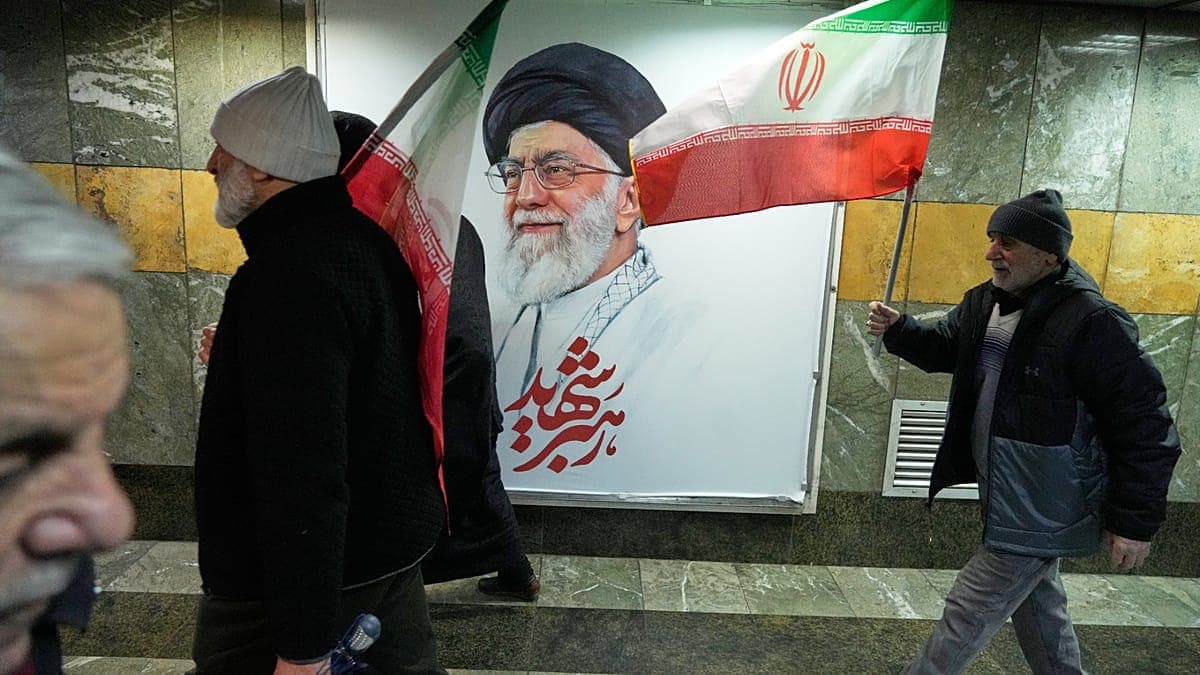
Iran sets July burial for Ali Khamenei after wartime delay
Iranian state television said the funeral rites for former Supreme Leader Ali Khamenei will run from July 4 to July 9, ending more than four months of delay after he was killed in the opening attack of the 2026 Iran war. The schedule turns a religious funeral into a political test: ceremonies are expected to start in Tehran, move through Qom and end with burial at the Imam Reza Shrine in Mashhad, according to Iranian state media accounts cited by international reports. Khamenei's son Mojtaba has already succeeded him, but his limited public visibility and the wartime context keep the succession politically sensitive. For Europe, the burial matters less as a ceremony than as a signal of whether Tehran can stage controlled public mobilisation while peace talks, Strait of Hormuz security and nuclear diplomacy remain unsettled.
Verified by Validiris·📚 7 sources·🧠 AI-checked·🇧🇪 Belgian: LowWhy you can trust this
The Iran Conflict: Nuclear, Regional and Diplomatic
The decades-long confrontation between Iran and its adversaries — the United States, Israel, Saudi Arabia, and proxies across the region — covering the nuclear file, sanctions, the JCPOA collapse, the post-October 2023 escalation, and current diplomatic openings.
About this story
Ali Khamenei (Iran's supreme leader from 1989 until his death in 2026) was the country's ultimate authority over security, foreign policy and the armed forces. Mojtaba Khamenei (his son and successor, named in March 2026 by the Assembly of Experts) is a cleric long linked by analysts to Iran's security establishment. The Assembly of Experts (Iran's clerical body empowered by the constitution to choose the supreme leader) selected the successor after Khamenei's death. Tehran (Iran's capital) is the political centre where the ceremonies are expected to begin. Qom (Iran's main Shiite seminary city) gives the funeral clerical legitimacy. Mashhad (Khamenei's birthplace in northeastern Iran) hosts the Imam Reza Shrine, one of Shiite Islam's holiest sites. Muharram (the first month of the Islamic calendar) is a period of mourning for Shiite Muslims. The Strait of Hormuz (the narrow Gulf shipping route for major oil and gas flows) remains central to the war's economic impact.
How to read this story
The history
Iran has faced only two supreme-leader successions since the 1979 Islamic Revolution. The Assembly of Experts chose Ali Khamenei on June 4, 1989, one day after Ruhollah Khomeini died; the constitutional framework was adjusted that year after earlier succession arrangements collapsed around Hussein-Ali Montazeri. Khamenei's 2026 death was different: it occurred during war, after reported US-Israeli strikes, and the funeral was postponed rather than staged immediately. The delayed burial contrasts with the Islamic Republic's usual reliance on mass mourning rituals to display unity and legitimacy.
The geopolitics
Khamenei's burial is a symbolic marker in a conflict involving Iran, Israel, the United States, Gulf states and European powers worried about maritime security. The Strait of Hormuz gives the story global economic weight: any renewed confrontation near that route can affect energy flows, inflation expectations and the diplomatic balance between coercion, regime survival and negotiated de-escalation.
Why now
Iranian state television announced a July 4-9 funeral timetable after months of postponement. The timing aligns the burial with Muharram and arrives as international reports describe renewed momentum around ceasefire and Strait of Hormuz negotiations.
What to watch
Watch whether Tehran confirms access routes and attendance rules before July 4, whether Mojtaba Khamenei appears publicly, whether the July 9 burial proceeds in Mashhad, and whether G7 discussions produce concrete Strait of Hormuz demining arrangements.
International angle
The funeral intersects with EU and G7 concerns because it comes as mediators discuss ending the Iran war and reopening Gulf shipping routes. Brussels matters as the EU's diplomatic centre, but the main story remains Iran's internal display of succession and wartime control. European governments will watch for signs that the ceremony stabilises or inflames negotiations.
What this means for you
For Belgian readers, there is no direct local action beyond normal consular caution for anyone in or near the region. Businesses exposed to fuel, aviation, shipping or Gulf supply chains should watch whether the funeral period disrupts ceasefire talks or maritime security planning. EU and Belgian officials will track whether the ceremony changes Tehran's negotiating posture.
What happens next
Iran is expected to stage ceremonies in Tehran, Qom and Mashhad between July 4 and July 9 if security conditions hold. Diplomatically, the next signals are whether ceasefire talks advance, whether Strait of Hormuz demining plans become operational, and whether Mojtaba Khamenei appears publicly or leaves messaging to state institutions and the security establishment.
Potential consequences
If the funeral is tightly controlled and uneventful, Tehran may use it to reinforce Mojtaba Khamenei's authority before external negotiations resume. If attendance, security incidents or rival messaging expose weakness, the burial could sharpen questions about regime cohesion. For Europe, the practical risk is that renewed escalation around the ceremonies could delay Gulf shipping normalisation, complicate energy markets and narrow diplomatic room for the EU.
Opposing perspectives
- Iranian state authorities
Iranian state media frame the July ceremonies as a delayed but orderly national farewell during Muharram. In that reading, the funeral is meant to show continuity: Ali Khamenei is mourned, Mojtaba Khamenei is accepted, and the Islamic Republic can still mobilise religious and political symbols despite wartime pressure.
- Western diplomatic and security officials
The Associated Press account places the funeral beside ceasefire and Strait of Hormuz talks, making the burial part of a broader de-escalation test. This frame treats the ceremony less as domestic ritual and more as a potential security variable while G7 states and regional mediators try to stabilise the conflict.
- Iran succession analysts
Analysts cited in Le Monde and the Washington Post stress that succession under wartime conditions strengthens security actors and reduces transparency. Their strongest reading is that the delayed funeral and Mojtaba Khamenei's limited public profile reveal a regime managing vulnerability rather than simply honouring a former leader.
Timeline
- 1989-06-04·The Assembly of Experts selected Ali Khamenei as supreme leader after Ruhollah Khomeini's death.
- 2026-02-28·International reports say Ali Khamenei was killed in the opening attack of the 2026 Iran war.
- 2026-03-09·International reports say Mojtaba Khamenei was named Iran's new supreme leader.
- 2026-04-07·The Associated Press reported that a tenuous ceasefire has been in place since this date.
- 2026-07-04·Iranian state television said funeral ceremonies for Ali Khamenei are due to begin.
- 2026-07-09·Iranian state media accounts cited by international reports say burial is planned in Mashhad.
Glossary
- Assembly of Experts
- Iran's elected clerical body that the constitution empowers to appoint, supervise and dismiss the supreme leader.
- Strait of Hormuz
- The narrow sea passage between Iran and Oman through which a large share of Gulf oil and gas exports normally passes.
- G7
- A forum of major industrial democracies: Canada, France, Germany, Italy, Japan, the United Kingdom, the United States and the European Union.
- Muharram
- The first month of the Islamic calendar, marked by mourning rituals in Shiite Islam.
Related to this story
Live connections from the Belgium Impulse ecosystem — not recommendations.
This briefing was prepared with AI assistance and reviewed by a Belgium Impulse editor before publication. methodology.