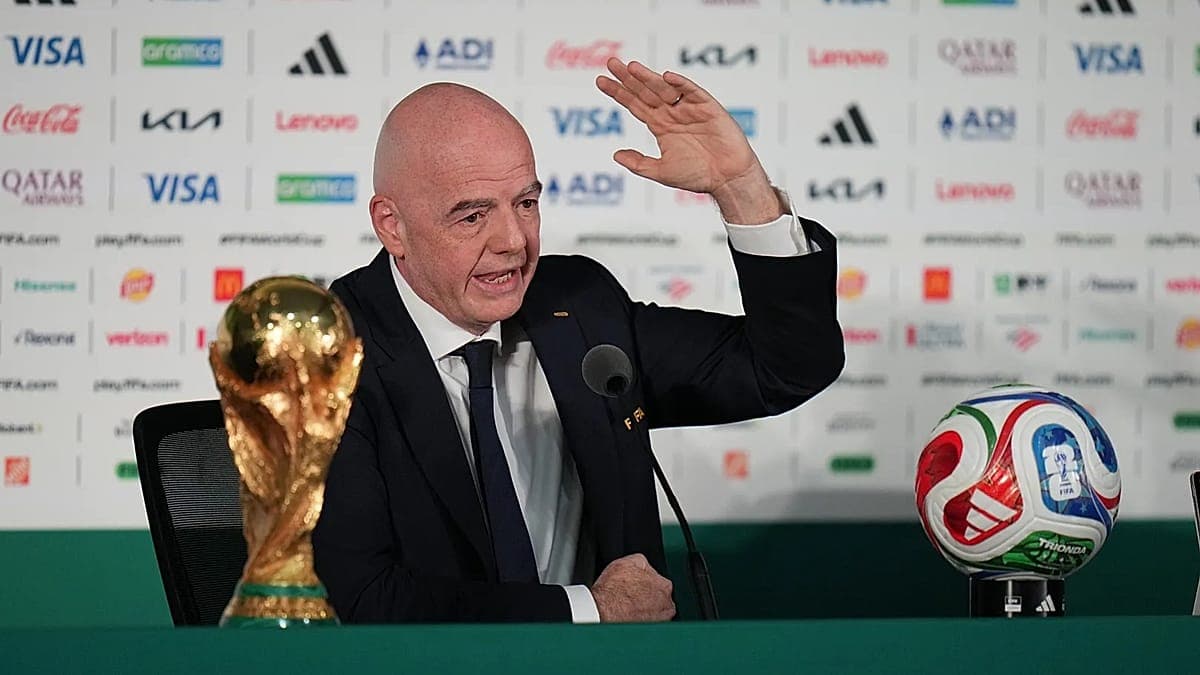
Infantino defends FIFA ticket prices before World Cup opener
Gianni Infantino used a Mexico City news conference on the eve of the 2026 FIFA World Cup to defend FIFA's pricing model, arguing that the North American sports market would have pushed cheap seats into higher-priced resale channels. FIFA's platform has listed group-stage tickets from $140 and regular final seats at far higher levels, while Infantino said FIFA had offered 130,000 discounted $60 tickets through national federations. The defence lands after Football Supporters Europe and Euroconsumers filed a European Commission complaint alleging excessive prices, opaque sales rules and resale fees. For Belgian supporters following the Red Devils in North America, the issue is less about one ticket category than the shift in World Cup economics: a 48-team, 104-match tournament designed for scale, revenue and global television, but increasingly difficult for ordinary travelling fans to attend.
Verified by Validiris·📚 8 sources·🧠 AI-checked·🇧🇪 Belgian: MediumWhy you can trust this
About this story
Gianni Infantino (Swiss-Italian football administrator, FIFA president since 2016) leads world football's governing body. FIFA (Federation Internationale de Football Association, founded in 1904 and based in Zurich) organises the men's World Cup. The 2026 FIFA World Cup (11 June to 19 July 2026) is co-hosted by the United States, Mexico and Canada. Mexico City (capital of Mexico and site of the opening match build-up) hosted Infantino's news conference. Football Supporters Europe (Hamburg-based umbrella body for European fan groups) campaigns on supporter rights. Euroconsumers (consumer organisation network including Belgium's Testachats/Test Aankoop) joined the ticketing complaint. The European Commission (EU executive in Brussels) can examine consumer-protection and competition complaints. Omar Abdulkadir Artan (Somali referee selected for the tournament) was a separate controversy at the same press conference after U.S. authorities denied him entry.
How to read this story
The history
FIFA's 2026 model follows two earlier structural shifts. The FIFA Council approved the move to a 48-team World Cup in January 2017, and the United States-Mexico-Canada bid defeated Morocco in June 2018. Qatar 2022 used a smaller 32-team, 64-match format, and FIFA's Qatar ticketing information put the cheapest final seats far below the 2026 levels cited by supporter groups. In December 2025, Football Supporters Europe said a fan following one team through a national-association allocation could face a minimum cost of $6,900, nearly five times its estimate for Qatar.
Why now
The timing is driven by Infantino's 10 June news conference in Mexico City, held one day before the 2026 World Cup opener, after months of criticism over ticket prices, resale rules and access for travelling supporters.
What to watch
Watch resale prices during Belgium's group-stage window, visible empty seats at lower-demand matches, any European Commission response to the complaint, and whether FIFA adjusts pricing or releases more discounted inventory as the tournament progresses.
International angle
The issue is cross-border by design: FIFA is based in Switzerland, the tournament is in North America, the complaint is aimed at the European Commission, and fans from Belgium and the rest of Europe must buy access into a U.S.-style event economy. That makes World Cup ticketing a test of how global sport treats European consumer expectations outside Europe.
What this means for you
Belgian fans still considering travel should treat official FIFA channels as the baseline, check visa and travel costs before buying match tickets, and be wary of unofficial resale offers. The complaint does not by itself lower prices or create refunds, so supporters should assume current FIFA terms apply unless regulators or FIFA announce a concrete change.
What happens next
The tournament now moves from pricing controversy to matchday reality, where empty seats, resale prices and supporter turnout will show whether demand matches FIFA's assumptions. The European Commission could decide whether to pursue the Football Supporters Europe and Euroconsumers complaint, but any regulatory response is likely to move more slowly than the World Cup schedule itself.
Potential consequences
If FIFA's pricing holds, the 2026 World Cup could become a reference point for future mega-events that use variable prices and official resale platforms. That may increase governing-body revenue but weaken the link between loyal national-team supporters and stadium access. If European regulators engage seriously, FIFA may face pressure to provide clearer pricing, inventory and resale-fee rules for fans in the European Economic Area.
Opposing perspectives
- FIFA / Gianni Infantino
Infantino's strongest case is that FIFA is operating inside the North American live-sport market: if tickets are set artificially low, resale operators capture the value instead of football. He argues FIFA revenue is reinvested through the global game and says discounted federation tickets preserve some access for regular supporters.
- Football Supporters Europe / Euroconsumers
Football Supporters Europe and Euroconsumers argue in their complaint that FIFA controls World Cup ticket access and has used that position to impose excessive prices, unclear seat information, pressure-selling tactics and resale fees. Their case frames the issue as consumer protection and market power, not simply expensive sport.
- Travelling European supporters
Supporter groups' argument is that the World Cup is not a normal U.S. playoff product: national-team fans build the atmosphere and often travel across continents. Football Supporters Europe says variable pricing breaks the tradition of consistent tournament access and shifts the event toward wealthier spectators.
Timeline
- 2017-01-10·The FIFA Council approved expanding the men's World Cup to 48 teams from 2026.
- 2018-06-13·FIFA awarded the 2026 World Cup to the United States, Mexico and Canada.
- 2025-09-03·FIFA announced 2026 ticket sales would begin with prices starting at $60 and variable pricing in use.
- 2025-12-11·Football Supporters Europe called for FIFA to halt national-association ticket sales over high prices.
- 2026-03-24·Football Supporters Europe and Euroconsumers filed a European Commission complaint against FIFA's ticketing practices.
- 2026-06-10·Gianni Infantino defended FIFA's pricing model at a Mexico City news conference.
- 2026-06-11·The 2026 World Cup opens in Mexico City.
Glossary
- European Commission
- The EU executive body in Brussels, responsible for proposing EU law and enforcing competition and consumer-protection rules in defined areas.
- Dynamic pricing
- A pricing method where ticket prices change according to demand, timing or sales conditions rather than staying fixed across a category.
- Participating Member Association allocation
- The ticket allocation made available through a national football association for supporters of a team playing in the tournament.
Related to this story
Live connections from the Belgium Impulse ecosystem — not recommendations.
This briefing was prepared with AI assistance and reviewed by a Belgium Impulse editor before publication. methodology.