India's crash investigators keep Air India families waiting for final report
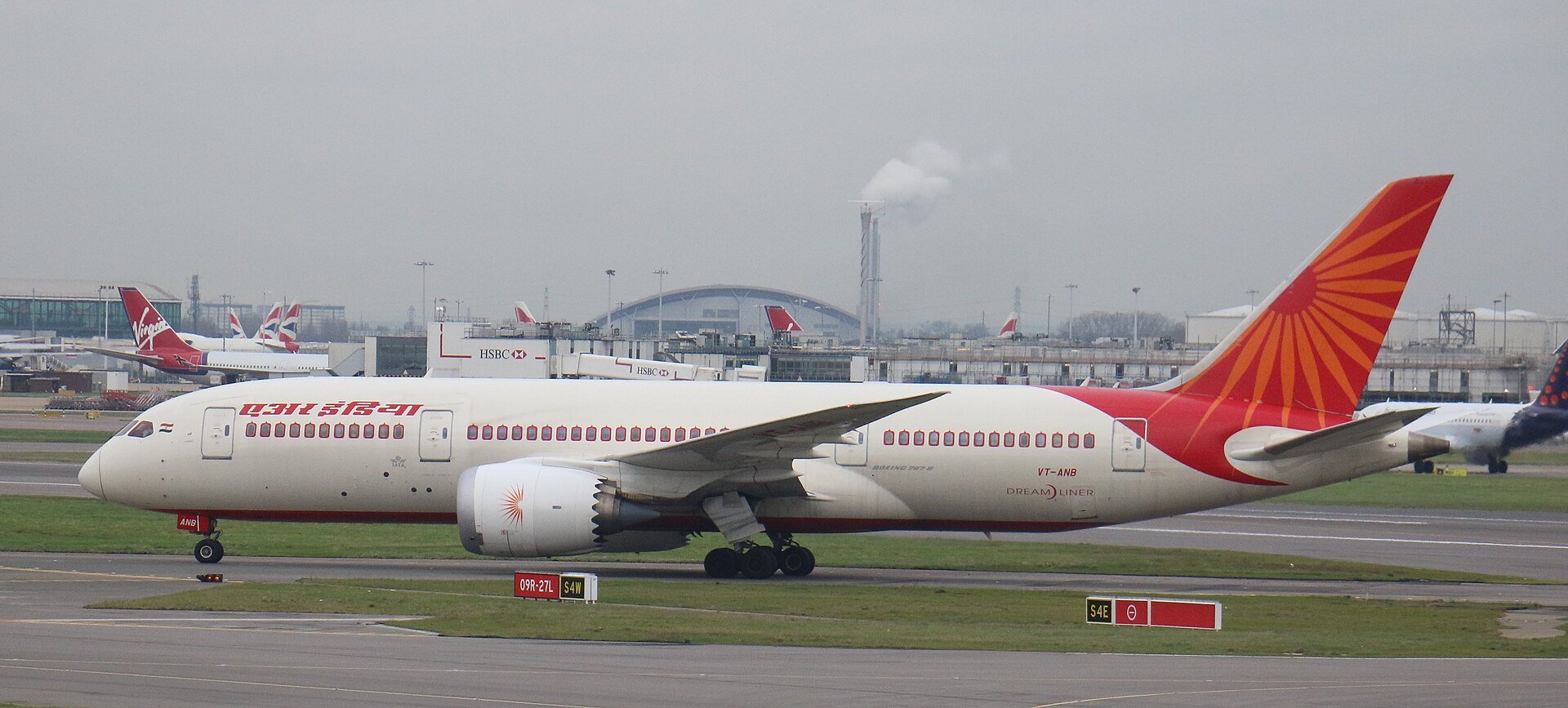
One year after Air India Flight AI171 crashed after takeoff from Ahmedabad, bereaved families are still pressing for a final account of why the London-bound Boeing 787 went down. India's Aircraft Accident Investigation Bureau's preliminary report says the aircraft lost thrust after both engine fuel-control switches moved from RUN to CUTOFF seconds after liftoff; the report did not assign blame or explain why the switches moved. Air India and Tata Sons say they have made interim and ex-gratia payments to most affected families, while lawyers for some relatives say compensation cannot substitute for disclosure of the technical findings. The crash killed 241 people on board and 19 people on the ground, according to the preliminary investigation and later reports. For Belgian readers, the story is mainly an international aviation-safety case: its final findings could shape Boeing 787 oversight, airline crisis support and passenger confidence beyond India and Britain.
Verified by Validiris·📚 10 sources·🧠 AI-checked·🇧🇪 Belgian: LowWhy you can trust this
About this story
Air India Flight AI171 (Ahmedabad-to-London Gatwick service that crashed on 12 June 2025) is the subject of the investigation. Air India (Indian flag carrier owned by Tata Group since 2022) operated the flight. Tata Sons (holding company of the Tata Group) controls Air India. Ahmedabad (major city in Gujarat, western India) was the departure city; London Gatwick (UK airport south of London) was the destination. B.J. Medical College (Ahmedabad medical campus) was struck by the aircraft. Boeing 787 Dreamliner (long-haul twin-engine jet introduced in 2011) was the aircraft type. India's Aircraft Accident Investigation Bureau (AAIB, civil air-crash investigator) leads the safety probe. India's Directorate General of Civil Aviation (DGCA, aviation regulator) ordered post-crash checks. The US Federal Aviation Administration (FAA) and National Transportation Safety Board (NTSB) supported as US authorities. The UK Air Accidents Investigation Branch (UK AAIB) supported because many victims were British. Vishwash Kumar Ramesh (British national seated in 11A) was the sole survivor.
How to read this story
The history
Aviation accident investigation is built on the Chicago Convention's Annex 13 model, under which the state of occurrence leads a safety inquiry while other states participate through accredited representatives. The FAA's 2018 Special Airworthiness Information Bulletin on engine fuel-control switches is now part of the AI171 context because India's preliminary report cited it while noting it was not mandatory. Major crashes have often changed practice: the 1977 Tenerife disaster reshaped cockpit communication, and the 1996 TWA Flight 800 aftermath helped formalise family-assistance obligations in the United States.
Why now
The first anniversary on 12 June 2026 has renewed public attention because families and the sole survivor are still waiting for the final investigation findings and clearer answers about support, compensation and possible liability.
What to watch
Watch for India's final AAIB report, any interim safety recommendations, regulator action from the DGCA, FAA or EASA, and the progress of civil claims brought by affected families. Airline or manufacturer responses will matter only once official findings narrow the cause.
International angle
The flight linked India and Britain and involved US-certified aircraft and technical support, making the investigation inherently cross-border. For Europe, the issue is not a Belgian route but the reliability of international safety oversight: final findings may be reviewed by EASA, national authorities and airlines operating the same aircraft family.
What this means for you
No immediate change is required for Belgian passengers. The practical takeaway is to monitor official safety directives rather than speculation: if regulators issue mandatory inspections or procedural changes, airlines operating Boeing 787s in Europe would have to respond through normal aviation-safety channels.
What happens next
India's AAIB is expected to publish a final report or further formal update after completing its technical analysis. Civil claims could advance once causation and potential liability are clearer. Regulators, including authorities outside India, would then assess whether any safety recommendations require fleet inspections, cockpit-procedure changes, manufacturer action or family-assistance reforms.
Potential consequences
If the final report identifies a design, maintenance, training or procedural weakness, regulators could require additional inspections or cockpit-safety changes across Boeing 787 fleets. If it finds no systemic defect, attention may shift toward crew procedures, investigative transparency and family support. Either way, the case could influence how airlines communicate after disasters and how quickly families receive usable information.
Opposing perspectives
- Victims' families and their lawyers
Families' representatives argue that compensation has not answered the central safety and accountability questions. Their strongest case is that relatives cannot make informed legal or personal decisions while the final technical report remains unpublished and while support arrangements vary between affected households.
- Air India and Tata Sons
Air India and Tata Sons say they have provided interim and ex-gratia payments and remain engaged with affected families. Their strongest position is that support can proceed while the independent safety investigation remains unfinished, because the airline should not pre-empt official technical conclusions.
- Federation of Indian Pilots
The Federation of Indian Pilots argues that a judicial probe is needed to avoid premature blame and preserve confidence in the investigation. Its strongest concern is that partial technical disclosures can feed speculation about pilots before the full chain of evidence has been tested.
Timeline
- 2025-06-12·Air India Flight AI171 crashed shortly after takeoff from Ahmedabad on its way to London Gatwick.
- 2025-06-13·The FAA said India would lead the investigation and the NTSB would be the official US representative if assistance was requested.
- 2025-07-11·India's AAIB issued a preliminary report describing the movement of both engine fuel-control switches to CUTOFF.
- 2026-06-12·Families marked the first anniversary while continuing to seek final investigative findings and fuller support.
Glossary
- EASA
- The European Union Aviation Safety Agency, the EU body responsible for aircraft certification and aviation-safety regulation across member states.
- AAIB
- Aircraft Accident Investigation Bureau; in this story, India's civil air-accident investigation authority.
- DGCA
- India's Directorate General of Civil Aviation, the national aviation regulator.
- Annex 13
- The ICAO framework setting international standards for aircraft accident and incident investigations.
- Fuel-control switch
- A cockpit switch that controls fuel flow to an engine; moving it to CUTOFF stops that engine's fuel supply.
Related to this story

Live connections from the Belgium Impulse ecosystem — not recommendations.
This briefing was prepared with AI assistance and reviewed by a Belgium Impulse editor before publication. methodology.