Indian Air Force investigates An-32 crash that killed five in Assam
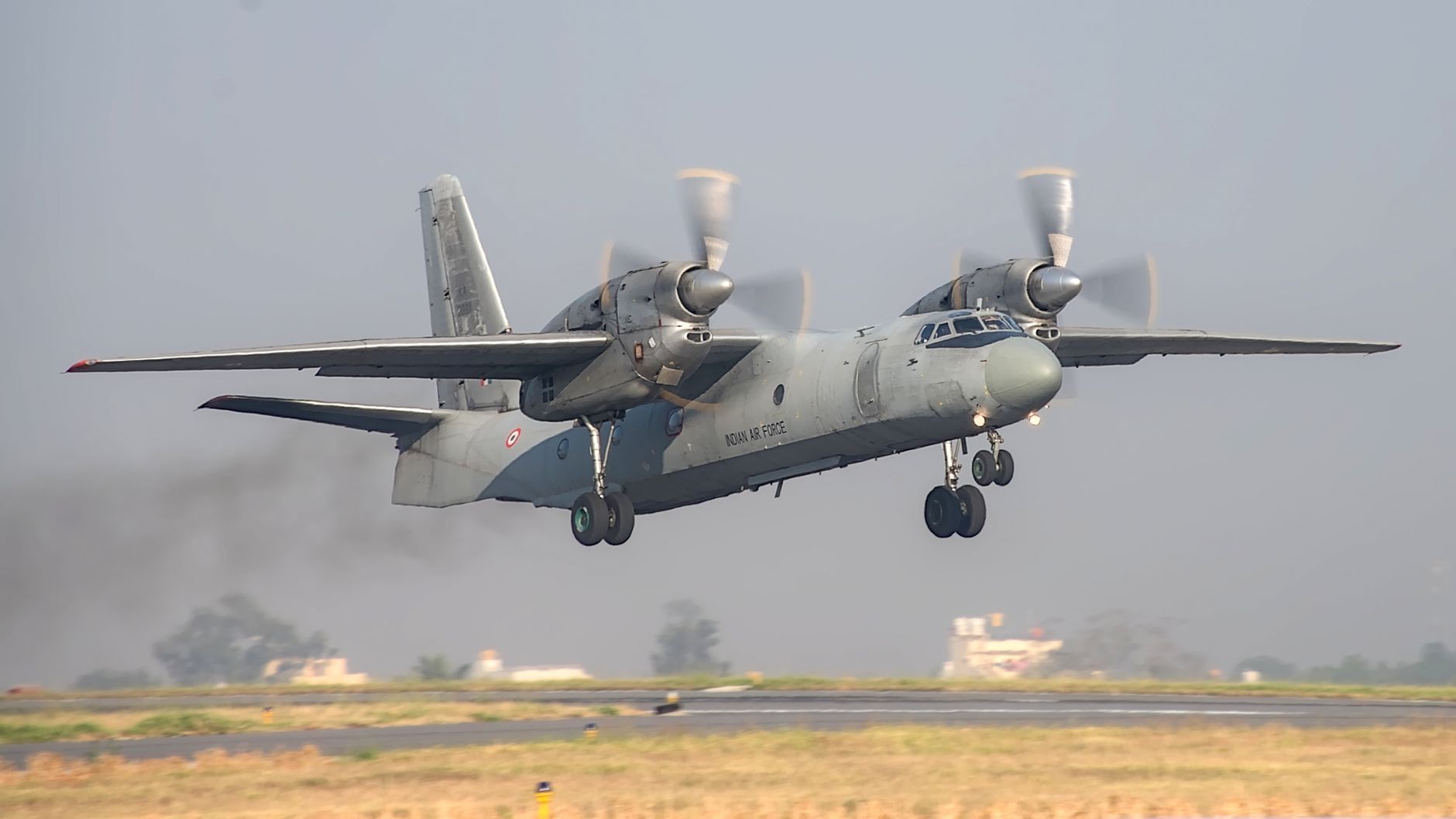
The Indian Air Force said an An-32 transport aircraft crashed during a routine sortie at about 10:00 on Saturday in Jorhat, Assam, killing five personnel. The force identified the dead as Squadron Leader Prashant Singh, Flight Lieutenant Shubham Kumar, Sergeant Jitendra Sharma, Agniveervayu Khemaram Kumawat and Agniveervayu Danish Alam, and said initial inquiries and crash-site management were under way. IAF officials said the co-pilot survived and was receiving treatment. The accident matters beyond the immediate tragedy because the An-32 is one of India's workhorse military transport aircraft, used for supply and relief missions in difficult terrain in the northeast and Himalayan border regions. India's Defence Minister Rajnath Singh said he was deeply anguished by the deaths. The cause has not been established, and the IAF has asked the public to avoid speculation until preliminary findings are available.
Verified by Validiris·📚 6 sources·🧠 AI-checked·🇧🇪 Belgian: LowWhy you can trust this
About this story
Assam is a northeastern Indian state near Bhutan, Bangladesh and Myanmar, with strategic air links to India's Himalayan border areas. Jorhat is an Assam city and air-force hub used for transport operations into remote northeastern terrain. The Indian Air Force is India's air arm and operates transport, fighter and helicopter fleets under the Ministry of Defence. The Antonov An-32 is a Soviet-designed twin-engine turboprop military transport aircraft built for hot, high-altitude and rough-field conditions. Squadron Leader Prashant Singh, Flight Lieutenant Shubham Kumar, Sergeant Jitendra Sharma, Agniveervayu Khemaram Kumawat and Agniveervayu Danish Alam were the five IAF personnel the force identified as killed. Agniveervayu is the air-force recruitment category under India's Agnipath short-service military enlistment scheme, introduced in 2022. Rajnath Singh is India's defence minister, in office since 2019.
How to read this story
The history
The crash fits a longer pattern of difficult An-32 operations in India. Indian official and aviation records describe a 3 June 2019 IAF An-32 crash after departure from Jorhat for Mechuka in Arunachal Pradesh, killing all 13 people aboard. A separate IAF An-32 disappeared over the Bay of Bengal on 22 July 2016 with 29 people aboard; India's defence ministry said in January 2024 that debris found off Chennai was likely from that aircraft. The An-32's value to India lies in the same geography that makes operations demanding: remote airfields, mountains, heat and monsoon weather.
The geopolitics
Assam and nearby Arunachal Pradesh form part of India's strategically sensitive northeast, close to China, Bhutan, Bangladesh and Myanmar. Transport aircraft such as the An-32 help maintain military and logistical access to remote border zones. The crash does not change regional balances by itself, but it highlights the operational strain behind India's posture in a contested Indo-Pacific security environment.
Why now
The story is timely because the Indian Air Force reported the Jorhat crash on 13 June 2026, identified five personnel killed and said initial inquiries were under way. The cause has not yet been established.
What to watch
Watch for the IAF's preliminary findings, any formal court-of-inquiry summary, survivor-status updates and whether the force orders inspections, temporary restrictions or maintenance checks across An-32 units. A fleet-wide safety step would be the clearest sign of broader operational concern.
International angle
The crash is local to Assam but sits inside a broader international picture: India relies on military airlift to sustain remote border areas and to project state capacity across difficult terrain. For EU readers, the relevance is indirect but real because India is a major EU partner in trade, technology and security dialogue, and its defence readiness shapes Indo-Pacific calculations.
What this means for you
There is no immediate action for most Belgian residents. Readers with relatives in Assam or links to Indian military personnel should rely on official Indian Air Force updates rather than social-media speculation. Policy and business readers should treat any claims about fleet grounding or operational disruption as unconfirmed until the IAF announces them.
What happens next
The Indian Air Force is expected to continue crash-site work, preserve evidence and complete preliminary inquiries before releasing more details. A formal court of inquiry could determine whether weather, mechanical failure, human factors, runway conditions or maintenance issues were involved. Until the IAF publishes findings, casualty support and aircraft-safety measures are the most concrete next steps.
Potential consequences
If the inquiry points to a fleet-wide technical or maintenance issue, the IAF could impose temporary inspections or operational limits on An-32 aircraft, affecting logistics in remote regions. If investigators find a localized landing or weather factor, consequences may be narrower. Either outcome could add pressure to India's longer-term transport-aircraft replacement and modernization plans, especially because the An-32 remains important for Himalayan and northeastern missions.
Timeline
- 2016-07-22·An Indian Air Force An-32 disappeared over the Bay of Bengal with 29 people aboard.
- 2019-06-03·An Indian Air Force An-32 crashed after leaving Jorhat for Mechuka, killing all 13 people aboard.
- 2024-01-12·India's defence ministry said debris found off Chennai was likely from the 2016 An-32.
- 2026-06-13·The Indian Air Force said an An-32 crashed during a routine sortie at Jorhat, killing five personnel.
Glossary
- IAF
- Indian Air Force, the air arm of India's armed forces.
- Court of inquiry
- A formal military fact-finding process used to establish the circumstances and causes of an incident.
- Agniveervayu
- An Indian Air Force recruit category under the Agnipath short-service enlistment scheme.
Related to this story
Live connections from the Belgium Impulse ecosystem — not recommendations.
This briefing was prepared with AI assistance and reviewed by a Belgium Impulse editor before publication. methodology.