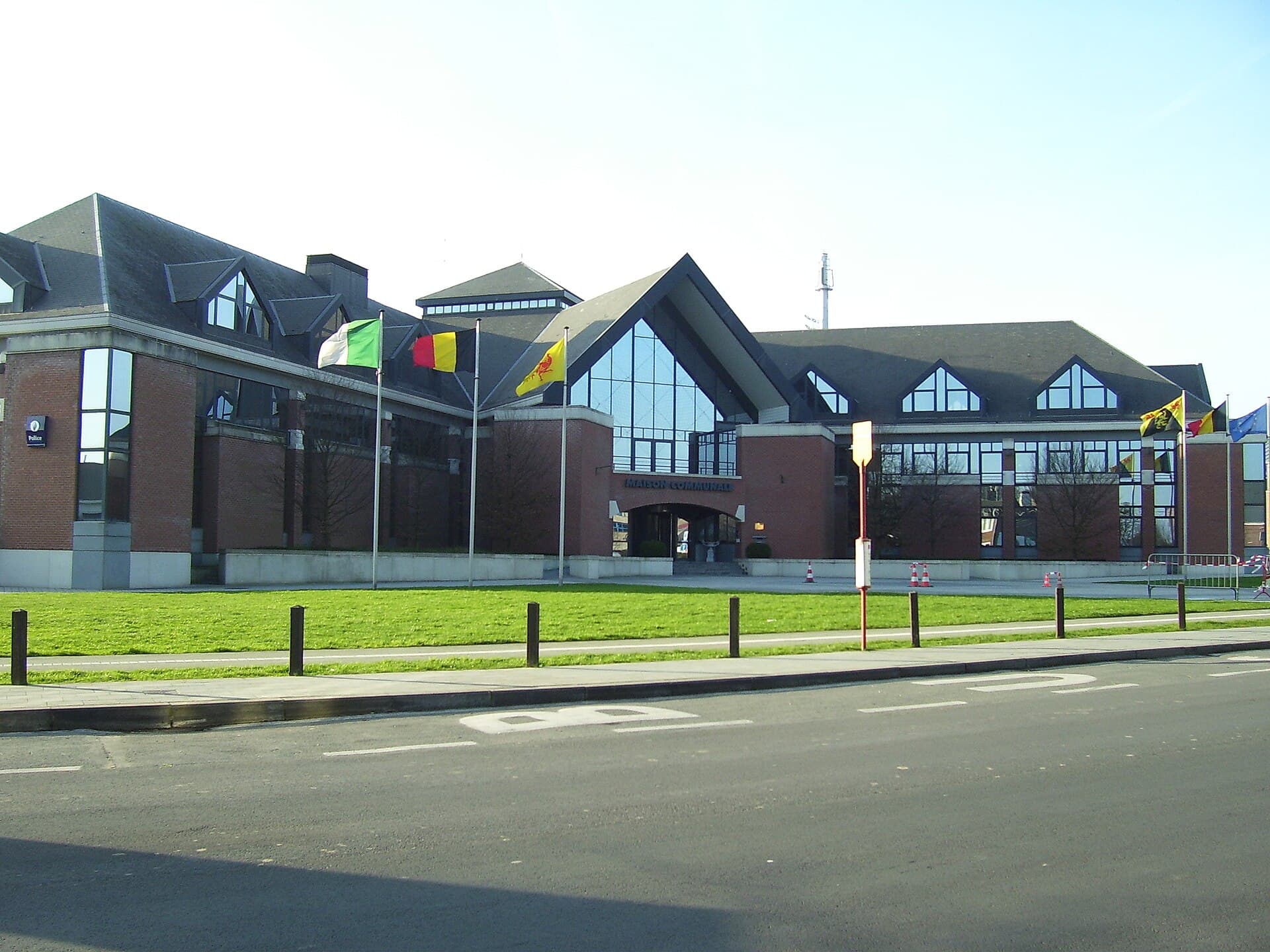
How will Wallonia’s social rent reform change what tenants pay from 2027?
Practical takeaway: if you live in, or are applying for, public housing in Wallonia, start checking three things now: your household income file, your logement’s energy performance, and the contact details held by your SLSP, the local public housing company. From 2027, Wallonia plans to reform how social rents are calculated by introducing a stronger “loyer chaud” logic: rent will no longer be read only as the monthly amount on the lease, but more directly alongside expected energy costs. ### What is changing? The reform reported by Le Soir under the French framing “Wallonie: les loyers sociaux reformes dès 2027” fits into a wider Walloon government move announced by Housing Minister Cécile Neven: public housing rent calculation will take account of the energy performance of the dwelling. In plain English, the region wants the bill faced by tenants to be assessed more fairly across two linked costs: the rent paid to the Société de Logement de Service Public (SLSP), and the heating or energy costs that depend heavily on insulation, windows, heating systems and renovation work. That matters because two families can currently pay similar social rents while facing very different energy bills. A tenant in a recently renovated apartment in Namur, Charleroi, Liège or Mons may have a higher-quality home with lower energy consumption. A tenant in an older, poorly insulated property may pay less rent on paper but face much higher gas or electricity costs. The “loyer chaud” idea is meant to bring those two realities into the same policy picture. ### What should tenants do now? Do not wait for 2027 to update your file. The rent you pay in Walloon public housing is already linked to household income, household composition, the value and condition of the home, charges, possible reductions, and sometimes a “surloyer” for extra bedrooms. The Société Wallonne du Logement (SWL) says rent is reviewed annually on 1 January and can also be adjusted during the year if household income or composition changes significantly. A practical checklist: 1. Check your SLSP file. Make sure your address, phone number, email, household composition and current income information are correct. 2. Keep your avertissement-extrait de rôle, payslips, unemployment, mutuality or pension documents, and family allowance proof available. 3. Ask your SLSP whether your home has a recent PEB-style energy assessment or renovation file. 4. If works are planned, ask whether they may affect future rent, charges, temporary rehousing or energy bills. 5. If you struggle to pay, contact the SLSP and, where relevant, your CPAS before arrears accumulate. ### Who handles the paperwork? For Walloon public housing, the key institution is your SLSP. The SWL coordinates and supervises the sector for the Walloon Government and says the region has 62 local public housing companies managing roughly 103,000 public homes. Applicants register with one reference SLSP, not several, and can select up to five communes or localities. In Wallonia, the working language is normally French. In the nine municipalities of the German-speaking Community, German-language services may be relevant. If you are used to Brussels terminology, note the institutional split: Brussels has communes/gemeenten and SISP companies under the SLRB/BGHM, while Wallonia uses communes and SLSPs under the SWL framework. A Brussels file does not automatically become a Walloon file. ### What happens when rent is reviewed? Under the current SWL guidance, the monthly amount can include a part linked to the dwelling, a part linked to household income, charges, possible extra-bedroom supplements, garage rent or guarantee instalments, and reductions for children or disability. The SWL also describes a maximum logic: rent should not exceed 20% of taxable household income or the private-market rental value of the home. The 2027 reform is therefore best understood not as a simple across-the-board rise or cut, but as a recalibration. Some tenants in energy-efficient renovated housing could see the rent side of the bill reflect improved performance. Others in less efficient homes may expect the reform to recognise that a low nominal rent is not necessarily affordable if monthly energy costs are high. ### What should applicants know? For people hoping to enter social housing, the basic application discipline remains the same. The SWL says candidates must not exceed income ceilings, must generally not own or hold usufruct over another home, and must keep their file complete. Documents usually include the latest tax assessment, household composition, proof of current taxable income and proof of family allowances where relevant. A file can be removed if it is not renewed in time, if information is incomplete or false, or after repeated refusals of suitable offers. For expats and internationally mobile residents, the key point is that Belgian housing administration is document-heavy. If your income comes from abroad, if your household composition changed after a move, or if you are separating, co-parenting or newly arrived, ask your commune, CPAS or SLSP early which documents they accept and whether certified translations are needed. ### The broader view Wallonia’s reform reflects a European housing dilemma: social rent policy, climate renovation and energy poverty are now inseparable. Governments want to renovate public housing stock, but renovation costs money. Tenants want warmer homes and lower bills, but fear that improvements may translate into rent increases they cannot absorb. Housing companies need predictable revenue to maintain buildings, while anti-poverty organisations will watch whether the reform protects households already squeezed by food, energy and transport costs. For Belgium Pulse readers, the useful frame is simple: from 2027, “how much is the rent?” may be the wrong first question in Walloon social housing. The better question will be: “What is the total monthly housing cost after rent, charges and energy?”
Trust & Evidence📚 5 sources· ✓ Editor reviewed· 🧠 AI-checked· Trust status: not yet independently verifiedView evidence & verification Hide
Verification record
- 📚 5 verified sources — Le Soir via Google News RSS - Wallonie : les loyers sociaux réformés dès 2027 · Cécile Neven, Walloon Minister for Housing - ministerial homepage and communiqué listing · Société Wallonne du Logement - public housing portal · Société Wallonne du Logement - Etre candidat à un logement public …
- 🧠 High confidence — AI-checked, editor-approved
- 🇧🇪 Belgian impact: High
- 📜 Provenance recorded & timestamped
Evidence is generated from the OIS evidence chain and reviewed before appearing on Belgium Pulse.
Powered by OIS / Evidentia
About this story
The subject is Wallonia’s planned reform of social rent calculation from 2027, centred on the “loyer chaud” principle: public housing rents should be assessed with the energy performance of the dwelling in mind. The main actors are the Walloon Government, Housing Minister Cécile Neven, the Société Wallonne du Logement (SWL), and the 62 Sociétés de Logement de Service Public (SLSP) that manage local public housing across Wallonie.
How to read this story
The history
Walloon public housing has long calculated rent through a mix of household income, household composition, property characteristics, charges, reductions and supplements. The new element is the stronger policy link between rent and energy performance, reflecting the post-energy-crisis reality that heating costs can determine whether a home is genuinely affordable.
Regional impact
The impact is directly Walloon. Tenants and applicants dealing with SLSPs in communes such as Liège, Charleroi, Namur, Mons, La Louvière, Verviers, Tournai and smaller rural municipalities should watch how their local housing company explains the 2027 calculation rules.
Local impact
Local impact will be handled through each SLSP. Tenants should expect the most practical information from their housing company, commune social services and CPAS, rather than from federal offices.
International angle
For international residents, the main relevance is administrative: newcomers may need foreign income documents, translated household records or proof of family composition to keep a Walloon housing file accurate.
What this means for you
Before 2027, tenants should update their SLSP file, keep proof of income and household composition ready, ask about the energy status of their home, and contact the CPAS early if rent, charges or energy bills become difficult to pay.
Opposing perspectives
- Walloon Government and housing operators
The Walloon Government and SLSP sector can argue that the reform makes the system fairer by comparing real housing costs, not just rent. If public money pays for renovation and better insulation, the rent formula should recognise improved comfort and lower energy consumption while helping housing companies finance maintenance.
- Public housing tenants and anti-poverty organisations
Tenants and anti-poverty groups are likely to focus on protection against rent rises. Their concern is that a technically fairer formula may still hurt low-income households if rent increases arrive before energy savings are visible, or if charges and arrears are not handled with enough social support.
- Applicants on waiting lists
People still waiting for a home may see the reform differently from sitting tenants. Their priority is often faster access to a decent, proportionate dwelling near work, school, family or transport. They may support renovation, but fear that policy attention on formulas will not solve the shortage of available homes.
Related to this story

Pulse Insight — This topic connects to 10 associations, 4 funding programmes, 88 upcoming events and 23838 jobs through the Wallonia ecosystem.
Live connections from the Belgium Impulse ecosystem — not recommendations.
This briefing was prepared with AI assistance and reviewed by a Belgium Impulse editor before publication. methodology.