How did the Belgian Falcons turn relay progress into European bronze?
The Belgian Falcons won bronze in the men’s 4x100 metres at the European Athletics Championships in Birmingham on 15 August, while the Belgian Rockets finished fifth in the women’s final.
In 30 seconds
- The Belgian Falcons won European 4x100m bronze in 38.70 seconds on 15 August 2026.
- Britain won the men’s final in 38.45, ahead of Germany in 38.64 and Belgium.
- The Belgian Rockets finished fifth in the women’s final in 43.31 after running 42.98 in their heat.
- The Falcons had progressed from sixth at Munich 2022 to fourth at Rome 2024.
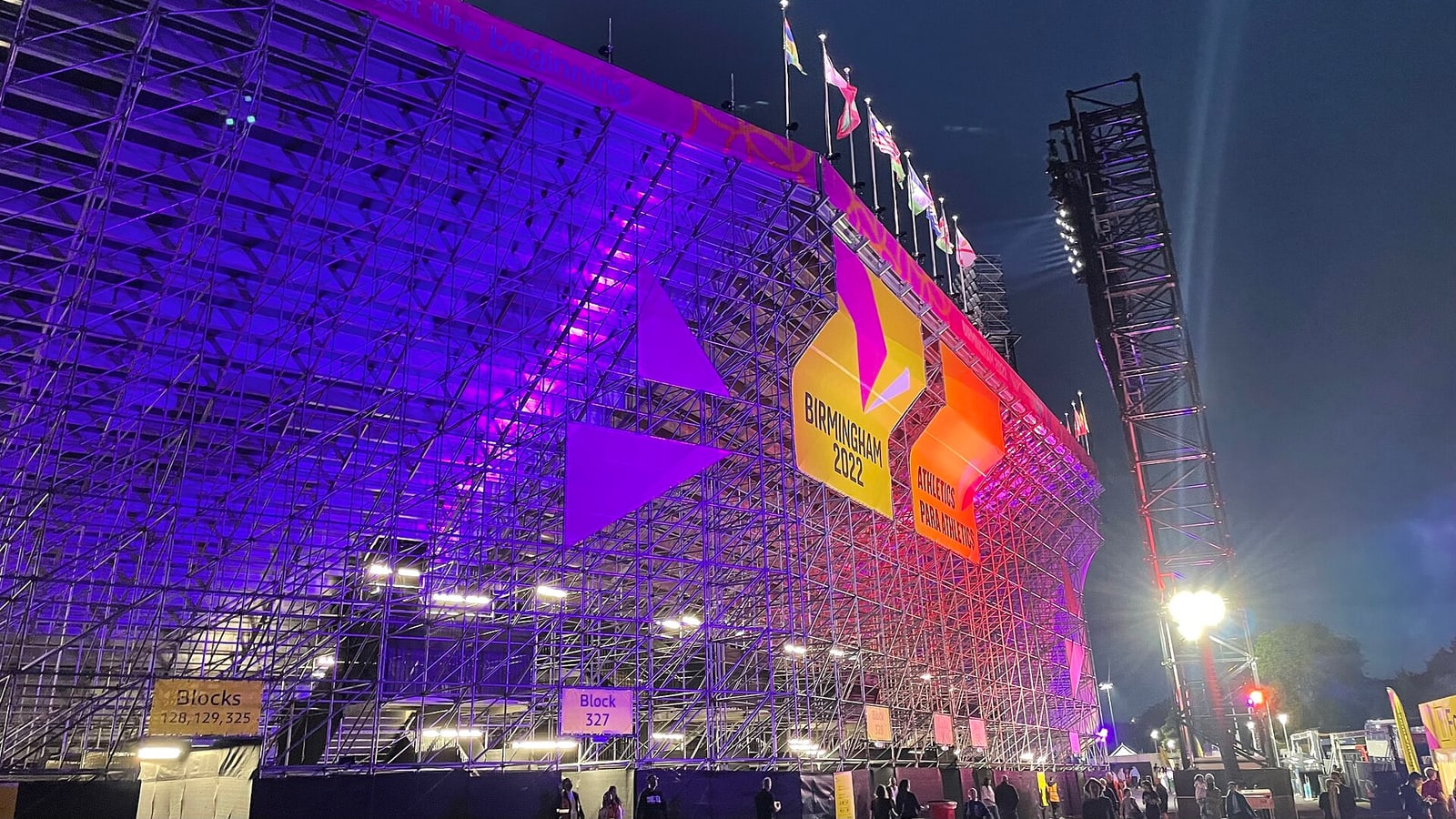
Belgium’s men’s 4x100-metre team won European bronze in Birmingham on Saturday, 15 August, giving the Belgian Falcons their first senior continental medal, while the Belgian Rockets placed fifth in the women’s final later that evening. European Athletics recorded the Falcons at 38.70 seconds and the Rockets at 43.31, confirming two top-five finishes for Belgium at Alexander Stadium.
The Falcons’ medal belongs first to the four sprinters who carried the baton: Kobe Vleminckx, Antoine Snyders, Raphael Kapenda and Simon Verherstraeten. Britain won the race on home soil and Germany took silver; Belgium held third place to complete a progression from sixth at Munich 2022 and fourth at Rome 2024. RTBF’s Francophone coverage described the Falcons as having “offered themselves” bronze, a celebratory Belgian framing of a result that the wider European picture also presents as part of Britain’s commanding relay night.
For a Belgium-based audience, the significance is straightforward rather than institutional: a relay programme that had repeatedly approached the European podium finally reached it. Atletiek Vlaanderen’s official championship tracker listed the Falcons as bronze medallists in 38.70 after they had qualified automatically from their heat in 38.84. The medal also gave national athletics another result built on collective execution, where three exchanges matter as much as any runner’s individual speed.
That distinction is important in the 4x100 metres. Four athletes each cover one bend or straight, but the baton must be transferred inside prescribed zones at close to maximum speed. A technically poor exchange can erase an advantage or end a race. Belgium has learned that lesson repeatedly: at the World Relays in Gaborone in May, the Falcons failed to complete their opening race after a missed first handover, before returning in a qualifying round and setting a Belgian record of 38.40, according to the Belga report carried by Starsporttv.
The Birmingham final was therefore slower than Belgium’s national record, but championship racing rewards position, not the fastest performance ever produced. Britain stopped the clock at 38.45 and Germany at 38.64, with Belgium close behind. That creates two legitimate readings of the evening. The European competitive view emphasises Britain’s victory and Belgium’s 0.34-second deficit to the champions. The Belgian programme view emphasises that the Falcons converted several seasons of faster running, near misses and exchange work into a medal when a final demanded clean execution.
The Rockets experienced the other side of that equation. Their 43.31 placed them fifth, behind champions Britain, Switzerland and Poland among others, after they had advanced from the heats in 42.98. Fifth is not a medal, but it kept Belgium among Europe’s leading women’s sprint-relay nations. It also followed the disappointment of the 2026 World Relays, where the women missed qualification for the 2027 World Championships after finishing fifth in their second-chance race, according to Starsporttv.
The women’s result gains context from the broader Belgian sprint revival. Delphine Nkansa had already won European 100-metre bronze in Birmingham in 11.06, Atletiek Vlaanderen reported, giving the Rockets access to an individual medallist within their relay group. Yet the team’s final was slower than its 42.98 heat and remained well outside Belgium’s long-standing national record of 42.54, set at the 2008 Beijing Olympics. The fifth place is consequently evidence of continental competitiveness, not proof that every technical or performance gap has closed.
Public investment forms a secondary Belgian angle. Sport Vlaanderen said its 2025 elite-sport policy introduced specific performance programmes for the men’s and women’s 4x100 teams, including part-time contracts for Vleminckx, Verherstraeten and Rani Rosius. Vleminckx said at the time that such support would let him focus fully on training and recovery rather than combine athletics with a job in the chemical sector. Birmingham offers a visible sporting return, although one medal cannot by itself establish how much any single funding measure contributed.
The next test is whether the Falcons can reproduce medal-level exchanges while approaching their 38.40 record, and whether the Rockets can turn regular European finals into a podium challenge. Selection changes, injuries and relay order will all shape that work. For now, Birmingham marks a clear threshold: Belgian men’s sprinting no longer merely threatens the European podium; it has a medal to show for the progress.
What to do
There is no immediate practical action for the public. For Belgium’s athletics bodies, the result supplies performance evidence for future coaching, selection and elite-sport funding decisions.
The Belgian angle
The result has relevance across Belgium’s divided but cooperating athletics structure: the relay pools include athletes and clubs connected to both Atletiek Vlaanderen and the Ligue Belge Francophone d’Athlétisme, while Flemish elite-sport funding supports several leading sprinters.
EvidenceWell established · 4 official documents + 1 independent reporting source · Background sources: 2Explore evidence →Hide evidence ↑
- Published:
- 15 Aug 2026, 02:00
- Retrieved by ODIN:
- 18 Aug 2026
- Published:
- 15 Aug 2026, 02:00
- Retrieved by ODIN:
- 18 Aug 2026
- Published:
- 10 Aug 2026, 02:00
- Retrieved by ODIN:
- 18 Aug 2026
- Published:
- 15 Aug 2026, 02:00
- Retrieved by ODIN:
- 18 Aug 2026
- Published:
- 3 May 2026, 02:00
- Retrieved by ODIN:
- 18 Aug 2026
- Published:
- 1 Jan 2025, 01:00
- Retrieved by ODIN:
- 18 Aug 2026
- Published:
- 12 Jun 2024, 02:00
- Retrieved by ODIN:
- 18 Aug 2026
Voices & reactions
What the main actors are doing
Reported positions, summarised — not direct quotationsBelgian programme perspective
RTBF framed the result as the Falcons having “offered themselves” the bronze medal, while Atletiek Vlaanderen highlighted “BRONS in 38.70.” This view treats the race as the payoff from a Belgian progression through sixth place in 2022, fourth in 2024 and a national record in 2026.
European competitive perspective
The European results frame the same final around Britain’s home victory in 38.45 and Germany’s silver in 38.64. From that viewpoint, Belgium’s achievement is a valuable bronze but also evidence of the remaining gap to the fastest European relay under championship conditions.
Rockets development perspective
Belgian coverage can reasonably present fifth place as confirmation that the Rockets belong in a European final. A stricter performance reading notes that their 43.31 final was slower than their 42.98 heat and remains well outside the 42.54 Belgian record.
Continue reading


This story was assembled from verified evidence, with its sources and reasoning recorded as it was written.
This briefing was prepared with AI assistance and passed Belgium Impulse source, provenance and publication-quality checks. methodology.