How did one Ryanair technical fault disrupt flights across two Belgian airports?
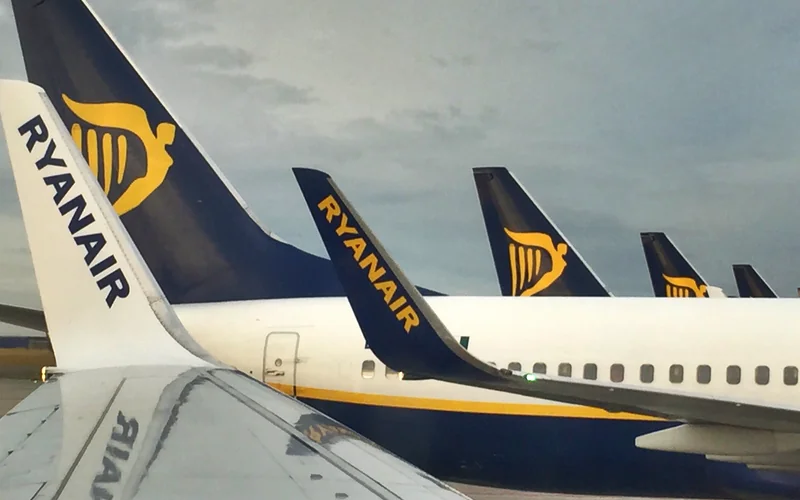
A Ryanair aircraft bound for Naples diverted safely to Brussels Airport on Tuesday evening after developing a technical defect and losing fuel during take-off from Charleroi, where the resulting runway closure forced six other flights to divert and delayed…
In 30 seconds
- Charleroi’s runway was closed from 19:30 to 20:40, a 70-minute interruption.
- Six flights were diverted, four aircraft circled temporarily and about ten services were delayed.
- Ryanair flight FR1302 was scheduled from Charleroi to Naples at 19:15.
- Skeyes said Ryanair represented 79% of Charleroi’s IFR traffic in 2024.
A aircraft carrying passengers from to Naples diverted safely to on Tuesday evening, 25 August, after a technical defect and fuel loss during take-off triggered a 70-minute runway closure at . Six other aircraft were diverted, four arriving flights had to circle temporarily and about ten services incurred delays, according to Brussels South Charleroi Airport and reporting by Het Nieuwsblad. No injuries were reported in the available accounts.
The affected service was Ryanair flight FR1302, scheduled to leave Charleroi for Naples at 19:15. HLN reported that the crew turned towards Brussels Airport in Zaventem after identifying the technical problem. What exactly failed, how much fuel escaped and how many passengers were aboard have not been disclosed. The confirmed outcome is that the aircraft landed at Brussels Airport, where emergency arrangements routinely accompany the arrival of an aircraft that has reported a technical problem.
At Charleroi, the operational consequences extended well beyond that one flight. Airport spokesperson Nathalie Pierard told Het Nieuwsblad that the runway was closed from 19:30 until 20:40 because safety rules required the spilled fuel to be removed before aircraft movements could resume. The runway reopened after cleaning and a safety inspection. Diverted passengers were to be brought back to Charleroi, while aircraft that had landed elsewhere could subsequently reposition or continue their operations.
This was a contained incident, but it exposed the vulnerability built into a busy airport operating around one principal runway. The Walloon administration describes Charleroi’s runway 06/24 as 3,055 metres long and 45 metres wide. When it becomes unavailable, arrivals cannot simply be transferred to a parallel strip. Controllers must hold aircraft in the air, send them to alternates such as Ostend or , or delay departures on the ground. A defect affecting one aircraft can therefore create extra fuel use, crew-time pressure, missed onward transport and considerable uncertainty for passengers on unrelated flights.
That matters economically because Ryanair is not a marginal operator at Charleroi. recorded 52,928 Ryanair movements there in 2024, representing 79% of the airport’s IFR traffic. The airline said in February 2026 that its full summer programme comprised 7.5 million seats, 9% more than in summer 2025, across 112 routes. Those figures are company claims, but they illustrate the scale at which a short runway interruption can ripple through aircraft rotations and later departures. Brussels South Charleroi Airport, its ground handlers, coach operators and Ryanair’s crews must then absorb the immediate recovery work.
For travellers, the practical effect can be more expensive and awkward than the word “diversion” suggests. Brussels Airport lies in Zaventem, while the Walloon government places Charleroi Airport about 55 kilometres from Brussels. A passenger expecting to return to a car, coach connection or family pickup at Charleroi may instead arrive at another airport late in the day. The airline remains the contractual contact for rebooking, assistance and claims; Brussels Airport advises disrupted passengers to preserve boarding passes and receipts for reasonable expenses.
Compensation is less straightforward. EU passenger-rights guidance says an ordinary aircraft technical problem is generally not an “extraordinary circumstance” that automatically releases an airline from paying compensation for a qualifying long delay. Yet the Court of Justice of the ruled in the Belgian case that petrol on a runway can be an extraordinary circumstance for another affected carrier when the spill did not originate from its aircraft. That distinction may matter here: passengers on FR1302 could face a different legal assessment from travellers delayed because Charleroi’s runway was closed. Eligibility will depend on each flight’s eventual arrival delay, the cause attributed to it and the measures taken by the operating airline.
Where this is happening
View on map Brussels South Charleroi Airport →The incident also highlights the complementary roles of Belgium’s two main passenger airports. Ryanair concentrates its Belgian operation at Charleroi and no longer bases aircraft at Brussels Airport, although it still serves Zaventem on aircraft stationed elsewhere. In an irregular operation, however, Brussels Airport becomes an important nearby safety valve. The airport says its fire service has 150 staff and must be able to reach a tarmac incident within three minutes with at least three specialist crash tenders. Those arrangements are designed precisely so that a precautionary diversion remains a managed safety procedure rather than an improvised emergency.
There are still important unanswered questions. Ryanair and the relevant aviation authorities have not publicly identified the defective component, the aircraft registration, the volume or precise source of the fuel loss, or whether the aircraft will require a formal occurrence investigation. Nor was it immediately clear when the Naples passengers would complete their journey. The next meaningful updates should establish the engineering cause, the final passenger arrangements and the length of the knock-on delays. Until then, the evidence supports a narrow conclusion: the safety response worked and the runway reopened, but one technical failure was enough to disturb a significant slice of an evening schedule.
What to do
If your flight was affected, keep the boarding pass, booking confirmation, delay or diversion messages, and receipts for reasonable meals, transport or accommodation. Ask the operating airline in writing whether your service was delayed, cancelled or rerouted and what assistance or reimbursement it will provide under EU passenger-rights rules. Check the airport’s live flight information before travelling. If you landed at Brussels Airport instead of Charleroi, confirm whether onward transport was arranged before paying for your own journey, and retain any receipts. Compensation is not automatic merely because the runway closed.
The Belgian angle
The direct disruption centred on Wallonia’s Charleroi airport, while Brussels Airport in Flemish Brabant provided the diversion destination. The incident therefore linked two airports with different commercial models but complementary roles during operational disruption.
EvidenceWell established · 1 primary source + 6 official documents + 1 independent reporting sourceExplore evidence →Hide evidence ↑
- Published:
- 25 Aug 2026, 02:00
- Retrieved by ODIN:
- 25 Aug 2026
- Published:
- 25 Aug 2026, 02:00
- Retrieved by ODIN:
- 25 Aug 2026
- Published:
- 25 Aug 2026, 02:00
- Retrieved by ODIN:
- 25 Aug 2026
- Publication date unavailable
- Retrieved by ODIN:
- 25 Aug 2026
- Publication date unavailable
- Retrieved by ODIN:
- 25 Aug 2026
- Published:
- 21 Jul 2026, 02:00
- Retrieved by ODIN:
- 25 Aug 2026
- Publication date unavailable
- Retrieved by ODIN:
- 25 Aug 2026
- Published:
- 26 Jun 2019, 02:00
- Retrieved by ODIN:
- 25 Aug 2026
Voices & reactions
What the main actors are doing
Reported positions, summarised — not direct quotationsAirport safety and operations teams
Brussels South Charleroi Airport’s position is that closing the runway was compulsory until the fuel had been removed and the surface inspected. From an operational perspective, diversions and delays were the necessary cost of preventing a potentially more serious runway event.
Affected passengers and businesses
Travellers and firms relying on punctual low-cost connections may judge the response by communication, onward transport and reimbursement rather than by the relatively short closure itself. Landing at another Belgian airport can still mean missed trains, additional ground travel and lost working time.
Ryanair and other delayed carriers
Ryanair may bear responsibility for disruption linked directly to its aircraft’s technical defect, while other carriers could argue that the runway closure was outside their control. EU law treats those factual situations differently, so a single blanket conclusion about compensation would be misleading.
The story, connected
Explore the people, places and ideas in this story
Go beyond the headline. Open a card for sourced context, maps, official links and the other subjects connected to this report.
Continue reading

This story was assembled from verified evidence, with its sources and reasoning recorded as it was written.
This briefing was prepared with AI assistance and passed Belgium Impulse source, provenance and publication-quality checks. methodology.