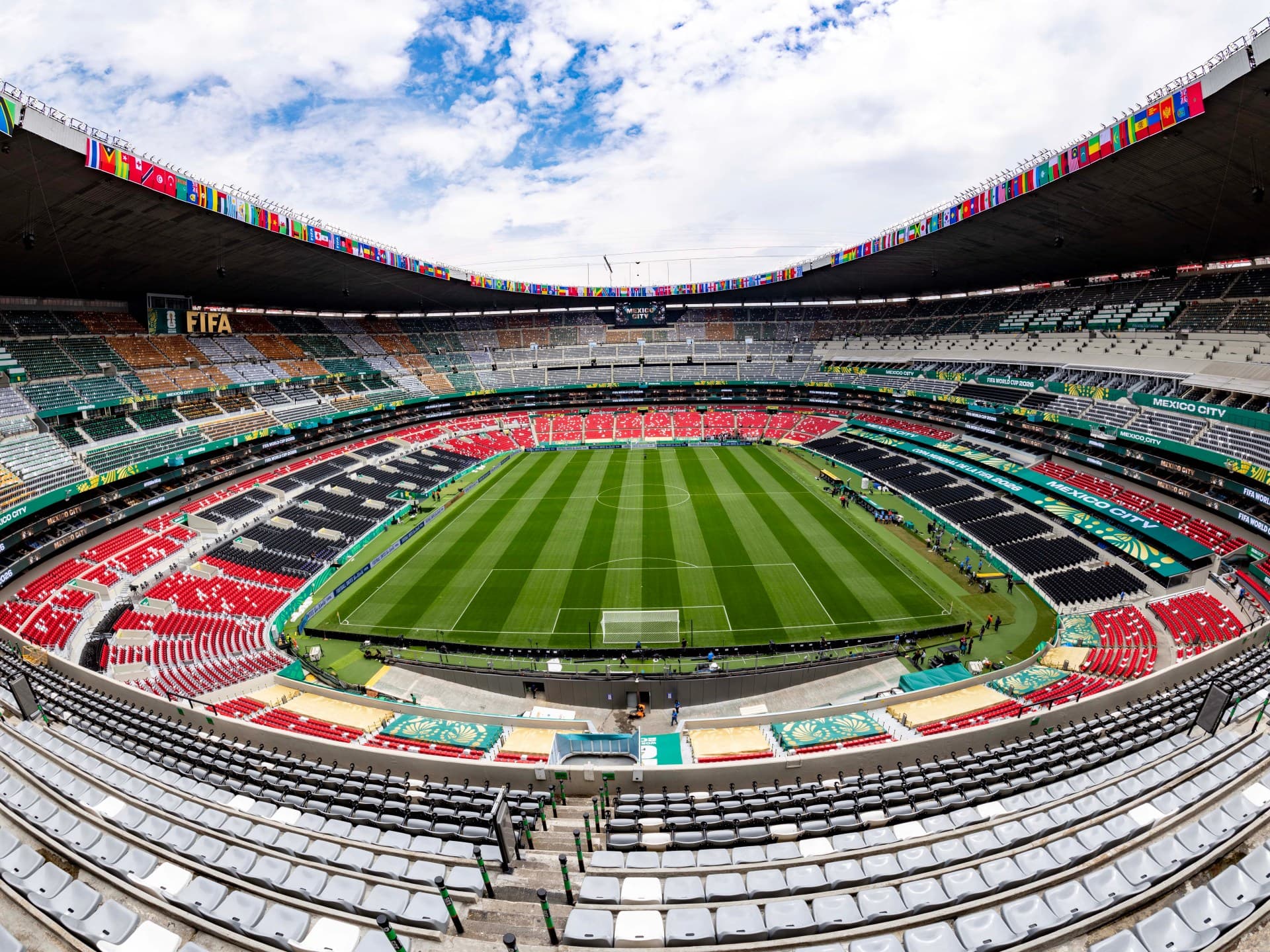
Estadio Azteca prepares to host World Cup opener
FIFA's match schedule says Estadio Azteca in Mexico City will stage the opening match of the 2026 FIFA World Cup on 11 June 2026, making the venue central to the tournament's expanded North American edition. The stadium is already exceptional in World Cup history: FIFA records show it hosted the 1970 and 1986 finals, including Brazil's third title and Argentina's Diego Maradona-led triumph. Mexico's organising pitch now turns that legacy into a modern test: a larger 48-team tournament, three host countries and a first match in a stadium being updated for contemporary security, hospitality and broadcast demands. For Belgian readers, the direct stakes are those of football followers, travellers and broadcasters rather than domestic policy. The Belgian national team's own path depends on UEFA qualifying, but the opener fixes the symbolic starting point for a World Cup that will dominate the 2026 football calendar.
Verified by Validiris·📚 7 sources·🧠 AI-checked·🇧🇪 Belgian: LowWhy you can trust this
About this story
Estadio Azteca (Mexico City stadium opened in 1966, officially sponsored as Estadio Banorte for the 2026 tournament) is one of football's most recognisable venues. Mexico City (Mexico's capital, at more than 2,200 metres above sea level) will stage the opening match. The 2026 FIFA World Cup (FIFA's 23rd men's World Cup, hosted by Canada, Mexico and the United States) expands the finals to 48 teams. FIFA (world football's governing body, founded in 1904 and based in Zurich) sets the tournament calendar. Concacaf (the North and Central American and Caribbean confederation) covers the host region. Diego Maradona (Argentina forward, 1960-2020) turned the 1986 tournament into one of football's defining individual World Cups. Belgium's Red Devils (Belgium's men's national team) would only be directly involved if they qualify through UEFA's European qualifying system.
How to read this story
The history
FIFA's historical records identify Estadio Azteca as host of the 1970 World Cup final, when Brazil beat Italy, and the 1986 final, when Argentina beat West Germany. The same venue staged Argentina's 1986 quarter-final against England, remembered for Diego Maradona's two contrasting goals. Mexico previously hosted the men's World Cup in 1970 and 1986, while FIFA's 2026 allocation makes it the first country to host matches in three men's World Cups. The 2026 edition also changes the scale: FIFA's Council approved expansion from 32 to 48 teams in 2017.
Why now
The story is timely because FIFA's schedule places the opening match on 11 June 2026, turning Estadio Azteca from a historical reference point into the first live stage of the tournament.
What to watch
Watch UEFA qualifying for Belgium's place, FIFA ticketing and travel guidance, and the final draw that will assign teams to groups and venues. Those steps will decide whether the Belgian angle becomes direct.
International angle
The 2026 World Cup is a cross-border tournament shared by Canada, Mexico and the United States, so the opener in Mexico City is also a statement about how FIFA wants to balance the three hosts. European audiences, including Belgian viewers, will follow a competition shaped by North American distances, time zones and multi-country logistics.
What this means for you
Belgian readers do not need to act on the opener alone, but football fans planning travel should account for long distances between host cities and North American time zones. Broadcasters, cafés and fan groups can treat 11 June 2026 as the tournament's fixed starting point while waiting for Belgium's qualification outcome.
What happens next
FIFA's published calendar fixes the opener, but the full competitive picture depends on qualifying. UEFA's process will decide Belgium's participation, while FIFA and local organisers are expected to continue venue preparations, security planning and ticketing operations. Belgian fans should watch qualification results first, then the final draw and match allocations that determine whether Belgium plays in Mexico, Canada or the United States.
Potential consequences
The opener could reinforce Mexico City's role as the emotional centre of the 2026 tournament even though the final will be played in the United States. For FIFA, the choice turns stadium heritage into a branding asset for an expanded format that may otherwise feel dispersed across a continent. For Belgian supporters, the main practical consequences are timing, travel complexity and the possibility that Belgium's fixtures, if the Red Devils qualify, are spread across long-distance North American venues.
Timeline
- 1966·Estadio Azteca opened in Mexico City.
- 1970-06-21·FIFA records show Estadio Azteca hosted the World Cup final between Brazil and Italy.
- 1986-06-29·FIFA records show Estadio Azteca hosted the World Cup final between Argentina and West Germany.
- 2017-01-10·FIFA's Council approved expanding the men's World Cup to 48 teams from 2026.
- 2024-02-04·FIFA published the 2026 match schedule with Mexico City hosting the opener.
- 2026-06-11·FIFA's schedule sets the 2026 World Cup opening match at Estadio Azteca.
Glossary
- UEFA qualifying
- The European qualification process run by UEFA to decide which national teams from Europe reach the FIFA World Cup.
- Concacaf
- The football confederation covering North America, Central America and the Caribbean, including the 2026 host countries.
Related to this story

Live connections from the Belgium Impulse ecosystem — not recommendations.
This briefing was prepared with AI assistance and reviewed by a Belgium Impulse editor before publication. methodology.