Can Kamping Kerosine turn Zurenborg’s former De Lijn depot into Antwerp’s next cultural landmark?
Kamping Kerosine will take over the former De Lijn depot in Zurenborg, Antwerp, on 12 September 2026 for an open-air programme of electronic music and art.
In 30 seconds
- Kamping Kerosine X is scheduled for Saturday 12 September 2026 at Pretoriastraat 1 in Antwerp.
- Doors are listed at 13:00; standard tickets cost €15 excluding booking fees.
- There is free bicycle parking but no designated car park, lockers or festival accommodation.
- Visitors may bring drinks, but glass containers are prohibited; under-18s need a parent or legal guardian.
Kamping Kerosine will bring its nomadic underground festival to the former bus depot in Zurenborg on Saturday 12 September 2026, turning the temporary cultural venue De Halte into an open-air setting for electronic music and art. The organisers list doors at 13:00 and tickets at €15 before booking fees, but have not yet published the full line-up or closing time. The practical message is straightforward: use Pretoriastraat 1, 2600 as the destination, check De Lijn or SNCB-NMBS shortly before travelling, and do not expect dedicated car parking or lockers.
The festival describes this edition, , as a daytime exploration of sound and space. Het Nieuwsblad reports that the event will occupy De Halte, the cultural café recently established on the old depot grounds with a mirror tent, terrace and outdoor stage. It is a striking change of function for a site where buses were once parked and serviced, but it is also deliberately temporary: De Halte’s announced programme runs only until 26 September.
Kamping Kerosine began near Antwerp Airport in Deurne in 2014, according to Het Nieuwsblad, growing from an informal gathering of friends watching aircraft into a recurring festival that moves between unusual locations. Its recent history includes events at Stormkop in Antwerp’s docklands and the 2025 Out of Space collaboration with Onder Stroom, which combined music with discussion about access to cultural and experimental space in the city. That mobility has become part of the festival’s identity, although it also reflects how difficult it can be for independent organisers to retain affordable venues.
What visitors need to know
The organisers’ practical page says the festival takes place at Pretoriastraat 1 in the Antwerp district of Berchem. There will be free bicycle parking, food and drink stalls and a bar serving alcoholic and non-alcoholic drinks. Visitors may bring their own drinks, an unusual survival from the festival’s informal beginnings, but glass bottles and containers are prohibited. Alcohol is sold only to people aged 18 or over.
The grounds are described by the organisers as relatively flat and entirely at ground level. Anyone who needs mobility assistance should nevertheless contact the festival beforehand, since a repurposed transport depot is not the same as a purpose-built accessible venue. There are no lockers and no campsite or accommodation attached to the event. Re-entry is permitted in principle, although the organisers warn that it cannot be guaranteed if crowd-management or other operational conditions change.
Under-18s must attend with a parent or legal guardian. The organisers say the event is designed primarily for adults and advise hearing protection for younger visitors; free earplugs are expected to be available. Their published safety policy also promises zero tolerance for violence, harassment and discrimination and asks visitors to treat consent as explicit and continuing.
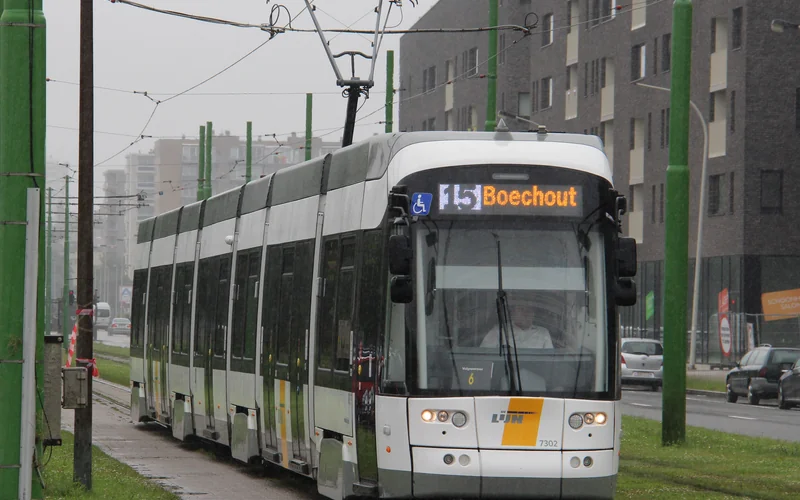
For travel information, use the official De Lijn journey planner or app for Flemish buses and trams and the SNCB-NMBS planner for trains. De Lijn warns that services can change because of roadworks, diversions, industrial action or events, so a route saved weeks in advance should be checked again on the day. International residents should note the language split: De Lijn and the operate principally in Dutch, while Belgium’s railway operator uses SNCB in French and NMBS in Dutch. The festival’s own practical information is available in English, which makes it the clearest first stop for visitors unfamiliar with local terminology. In Antwerp, the municipal authority is the Stad Antwerpen; at district level, Zurenborg’s southern side falls within the district of Berchem, commonly described in English as a borough but officially called a district rather than a commune or gemeente.
More than a one-day rave
De Halte opened on 14 August with a mirror tent and a programme intended to give young artists and neighbourhood initiatives a platform, Het Nieuwsblad reported. It was created by local art graduates Roos de Buysscher and Pjotr Durlet, with support reported at €20,000 from Antwerp’s culture portfolio and €5,000 from the district of Berchem. The venue has also restored a visible literary connection to Zurenborg by displaying Herman De Coninck’s poem ‘Thuis’, previously mounted near the bridge at Draakplaats.
The wider site is now controlled by the City of Antwerp through its property agency AG VESPA. A city decision approved on 3 June says De Lijn’s temporary use ended in September 2025 and authorises up to three event organisers on the outdoor grounds during July, August and September 2026. The same official record identifies important constraints: parts of the buildings have safety defects, access to some areas requires supervision, and a soil-remediation investigation involving De Lijn, Tersana and OVAM is due to reach its preliminary stage by September 2026. The festival’s presence therefore should not be read as unrestricted public access to the entire depot.
The city presents temporary activity as a way to make the large site livelier and safer while the Nieuw Zurenborg planning process develops. Its plans also include space for a works depot, temporary accommodation for primary school De Kleine Wereldburger and, from October, a disruption-mitigation car park for eligible neighbourhood residents during works in Transvaalstraat. De Standaard reported in 2020 that the city had agreed to acquire the depot land as part of a roughly ten-hectare redevelopment area adjoining the former gasworks.
That produces two legitimate expectations. Festival-goers and independent cultural organisers see a rare chance to use a dramatic piece of industrial infrastructure before redevelopment. Nearby residents and future site users, meanwhile, have reason to expect careful management of noise, traffic, safety and environmental restrictions. The City of Antwerp’s formal emphasis is on neighbourhood-oriented use and greening, while Kamping Kerosine’s identity is built around a larger underground audience. How comfortably those purposes coexist will be part of the test.
For now, the confirmed date, address, opening time and base ticket price are enough to plan around. The important missing pieces are the line-up, detailed timetable, closing time and any final access arrangements. Visitors should consult kampingkerosine.be and the official transport planners again shortly before 12 September. After the festival, De Halte is scheduled to continue only until 26 September; the city then moves toward a longer temporary-use partnership while the permanent future of Nieuw Zurenborg remains several years away.
What to do
If you plan to attend, reserve Saturday 12 September 2026 and budget at least €15 plus booking fees. Doors open at 13:00 at Pretoriastraat 1, Antwerp. Travel by bicycle, on foot or by public transport: the festival has free bicycle parking but no designated car park. There are no lockers or festival accommodation, so pack accordingly. You may bring drinks, but not in glass containers. Anyone under 18 must attend with a parent or legal guardian. De Halte’s programme ends on 26 September 2026.
The Belgian angle
The festival adds a substantial cultural event to Zurenborg’s temporary summer programme, while concentrating visitors, bicycles, sound and late-day activity around Pretoriastraat and neighbouring streets in Berchem. Its success will depend partly on managing that activity without undermining the city’s neighbourhood-oriented goals.
EvidenceWell established · 2 primary sources + 3 official documents + 1 independent reporting source · Background sources: 1Explore evidence →Hide evidence ↑
- Published:
- 18 Aug 2026, 02:00
- Retrieved by ODIN:
- 24 Aug 2026
- Publication date unavailable
- Retrieved by ODIN:
- 24 Aug 2026
- Published:
- 14 Aug 2026, 02:00
- Retrieved by ODIN:
- 24 Aug 2026
- Published:
- 4 Jun 2026, 02:00
- Retrieved by ODIN:
- 24 Aug 2026
- Published:
- 4 Jun 2026, 02:00
- Retrieved by ODIN:
- 24 Aug 2026
- Published:
- 28 Nov 2020, 01:00
- Retrieved by ODIN:
- 24 Aug 2026
- Publication date unavailable
- Retrieved by ODIN:
- 24 Aug 2026
Voices & reactions
What the main actors are doing
Reported positions, summarised — not direct quotationsIndependent organisers and festival audiences
Kamping Kerosine’s supporters see temporary access to an unusual industrial site as culturally valuable, especially in a city where affordable experimental venues can be difficult to retain. The changing location is part of the festival’s creative identity, but also illustrates the instability faced by grassroots cultural projects.
Zurenborg residents and city-site managers
People living around Pretoriastraat, together with Stad Antwerpen and AG VESPA, have a legitimate interest in limiting noise, traffic, unsafe access and environmental disturbance. The official framework emphasises neighbourhood use, greenery and social control, meaning a large festival must coexist with local needs rather than displace them.
The story, connected
Explore the people, places and ideas in this story
Go beyond the headline. Open a card for sourced context, maps, official links and the other subjects connected to this report.
Continue reading


This story was assembled from verified evidence, with its sources and reasoning recorded as it was written.
This briefing was prepared with AI assistance and passed Belgium Impulse source, provenance and publication-quality checks. methodology.